
Would you like to save this?
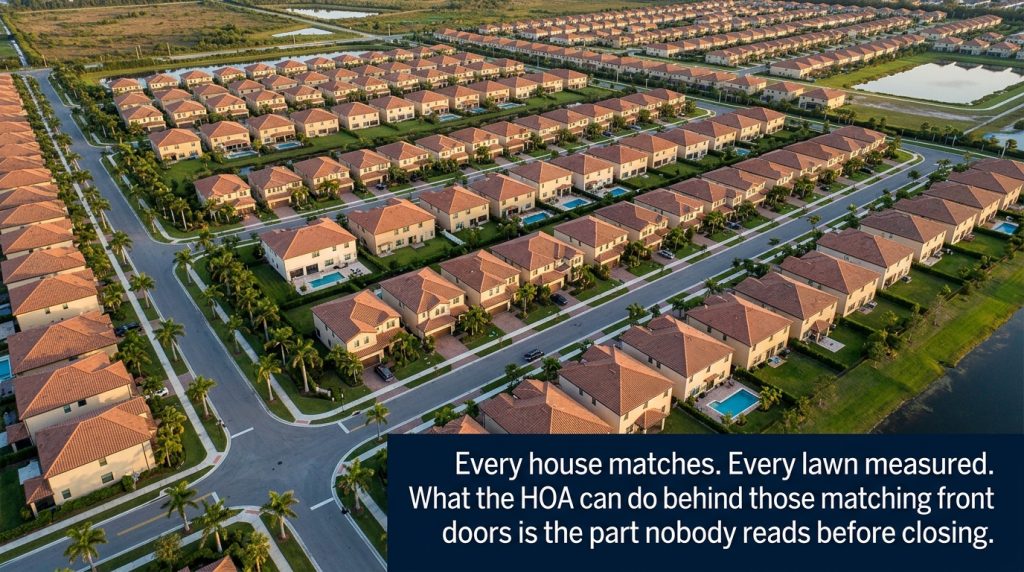
You own your home. You pay your mortgage, you mow your lawn, you painted the front door yourself on a Saturday.
But somewhere in that stack of closing documents you signed, you handed over more control than you realize.
Florida Statute Chapter 720 gives your HOA powers that would make most homeowners’ jaws hit the floor.
All 27 on this list are legal. Most require zero advance warning. And the scariest part is not what the board can do. It is how few people know about any of it until the certified letter shows up.
Number 14 already sent a Tampa woman to jail. Not a fine. Not a lien. Actual jail time, over a dented garage door.
1. Place a Lien on Your Home for a Single Unpaid Assessment
Your HOA does not need a court order to put a lien on your property.
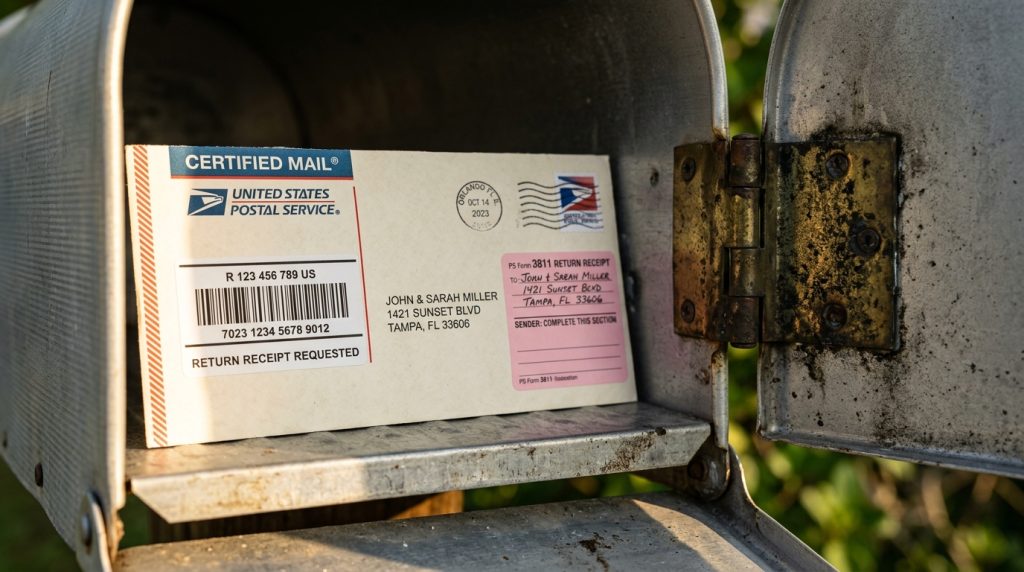
Under Florida Statute 720.3085, if you miss a single quarterly assessment, the board sends one certified letter, waits 45 days, and records a claim of lien against your home with the county.
That lien attaches to your title. You cannot sell, refinance, or transfer ownership until it is cleared.
Interest accrues at up to 18 percent annually.
2. Pile Attorney Fees on Top of That Lien
Here is where a $300 missed assessment becomes a $12,000 problem.
YOU’LL ALSO LOVE25 Things About Your Home That Visitors Notice in the First 10 Seconds (But Never Tell You)
Florida law allows the association to add “reasonable costs and attorney fees incurred incident to the collection process” directly onto your lien.
A real case in the Creek View community near Tampa showed exactly this. A homeowner owed roughly $2,800 in original assessments.
The final lien balance hit $12,295 because $9,400 of it was attorney fees alone.
3. Foreclose on Your House Over That Unpaid Balance
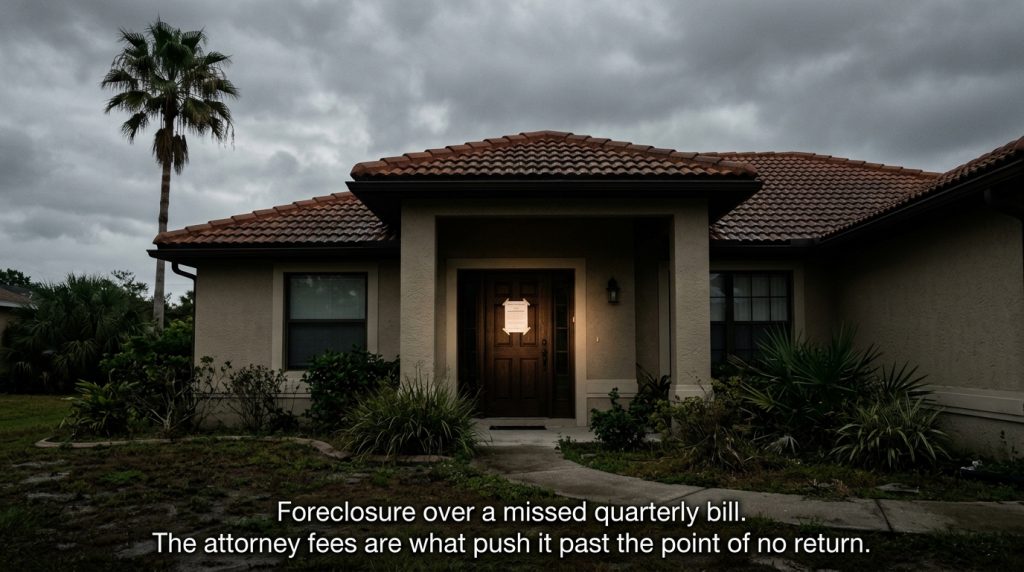
This is not a scare tactic. Florida HOAs can foreclose on assessment liens the same way a bank forecloses on a mortgage.
They file a lawsuit in circuit court, and if the judgment goes their way, your home goes to auction.
The association must give 45 days’ notice before filing, but once the lawsuit is in, the clock is ticking and the legal costs are piling on top of everything you already owe.
4. Suspend Your Right to Vote on Community Decisions
Miss your assessments by 90 days and your voting rights vanish.
Under Section 720.305, the board can suspend your ability to vote on budgets, board elections, rule changes, and amendments.
You are still required to pay for everything the community decides. You just no longer have any say in what they decide.
5. Lock You Out of the Pool, Gym, and Clubhouse
That same statute gives your HOA the authority to suspend your access to common amenities for unpaid fees or rule violations.
The pool you helped pay for with your assessments? Off limits. The clubhouse you reserved for your granddaughter’s birthday party? Cancelled.
They cannot block you from accessing your own home, but everything else is fair game.
6. Fine You $100 Per Day for a Continuing Violation
Florida Statute 720.305 caps individual HOA fines at $100 per violation.
Sounds manageable until you realize a continuing violation means that fine resets every single day.
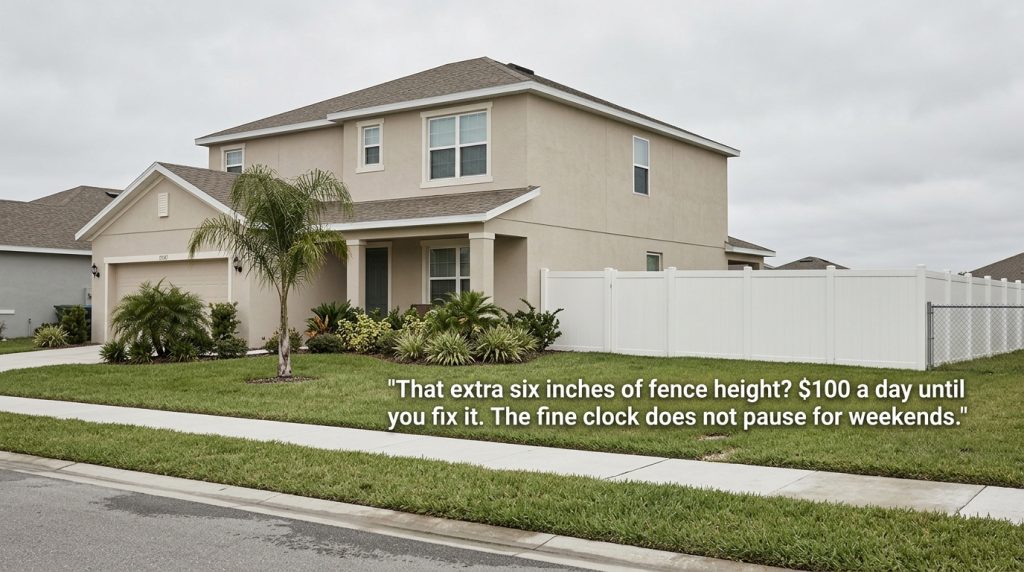
A fence that does not meet the approved height? That is $100 today, $100 tomorrow, and $100 the day after that, stacking up to $1,000 in aggregate before they even need to hold a second hearing.
But the fines are almost the polite option. Wait until you see what they can do to your landscaping.
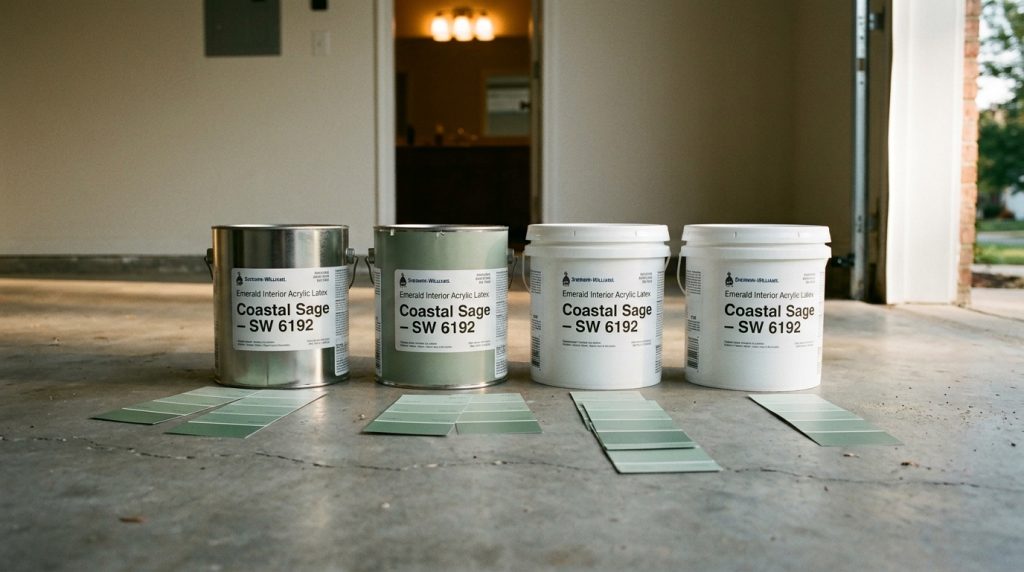
7. Deny Your Exterior Paint Color After You Already Bought the Paint
Florida’s Architectural Review Committees have the legal authority to approve or reject any exterior modification to your property, including paint colors, under the community’s CC&Rs.
YOU’LL ALSO LOVE30 Things in the 1970s Living Room That Would Confuse Anyone Under 30
As of 2024, House Bill 1203 requires the committee to cite the specific covenant or rule you violated when denying a request. But the denial itself is still perfectly legal.
You bought six gallons of “Coastal Sage” and the committee says no? You eat the cost.
8. Demand You Rip Out Landscaping That Was Not Pre-Approved
If you planted a hedge, installed a garden border, or replaced your sod without running it past the Architectural Review Committee first, the association can require you to remove it at your own expense.
Florida courts have consistently upheld this power when the CC&Rs require prior approval for landscaping modifications.
No approval on file means the board can treat it as an unauthorized improvement and pursue enforcement.
9. Tow Your Car from Your Own Street
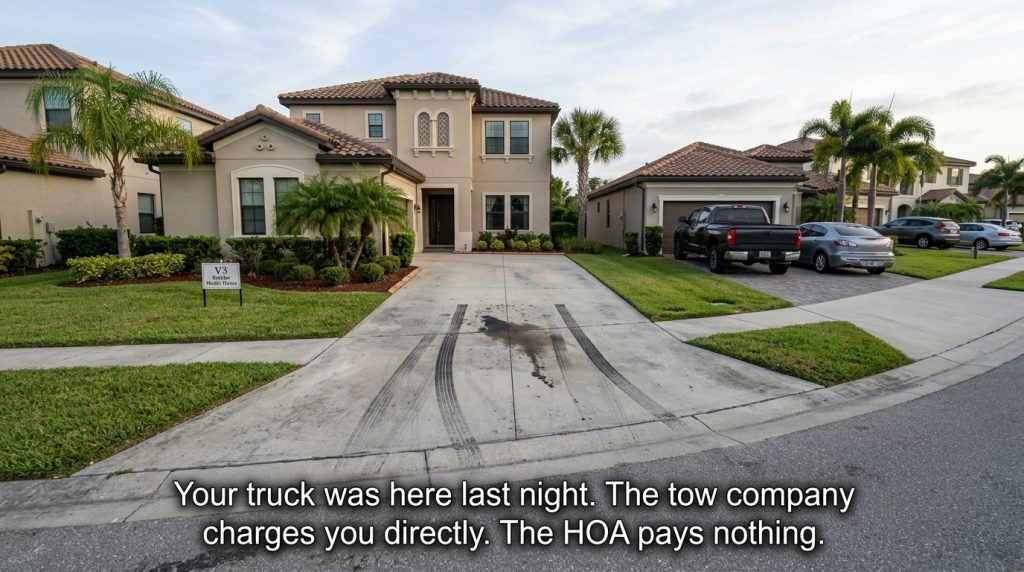
Under Florida Statute 715.07, your HOA has the authority to tow vehicles that violate community parking rules, as long as those rules were communicated in writing beforehand.
The truck you parked in front of your own house could be gone by morning if it violates a rule about street parking, commercial vehicles, or overnight guest limits. The tow company charges you directly. The HOA pays nothing.
Good news, though. As of the 2024 changes, your HOA can no longer ban personal pickup trucks from your own driveway. Small victories.
10. Change the Rules on You Without a Homeowner Vote
Your HOA’s CC&Rs require a two-thirds vote of all owners to amend.
But the board’s “Rules and Regulations”? Those only need board approval. No homeowner vote required.
The board can adopt new parking restrictions, landscaping timelines, holiday decoration policies, or quiet hours at a regular board meeting. The only legal requirement is 14 days’ notice posted before the meeting where the vote happens.
11. Charge You Up to $299 Just to Sell Your Own Home
Think the rule changes are bad? Wait until you try to leave.
When you sell your property, the association issues an estoppel certificate confirming what you owe. Under Florida law, that certificate costs up to $299 for a current account.
If your account is delinquent, they add another $179.
Need it fast? That is another $119 on top.
The closing cannot happen without it.
YOU’LL ALSO LOVE11 Neighborhood Rules Every Kid Knew in the ’80s That No Parent Would Allow Today
12. Force a Special Assessment on You for Surprise Repairs
The board can levy a special assessment for unbudgeted expenses.
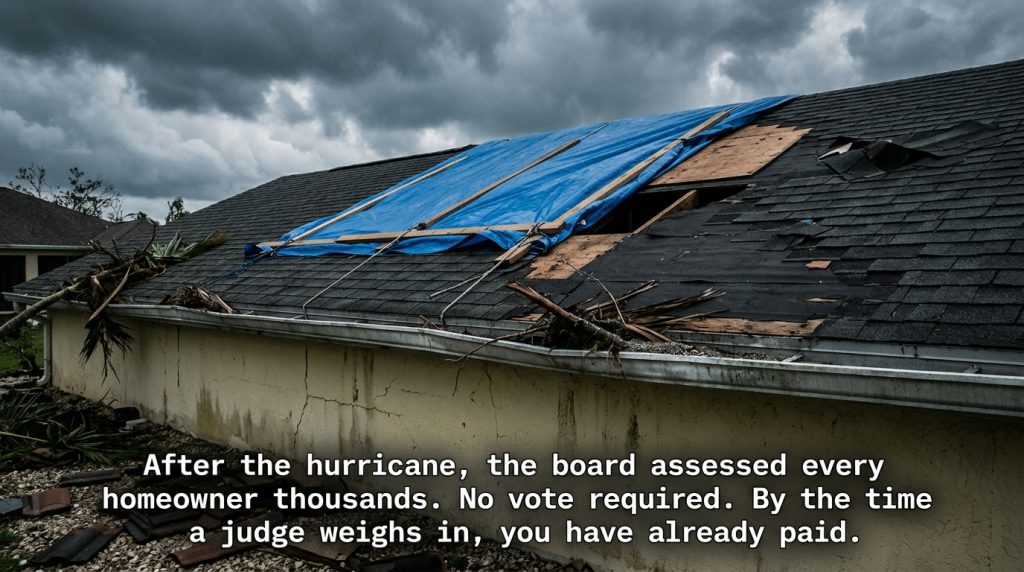
Some governing documents require a homeowner vote for large amounts, but emergency repairs often bypass that requirement entirely.
After a hurricane, the board can assess every homeowner thousands of dollars with no prior vote, as long as they document why delaying the repair would threaten health or safety. Courts scrutinize these, but by the time a judge rules, you have already paid.
13. Require You to Carry Specific Insurance Coverage
Many Florida HOA declarations require homeowners to maintain certain insurance policies, including wind mitigation coverage and minimum liability amounts.
If your policy lapses or does not meet the association’s requirements, some governing documents give the board the authority to purchase coverage on your behalf and add the premium to your assessment bill.
And that is still within the realm of money. The next one goes further than most people believe is possible.
14. Take You to Court, Stick You with Their Legal Bill, and Yes, You Can Go to Jail
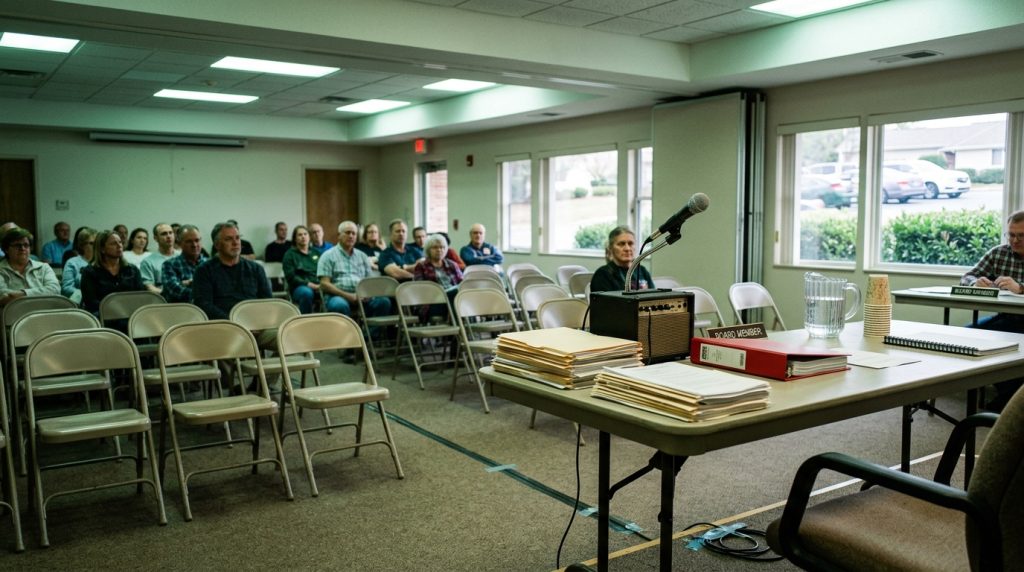
Section 720.305 is blunt. The prevailing party in HOA litigation is entitled to recover reasonable attorney fees and costs.
If your HOA sues you for a covenant violation and wins, you pay their lawyers on top of your own.
This is not theoretical. In the Creek View community near Tampa, a woman named Irena Green was jailed for seven days over violations that included dry grass, a dented garage door, and a dirty mailbox.
Seven days behind bars over a mailbox.
Other neighbors in the same community received citations for toy wagons left outside and sod that was not green enough. When the court costs, fines, and attorney fees stacked up, multiple homeowners in that neighborhood faced foreclosure.
15. Enter Your Property for Maintenance or Inspection
If your governing documents include a maintenance or inspection easement, the association or its contractors can enter your property to perform specific tasks.
Think tree trimming that overhangs a common walkway, drainage easement maintenance, or exterior pest treatment.
The CC&Rs define the scope, and some declarations require notice while others do not specify a notification period at all.
16. Force You to Fix a Violation or Fix It for You and Bill You
Some Florida HOA declarations include self-help provisions. That means if you fail to correct a violation after proper notice, the association can hire someone to do the work on your property and send you the invoice.
The Fourth District Court of Appeals confirmed self-help is a valid remedy, even alongside the option to seek a court injunction.
YOU’LL ALSO LOVE25 ‘Common Sense’ Home Rules Everyone Followed in the 80s That Would Get You Laughed At Today
Your dead sod could become someone else’s sod installation on your credit.
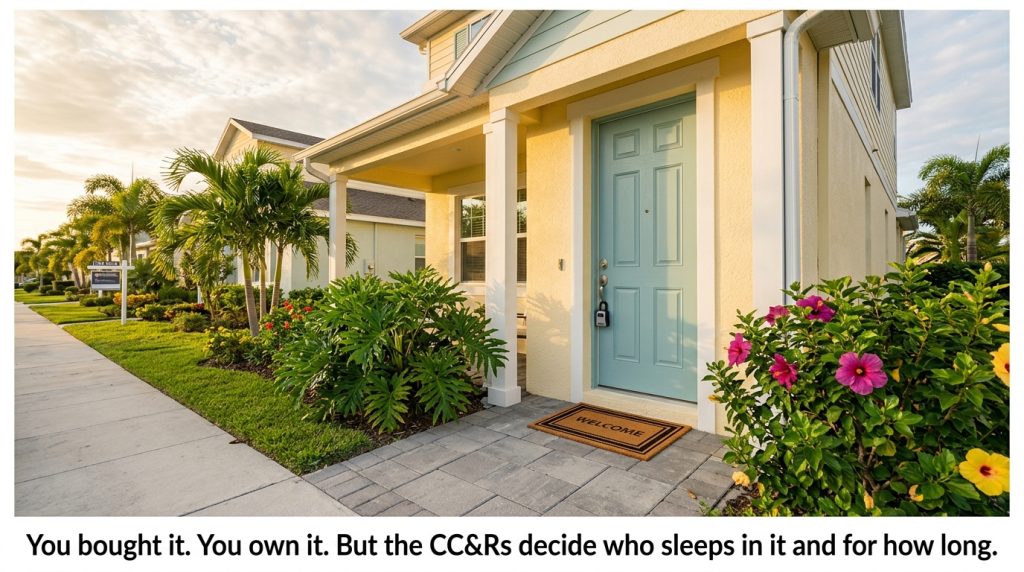
17. Restrict How You Rent Out Your Own Property
Fixing it for you and billing you is one thing. Controlling who you let live there is another.
Your HOA’s governing documents can restrict or even prohibit short-term rentals. If the declaration was amended to include rental restrictions, the association can enforce minimum lease terms, require tenant screening, cap the number of rentals per year, or ban vacation rentals entirely.
You bought the house, you own the house, but the CC&Rs decide who sleeps in it.
18. Suspend Your Amenity Access Without a Board Vote
Here is a detail most homeowners miss.
Under Section 720.305, the initial decision to fine you or suspend your amenity access comes from the board. But the final approval goes to a three-member committee.
Would you like to save this?
Those committee members cannot be officers, directors, or employees of the association. If the committee approves, the suspension stands. If they do not, it dies.
The catch? The board appoints the committee.
19. Require You to Get a Certified Roof Inspection
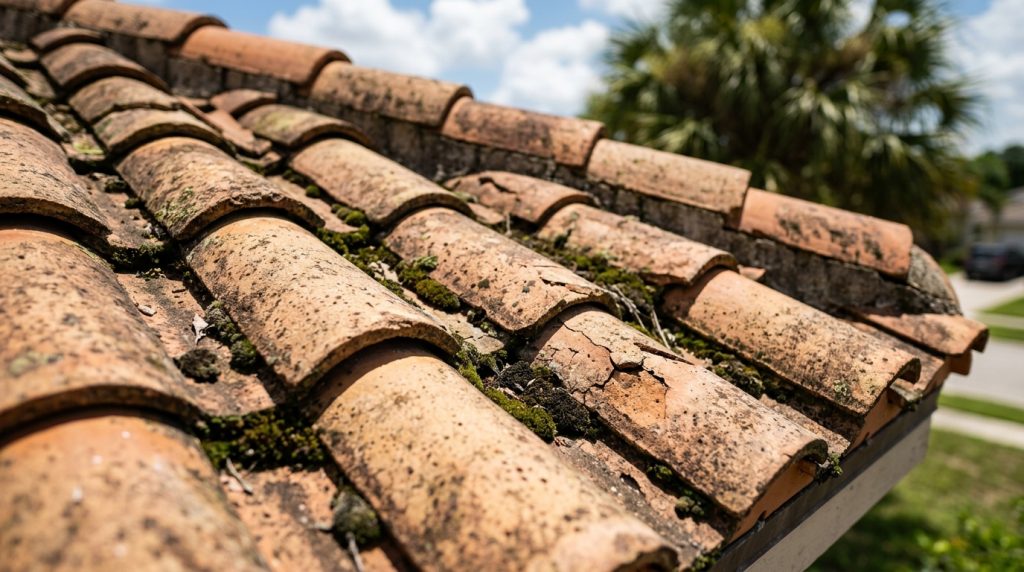
Florida’s strict building codes, combined with HOA authority, mean your association can require roof inspections on a schedule dictated by the governing documents.
With insurers increasingly refusing coverage on roofs older than 15 years, your HOA may require you to prove your roof has at least five years of remaining life.
Fail the inspection and you could face mandatory replacement at your own cost.
In Florida, that averages $8,000 to $15,000 for a standard single-family home.
That roof requirement sounds expensive. But the next three are about something money cannot fix.
20. Deny You the Right to Install a Fence Without Their Approval
Even on your own lot, within your own property lines, the Architectural Review Committee can reject a fence application based on material, height, style, color, or placement.
Florida courts have upheld these restrictions as long as they are documented in the CC&Rs and applied consistently across the community.
Your neighbor got a white vinyl fence approved last year? That does not mean you will.
21. Mandate Specific Mailbox, Driveway, and Exterior Standards
Your CC&Rs can specify exactly what your mailbox looks like, what material your driveway must be, how your exterior lighting is positioned, and what condition your garage door must maintain.
Remember Irena Green from item 14? Her violations included a dented garage door and a dirty mailbox.
That is how granular these standards get, and each notice starts the fine clock ticking at $100 a day.
22. Block Your Access to Association Financial Records (Illegally, but They Try)
Florida Statute 720.303 is clear. You have the right to inspect the association’s official records, including financial statements, contracts, budgets, and insurance policies.
But some boards drag their feet, claim records are unavailable, or charge excessive copying fees.
A recent Florida appellate court reinforced that members can designate an authorized representative to inspect records on their behalf. The law is on your side here. Getting the board to comply is a different conversation.
23. Raise Your Quarterly Assessments With Only Board Approval
Unless your governing documents require a membership vote for assessment increases, the board can raise your quarterly dues as part of the annual budget process.
They must provide notice of the budget meeting and the proposed budget. But the actual vote to adopt it? That is the board’s call.
Your assessments can go from $400 a quarter to $600 a quarter and the only input you get is showing up to the meeting.
24. Place Age Restrictions on Who Lives in Your Home
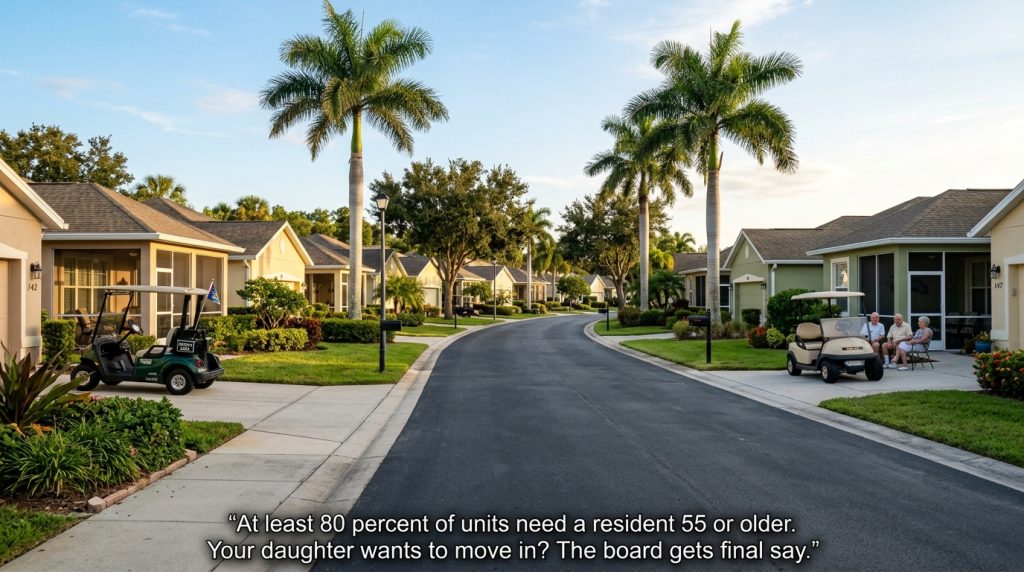
If your community was established as a 55-and-older community under the federal Housing for Older Persons Act and your CC&Rs reflect that designation, the association can legally restrict occupancy based on age.
At least 80 percent of occupied units must have at least one person 55 or older.
Your 48-year-old daughter wants to move in after her divorce? The board can say no.
25. Force You to Use Their Approved Contractors
Some governing documents require homeowners to select from an approved list of contractors for exterior work.
If your brother-in-law is a licensed roofer with 20 years of experience, that does not matter if he is not on the list.
The association can reject the work, require you to redo it, and fine you for the unauthorized modification in the meantime.
26. Report Your Violations to Future Buyers Through the Estoppel Certificate
When you sell, the estoppel certificate does not just list what you owe. It can include open violations, pending fines, and unresolved compliance issues.
A buyer’s title company sees that, and suddenly your negotiating position just collapsed.
Some associations are thorough to the point of listing violations you did not even know existed until the sale process surfaced them.
27. Dissolve Your Right to a Quiet Dispute
Before you can sue your HOA in Florida, you are required to go through pre-suit mediation for most disputes.
That sounds reasonable until you realize the mediation costs are split, the mediator has no binding authority, and if mediation fails, you are now out the mediation fees on top of whatever you will spend in court.
The association’s legal costs come from your assessments, meaning you are partially funding the other side of your own dispute.
One Number Every Florida HOA Homeowner Should Know
Forty-five.
That is the number of days you have after receiving a demand letter before the HOA can record a lien against your property under Florida Statute 720.3085.
It is also the number of days of notice required before they can file a foreclosure lawsuit.
That 45-day window is your best and sometimes only chance to negotiate a payment plan, dispute the charges, or get an attorney involved before the legal machinery starts grinding.
Most homeowners do not know this number exists until the window has already closed.
Which of these surprised you the most? Drop a comment and tell us which one hit closest to home.