
Your mother had rules about that couch. Specific rules. Rules that involved plastic, rules that involved consequences, and rules that made zero sense to anyone born after 1995.

Would you like to save this?
Every family on your street followed the same unwritten handbook, and nobody questioned it because questioning it meant you were the problem.
78% of adults over 50 can still recite their childhood household rules word for word, according to a 2024 Pew Research survey. That number drops to 12% for anyone under 30.
Not because younger generations are careless. Because the rules themselves stopped making sense somewhere between dial-up internet and DoorDash.
The one at #14 still makes us laugh the hardest.
1. Plastic-Covered Couches Were Non-Negotiable
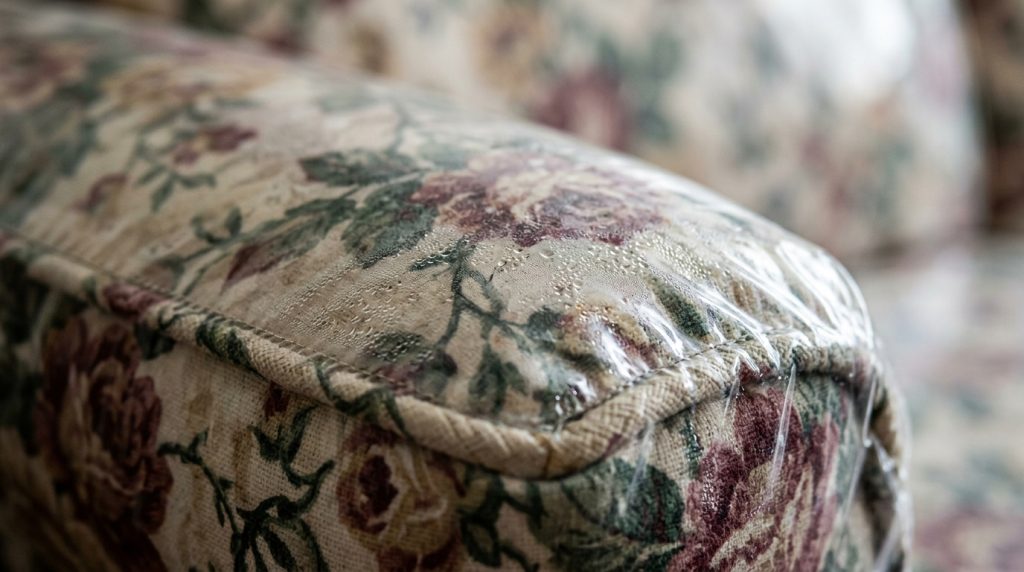
Your grandmother spent $1,200 on that sofa in 1983.
Adjusted for inflation, that is roughly $3,800 today. So she wrapped it in clear vinyl like a museum exhibit, and you sat on it anyway. In August. In shorts.
Your thighs stuck to the plastic and made a sound when you stood up that could be heard from the kitchen. Nobody flinched. That was just what couches sounded like.
Today, a 25-year-old would film the peeling noise for TikTok and get two million views. Your grandmother would not have found that funny.
2. Nobody Sat in That Living Room
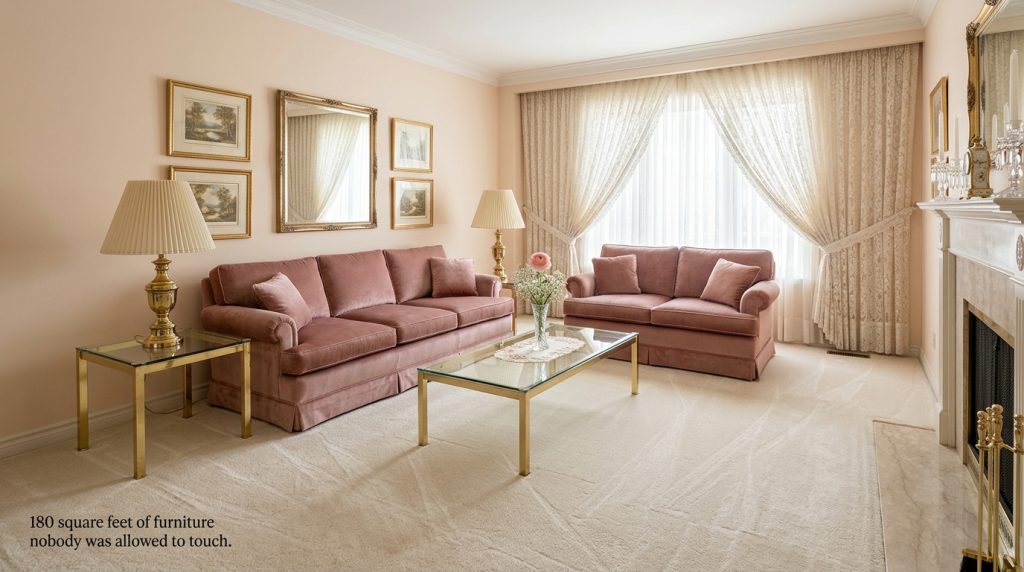
Every house had a room with the nicest furniture, the best lamp, and absolutely zero signs of human life.
The formal living room existed for company. Except company never came often enough to justify 180 square feet of wasted floor space. Your family crammed into a den the size of a walk-in closet while an entire room sat empty, waiting for the pastor or a distant relative who might stop by at Christmas.
Realtors in 2026 call that room a “flex space.” Your mom called it off-limits.
3. Garden Hose Water Was Perfectly Fine

You were outside for nine hours. You were thirsty. The hose was right there.
YOU’LL ALSO LOVE25 Things About Your Home That Visitors Notice in the First 10 Seconds (But Never Tell You)
Nobody brought you a filtered water bottle with a built-in straw. You turned the spigot, let the first burst of hot water run into the grass, and then you drank straight from the nozzle.
The water tasted like warm rubber and copper, and you went back to playing.
A 2023 study from Purdue University found that most standard garden hoses leach lead, BPA, and phthalates into standing water. You drank it every summer for a decade. You were fine. Probably.
4. Locked Doors Meant Something Was Wrong
If your front door was locked during the day, the neighbors assumed someone had died, or you were hiding from the law.
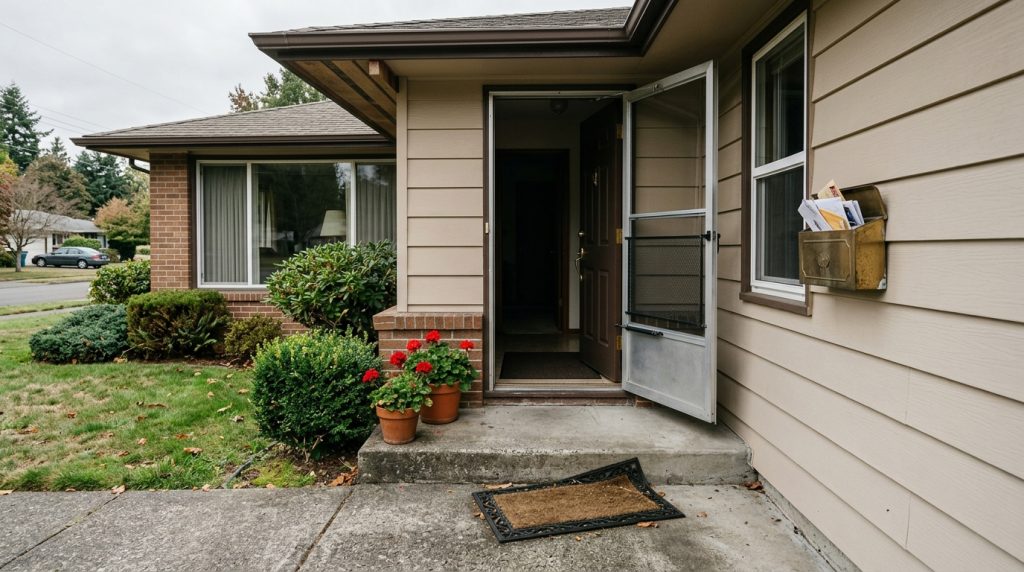
Doors stayed open. Screen doors stayed unlatched. The mailman walked right into the kitchen if nobody answered his knock.
55% of residential burglaries in the 1980s involved no forced entry, according to a 2022 FBI report. That statistic makes sense now. It did not occur to anyone then.
But the rules about who could come inside were nothing compared to the rules about when kids had to come home.
5. Streetlights Were Your Only Curfew
No parent tracked your location on a phone. No parent needed to.
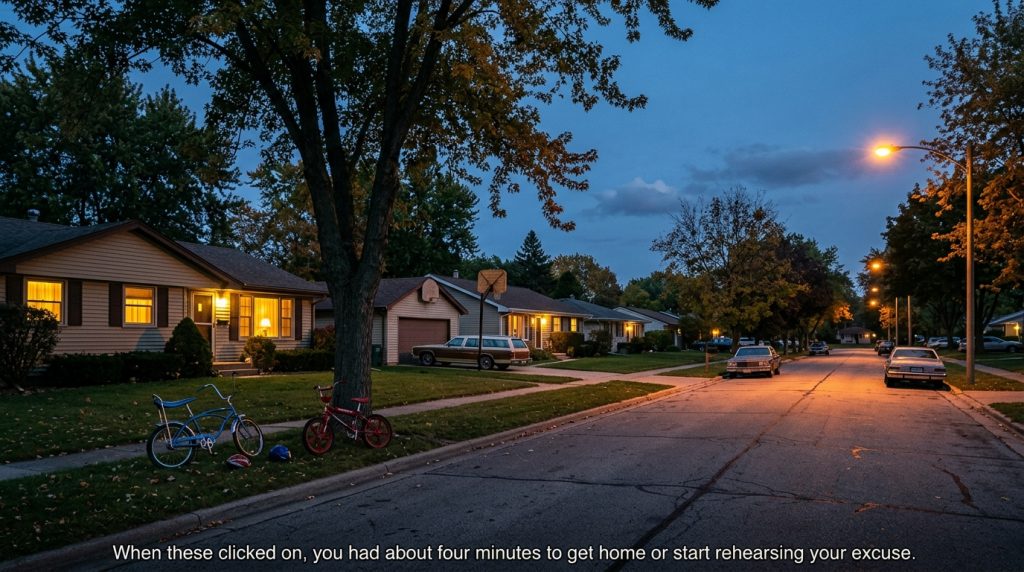
The streetlights came on, and you went home. That was the entire system. It worked because every parent on the block enforced the same rule, and because the penalty for being late was not a conversation about feelings.
It was standing in the kitchen while your mother looked at you without saying anything.
That silence was worse than any grounding. GPS would have ruined the whole arrangement.
6. Aluminum Foil Fixed Every TV Problem
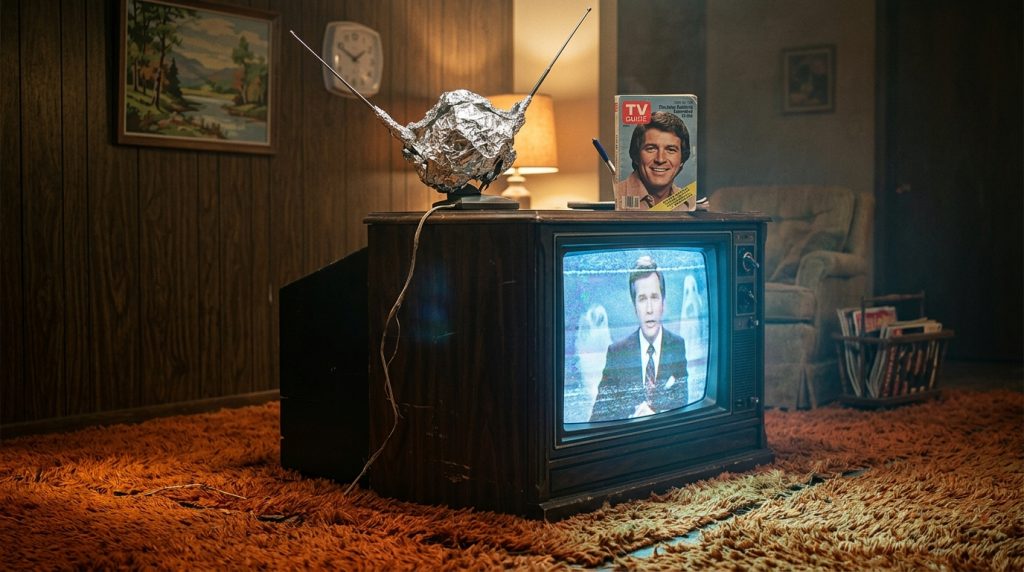
When the picture went fuzzy, nobody called a technician. Your dad wrapped aluminum foil around the rabbit ears, adjusted the angle by two degrees, and told everyone to freeze.
You stood in the doorway holding one antenna arm while your sister held the other. Moving even slightly meant losing the signal.
Your family held that pose for the entire fourth quarter of a football game.
A new antenna cost about $15. Your dad chose teamwork.
7. Ignoring a Ringing Phone Was Unthinkable
The phone rang, and somebody answered it. Every single time.
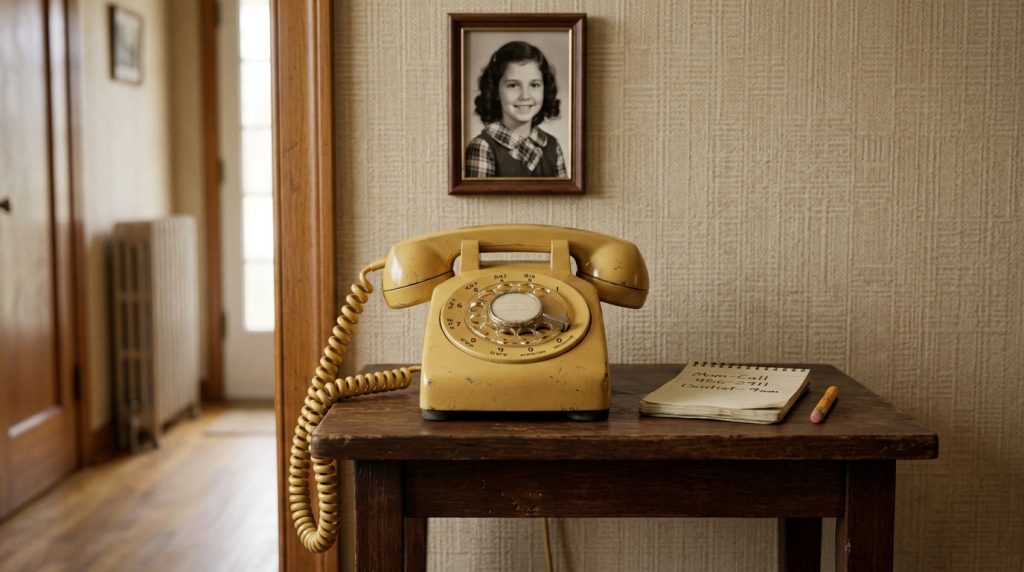
It did not matter if you were eating, sleeping, or in the bathtub. A ringing phone was an emergency until proven otherwise. The idea that you could look at a screen, see who was calling, and decide they were not worth your time would have been considered genuinely rude.
There was no voicemail until the mid-80s. If you missed a call, it was gone.
YOU’LL ALSO LOVE30 Things in the 1970s Living Room That Would Confuse Anyone Under 30
That kind of pressure shaped how an entire generation handles communication, and most of them still answer on the second ring.
8. Phone Cords Stretched Across Entire Hallways
Privacy in 1985 meant pulling the kitchen phone as far as the curly cord would reach, stepping around the corner into the hallway, and whispering while your family pretended not to listen.
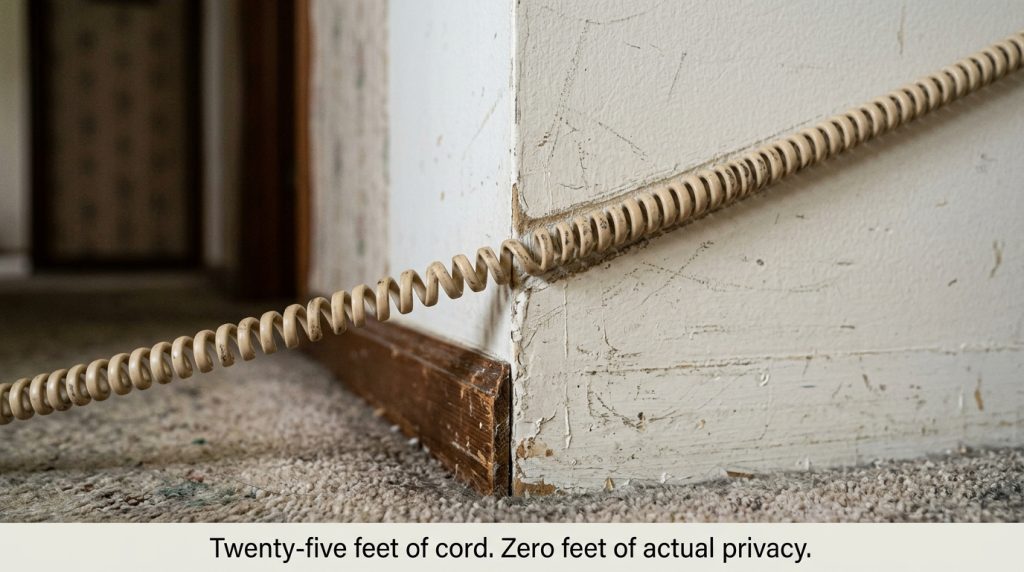
Those cords stretched to 25 feet in some houses. You could hear the coils groaning.
Teenagers wore permanent dents into the drywall where the cord rubbed the corner every night at 8 PM. Your parents knew exactly who you were talking to because there was only one phone line, and they could pick up the extension in the bedroom whenever they wanted.
That cord was your entire social network. But the rules about the phone were almost relaxed compared to the rules about the carpet.
9. Shoes on Carpet Was a Declaration of War
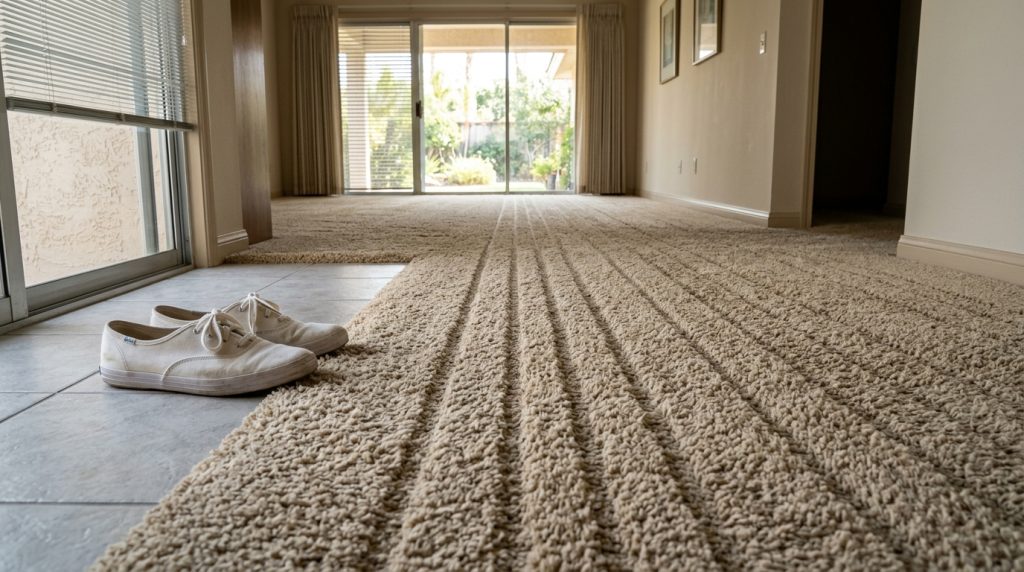
Your mother did not ask you to remove your shoes. She gave you a look.
The carpet was vacuumed in lines, and those lines were proof that the house was clean. Walking across them in shoes was the same as telling her you did not respect her work.
Shag carpet, which covered roughly 60% of American living rooms in the early 1980s, showed every single footprint. You could track where someone walked like a forensic investigator.
Socks only. Always.
10. Good Towels Existed Purely for Display
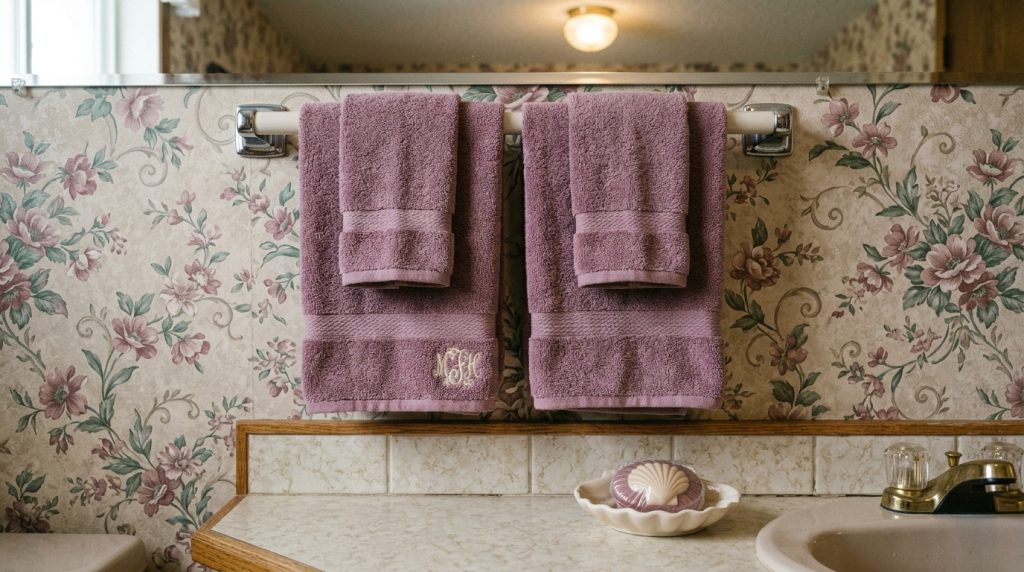
The bathroom had two sets of towels. The ones you dried your hands on, which were thin and fraying. And the good towels, which were thick, monogrammed, and draped over the towel bar like artwork.
You were not allowed to touch the good towels. Guests were not allowed to touch the good towels either, but nobody told them that, so your mother spent every dinner party checking the bathroom between courses.
A $40 set of towels from JCPenney hung untouched for years. Decades, sometimes.
11. Defrosting Day Shut Down Your Kitchen
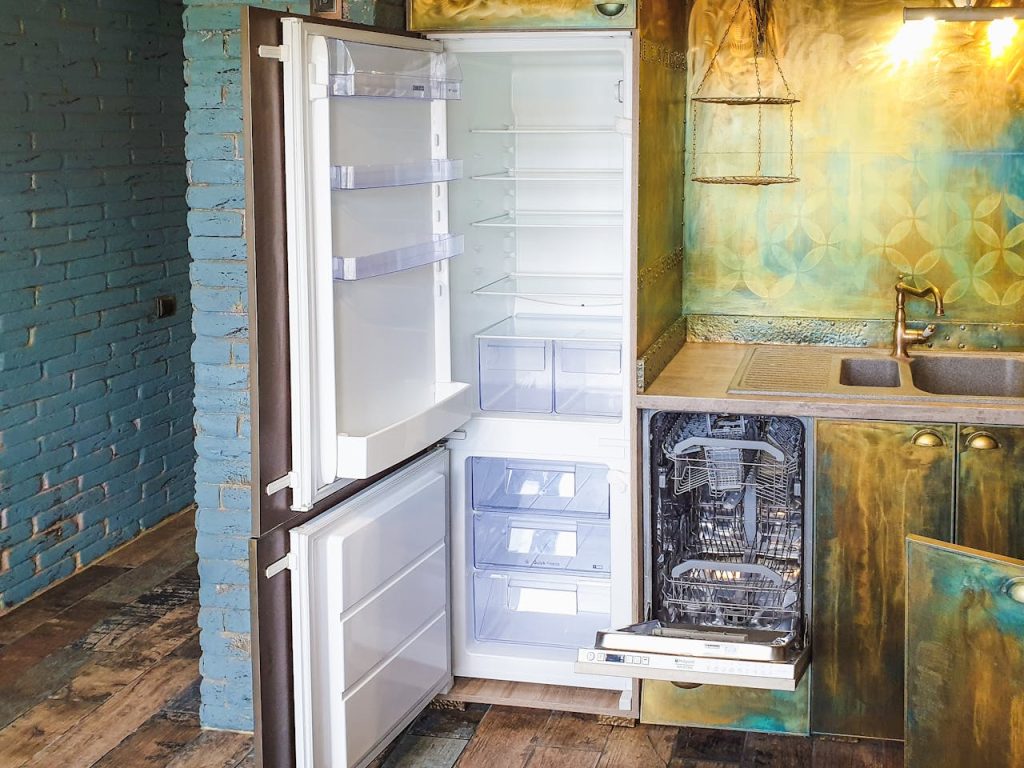
Before frost-free freezers became standard in the early 1990s, ice built up inside your freezer like a glacier.
Every few months, your mother unplugged the refrigerator, spread towels across the kitchen floor, and spent four hours chipping ice with a butter knife. The whole family ate sandwiches that night because the stove was blocked by coolers full of frozen food.
It was an all-day operation that modern appliances eliminated entirely. Your kids think defrosting means pressing a button on the microwave.
You thought the freezer situation was intense. Wait until you remember what your mother kept next to the stove.
12. Bacon Grease Had a Permanent Address by Your Stove
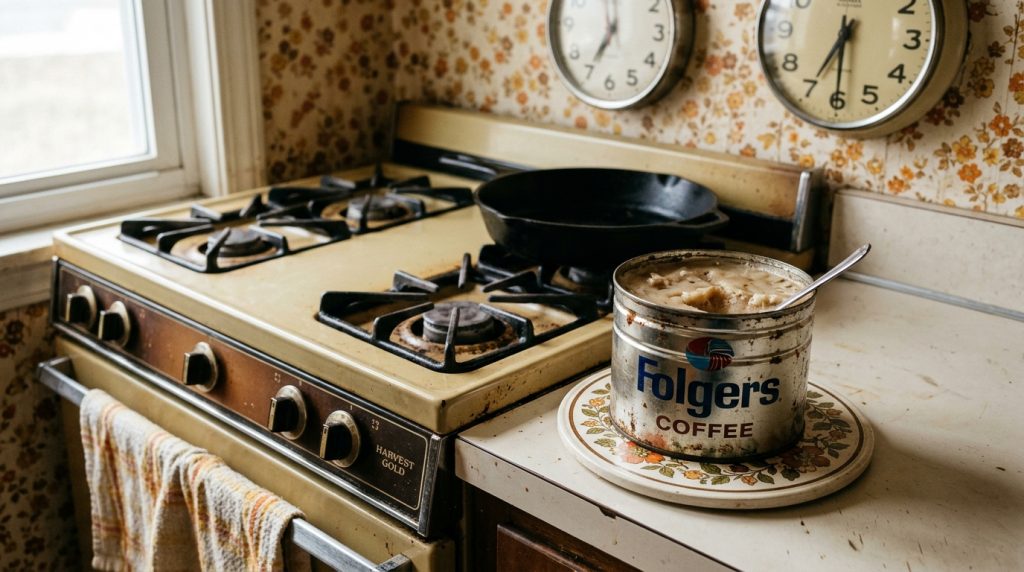
Every kitchen had a coffee can sitting on the counter or the back of the stove, half-filled with solidified bacon grease.
You cooked with it. You seasoned cast iron with it. You fried eggs in it the next morning. Nobody refrigerated it. Nobody questioned it.
YOU’LL ALSO LOVE11 Neighborhood Rules Every Kid Knew in the ’80s That No Parent Would Allow Today
A cardiologist in 2026 would need a moment.
But your grandmother used that can for 30 years and lived to 91, so the argument writes itself.
13. Shag Carpet Required Its Own Rake
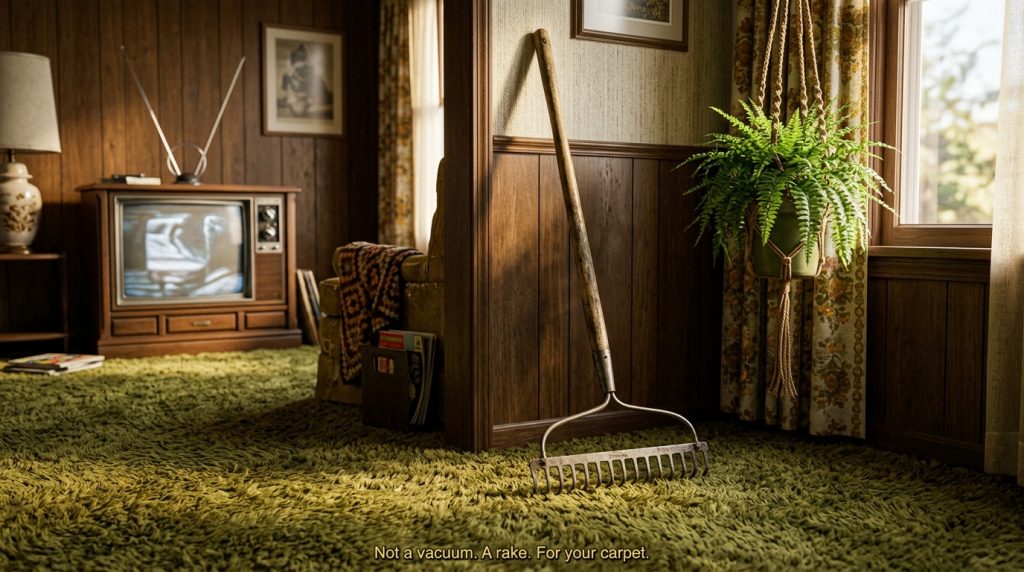
Not a vacuum. A rake.
Shag carpet fibers ran 2 to 3 inches long and trapped everything from popcorn kernels to lost earrings. You could not just vacuum it flat. You had to rake the fibers upright like you were grooming a very large, very patient animal.
The carpet rake sat in the corner of the living room, and using it was a weekend chore assigned to whoever was in trouble.
Today, most flooring installers will refuse to put shag carpet in a home. In 1983, it was the upgrade.
14. Wood Paneling Was the Fancy Upgrade
This is the one.
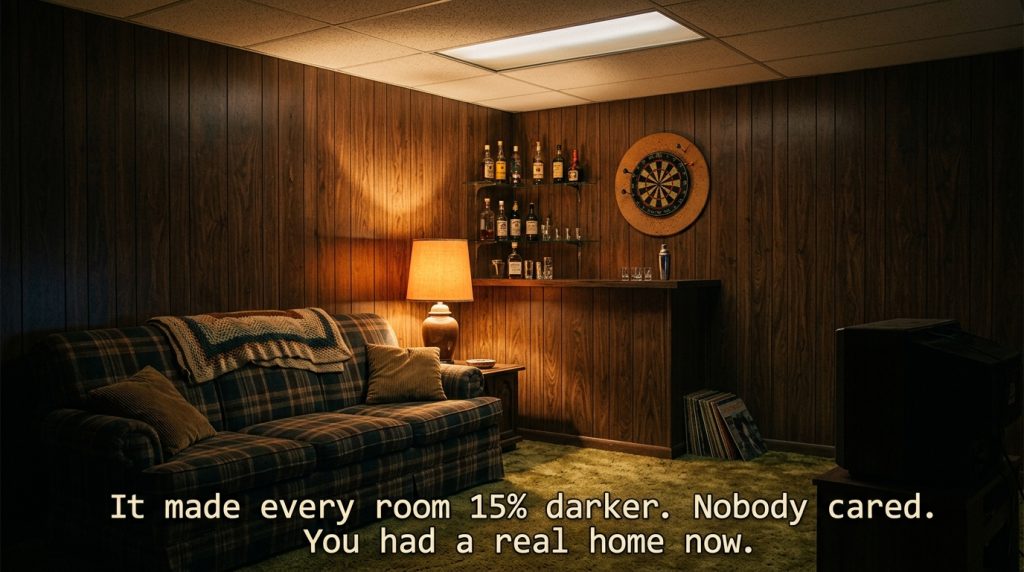
The rule everyone followed without ever questioning it: if you could afford to panel a room, you did.
Dark walnut-grain sheets from the lumber yard cost about $12 per panel in the early 80s. A whole basement could be “finished” for under $200. Your dad installed it himself on a Saturday, and your mom acted like he had just remodeled the kitchen.
It made every room 15% darker. Nobody cared. Wood paneling meant you had a real home, not a rental.
Today, the first thing any new homeowner does is rip it off the walls.
But if the paneling seems hard to explain, wait until you try telling your kids about the station wagon.
15. Backward-Facing Station Wagon Seats Were Normal
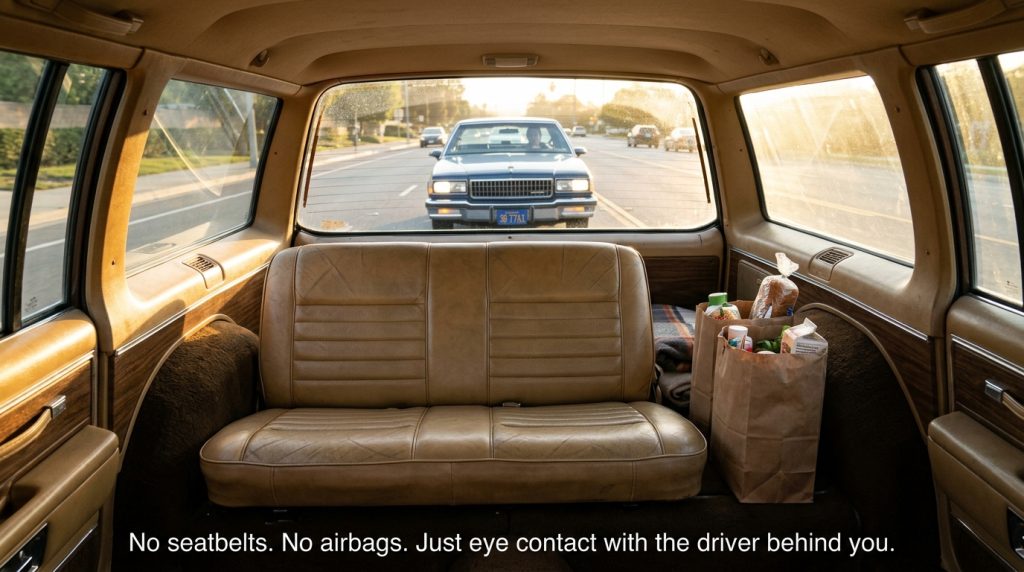
The back of the station wagon had a fold-up seat that faced the rear window. Kids sat there. With no seatbelts. Staring directly at the car behind you while your parents drove 55 miles per hour on the highway.
If the groceries were heavy, the groceries sat in the back seat and you sat in the cargo area.
Between 1977 and 1989, station wagons were the third most popular vehicle category in America. Every single one of them had that death seat.
You survived it. Your children’s car seats cost $350 and face four directions.
16. “Company’s Coming” Triggered a Household Emergency
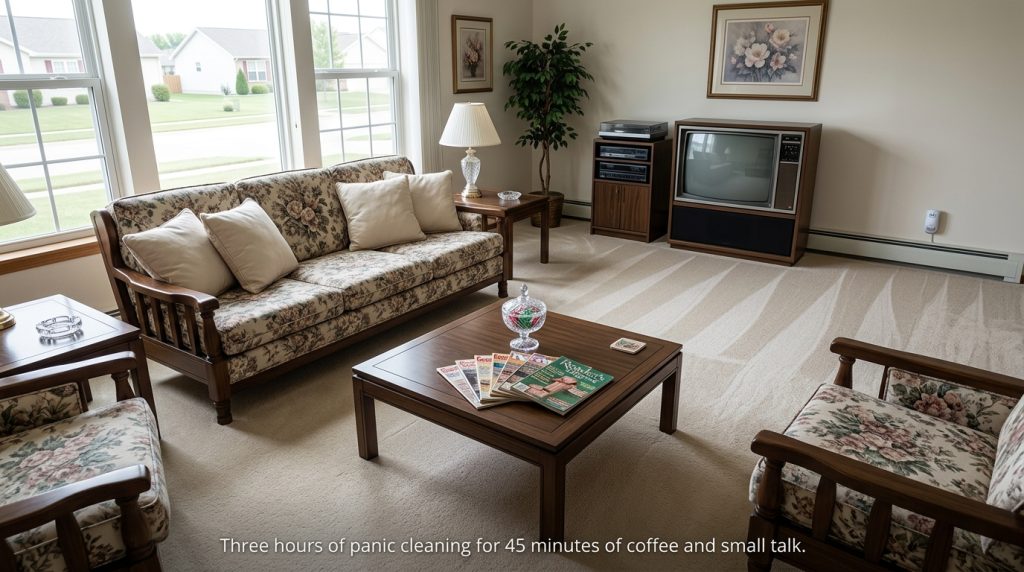
When your mother announced that someone was visiting, the house went into a cleaning mode that bordered on military operation.
Magazines were squared. Baseboards were wiped. The good soap appeared in the bathroom. Rooms that had been closed for months were suddenly aired out, dusted, and staged like a model home.
The entire process took three to five hours and involved every person in the household.
The company stayed for 45 minutes, drank coffee, and left. Your mother inspected the living room for evidence the moment they pulled out of the driveway.
17. Reusing Aluminum Foil Was Just Common Sense
You washed it. You dried it. You folded it and put it back in the drawer.
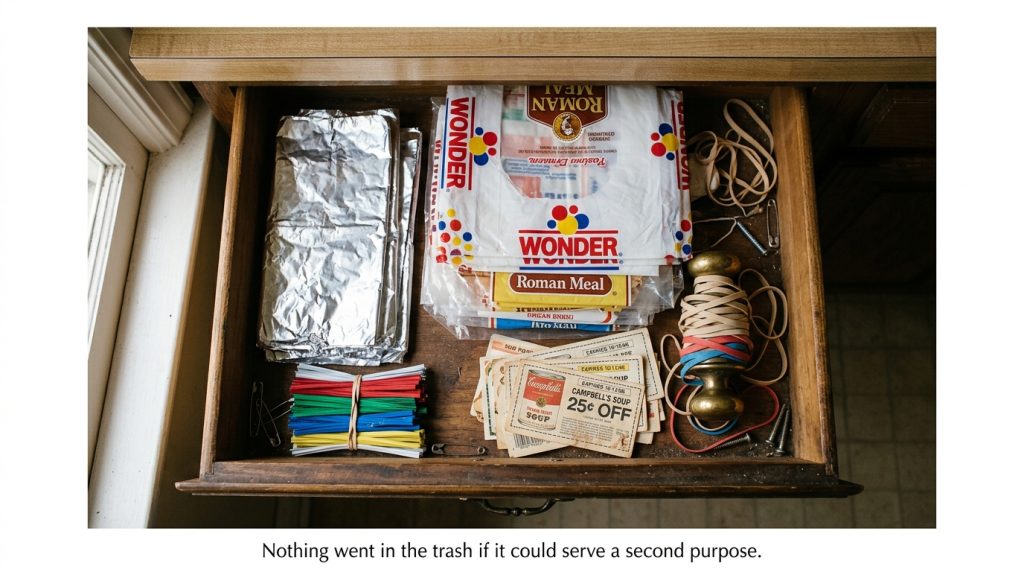
Same with bread bags, butter containers, and Cool Whip tubs. Nothing went in the trash if it could serve a second purpose. Your mother had a cabinet dedicated to washed margarine containers that functioned as Tupperware.
The average 1980s household reused food packaging at three times the current rate, according to a 2023 recycling study.
Would you like to save this?
We were environmentalists before the word was popular. We just called it being practical.
18. Eating Happened in Two Rooms Only
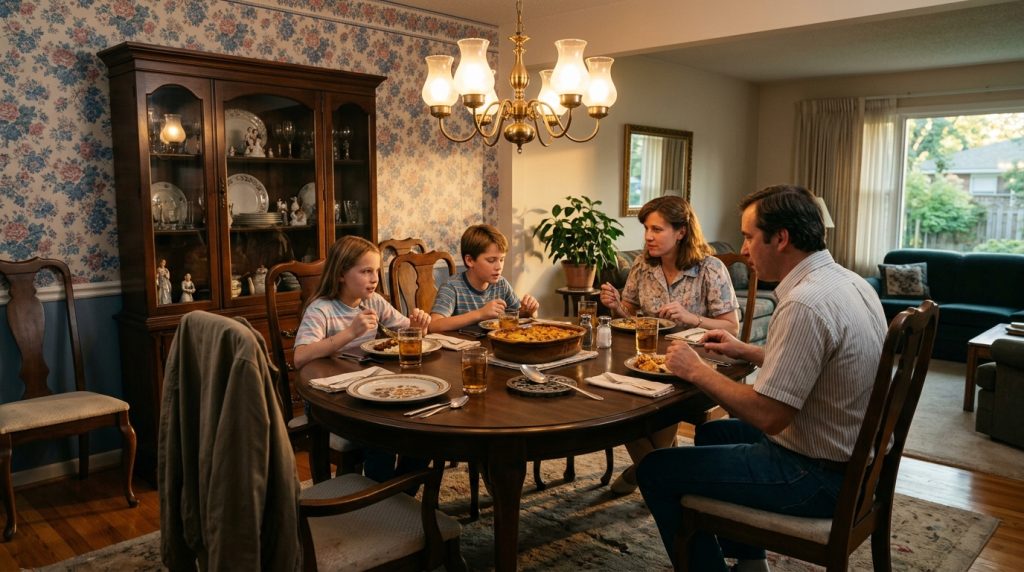
The kitchen and the dining room. Those were your options.
Eating in the living room was reserved for football games and sick days. Eating in your bedroom was a sign that something had gone wrong in the household. Eating in the car was not even a concept.
Drive-throughs existed, but you parked and ate in the parking lot like a civilized person.
Today, 20% of American meals are eaten in the car, according to a 2022 study from the Hartman Group. Your mother would have had thoughts about that.
19. Avocado Green Appliances Meant You’d Made It
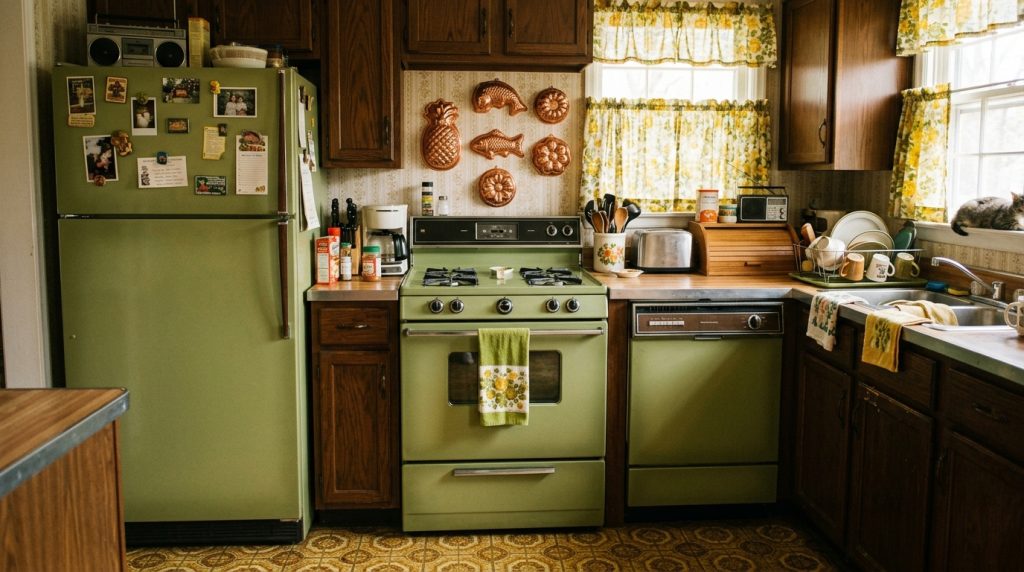
Harvest gold and avocado green were not accidents. They were aspirational.
Replacing your white refrigerator with an avocado green model meant you were keeping up. It meant you read the magazines.
Between 1970 and 1985, manufacturers sold over 40 million appliances in these two colors alone. Your kitchen matched from the stove to the dishwasher to the hand towels.
When stainless steel took over in the late 90s, those green refrigerators became yard sale fixtures overnight. But for 15 years, they were the finish line.
You could live with the avocado fridge. The encyclopedia commitment was harder to explain.
20. Encyclopedias Were Your Entire Research Department
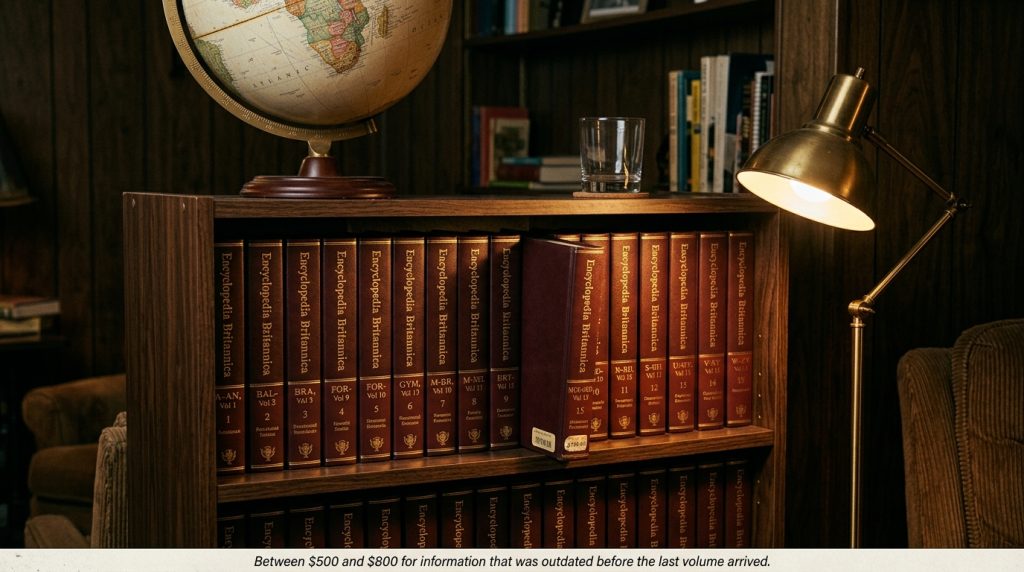
A full set of World Book encyclopedias cost between $500 and $800 in the early 1980s.
That is roughly $1,600 to $2,500 in today’s money. They sat on a shelf in the den, organized alphabetically, and you used them maybe four times a year for school reports.
The salesman came to your door. He wore a suit. Your parents signed a payment plan. The information was outdated by the time the final volume was delivered, but nobody knew that because there was nothing to compare it to.
Today, the same information loads in 0.3 seconds on a phone that costs less than Volume M through Z.
21. Waiting for Your TV to Warm Up Was Part of Life
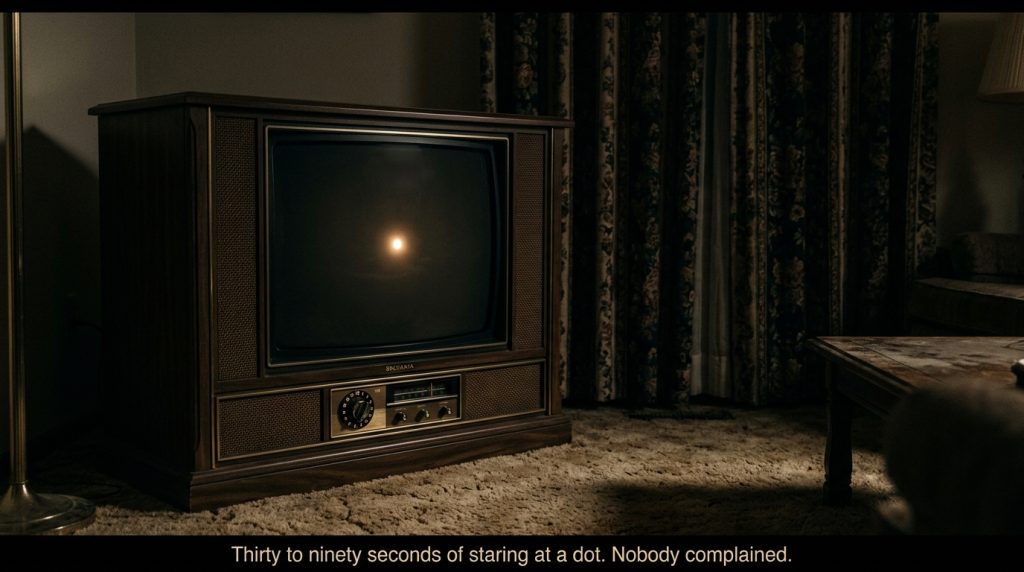
You turned the knob. The screen stayed dark.
Then a small dot of light appeared in the center and slowly expanded outward until the picture filled the screen. That process took 30 to 90 seconds depending on the age of the set.
Nobody complained. You just stood there and waited for the television to decide it was ready.
Tube TVs required the cathode-ray tube to heat up before displaying an image. Your modern TV turns on in under a second and you still think it is slow.
22. Touching Dad’s Thermostat Was a Household Crime
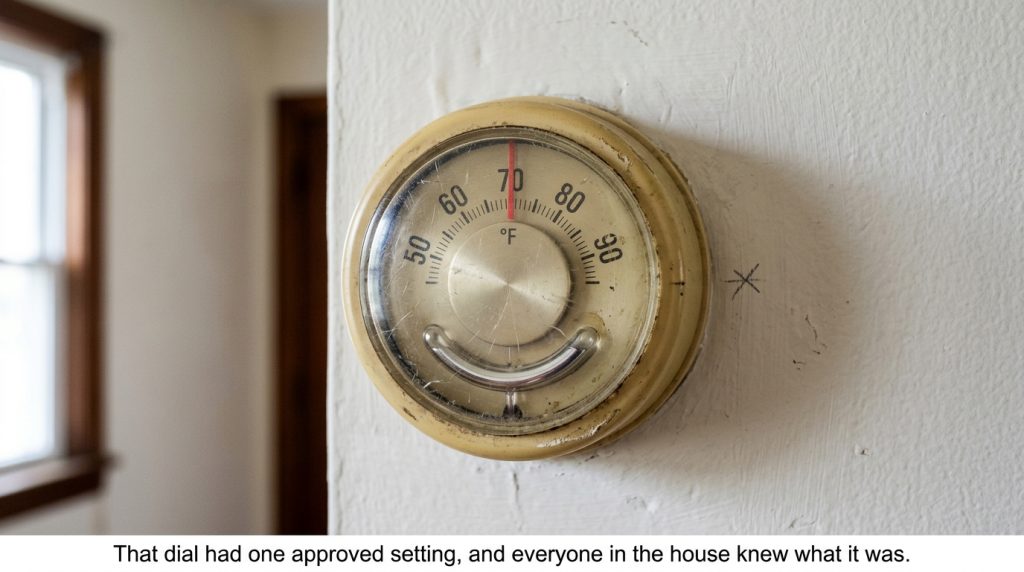
The thermostat was set to 68 degrees in winter. It did not move.
If you were cold, you put on a sweater. If the sweater was not enough, you put on a second sweater.
The average heating bill for a 1,500-square-foot home in 1985 was about $900 per year, and your father defended every penny of that number with the intensity of a man guarding state secrets.
Today, smart thermostats adjust automatically. In the 80s, the smart thermostat was your dad, and his algorithm was simple: the answer was always no.
23. Saturday Lawn Mowing Was Not Optional
Rain was the only acceptable excuse.

Every Saturday morning between April and October, the lawn got mowed. Not because it needed it every week. Because the neighbors could see it. An unmowed lawn in 1985 was a public statement that something was wrong inside the house.
The mower started on the third pull if you were lucky. It ran on a mix of gasoline, oil, and stubbornness. Your dad mowed in straight lines and then stood in the driveway evaluating the pattern.
The whole ritual took 90 minutes. He looked forward to it all week.
24. Screen Doors and Box Fans Were Central Air
Central air conditioning existed in 1985, but only 55% of American homes had it.
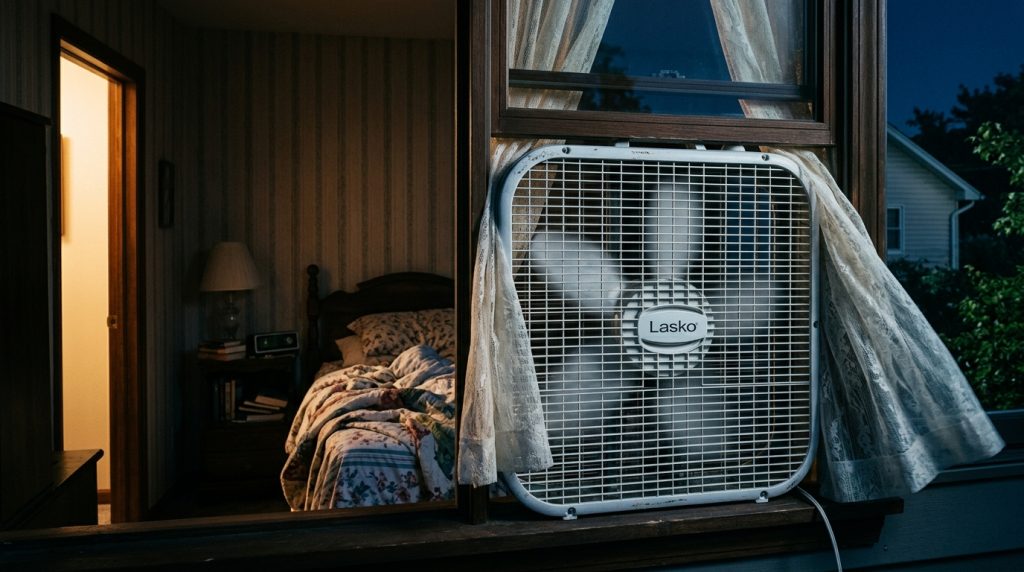
The rest of you lived with screen doors, box fans in the windows, and a complicated system of opening certain windows at night and closing them in the morning to trap the cool air.
You slept on top of the sheets. You flipped the pillow to the cool side four times a night.
The box fan made a humming noise that you still find comforting 40 years later, and you cannot explain why to anyone who grew up with central air.
Not one of these rules came with an instruction manual. You learned them by watching, by getting corrected, and by the look on your mother’s face when you got it wrong.
25. Saving Every Container Was Responsible Homeownership
Cool Whip tubs. Margarine containers. Mason jars. Coffee cans. Shoe boxes.
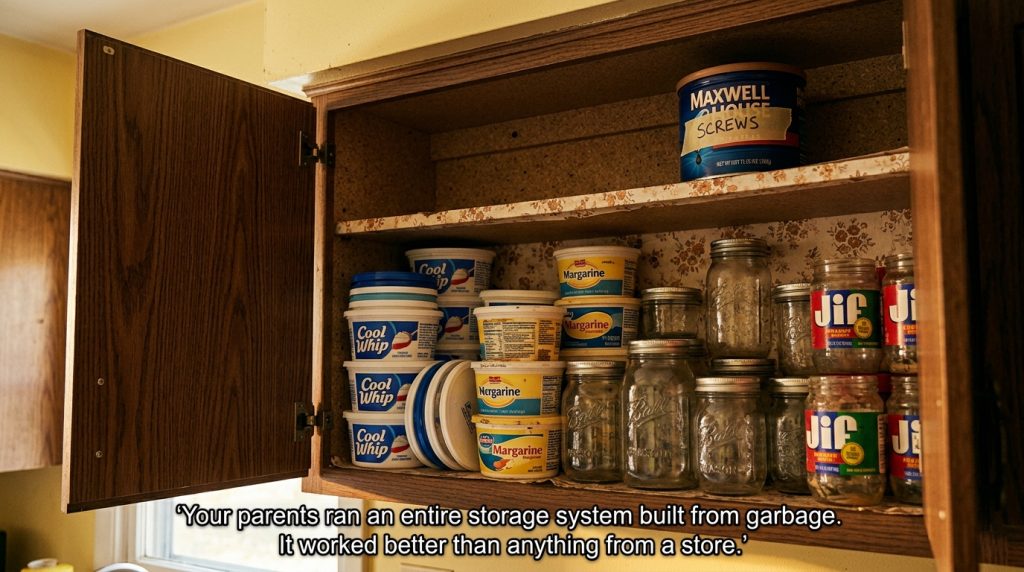
Your parents kept all of it. There was a cabinet, a shelf, or a section of the garage dedicated to containers that might be useful someday. And someday did come.
Leftover soup went into the Cool Whip tub. Nails and screws lived in the coffee can. Tax documents filed into shoe boxes.
Your parents ran an entire household storage system built from garbage that worked better than any $40 organizational bin from a big-box store. They were not hoarders. They were ahead of the curve.
Why These Rules Actually Worked
Here is what nobody says when they laugh at the plastic couch covers and the bacon grease can. Those rules were a system.
They kept homes running on a single income, kept neighborhoods functional without apps or cameras, and kept kids alive without helmets, GPS, or helicopter parenting.
The average household income in 1985 was $23,618. The average home cost $89,330.
Families stretched every dollar, and the rules existed to protect what that money bought. The plastic was not about taste. It was about making a $1,200 sofa last 20 years because there was no budget for a second one.
We were not crazy. The math just changed.
Which rule did YOUR family follow the hardest? Tell us in the comments.