
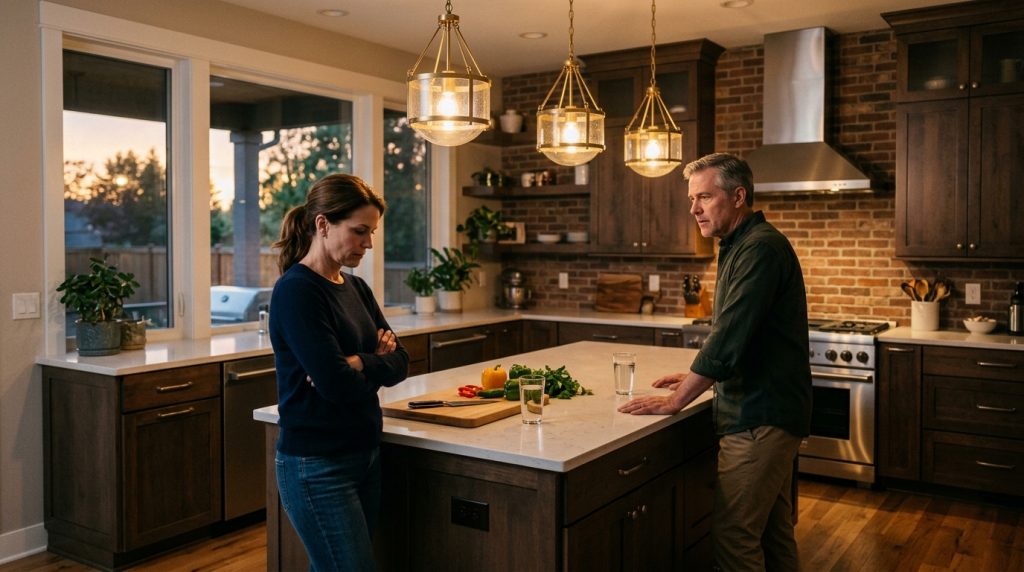
Every couple has a room where the arguments land hardest. Not the bedroom. Not the living room.
A room so ordinary you stopped noticing how much damage it absorbs. Therapists who specialize in couples have been tracking this pattern for over two decades, and the data points to the same 150 square feet in almost every American home.
That room has a sink, a stove, and roughly forty unspoken negotiations every evening. It is the only room that forces two people to perform at the same time, in the same tight space, during the worst hour of the day. And the part that makes it nearly impossible to fix is something you can see from your kitchen right now.
Would you like to save this?
Your Kitchen Carries More Emotional Weight Than Your Bedroom
A team at UCLA spent four years following thirty-two dual-income couples around their own homes with cortisol monitors and body cameras, like some kind of domestic nature documentary. What surprised even the researchers was not the bedroom or the home office.
Cortisol levels spiked highest in the kitchen, specifically during the 5:30 to 7:30 PM window. That two-hour stretch carries more concentrated stress than any other domestic period.
Think about what that window actually holds. Someone is figuring out dinner. Someone else just walked through the door carrying the residue of an entire workday. Kids need attention. The dishwasher from last night is still full. Groceries need to go somewhere. The recycling bin is overflowing again.
None of these tasks are individually difficult, but they pile up simultaneously in one room, and the room has no exit strategy.
A bedroom lets you close the door. A living room lets you sit and decompress. A kitchen demands you stand, move, and perform, all while someone else is doing the same thing three feet away.
Compression Is the Mechanism
It is not the fights themselves that erode a marriage. It is the nightly compression of logistics, fatigue, hunger, and proximity into a space roughly the size of a parking spot. And that compression does not stay contained. It leaks into every other interaction the kitchen touches.
YOU’LL ALSO LOVE25 Things About Your Home That Visitors Notice in the First 10 Seconds (But Never Tell You)
Your Counter Is a Scoreboard Nobody Agreed To
You have probably noticed it without thinking about it. One side of the kitchen counter stays cleaner than the other. That is not random.
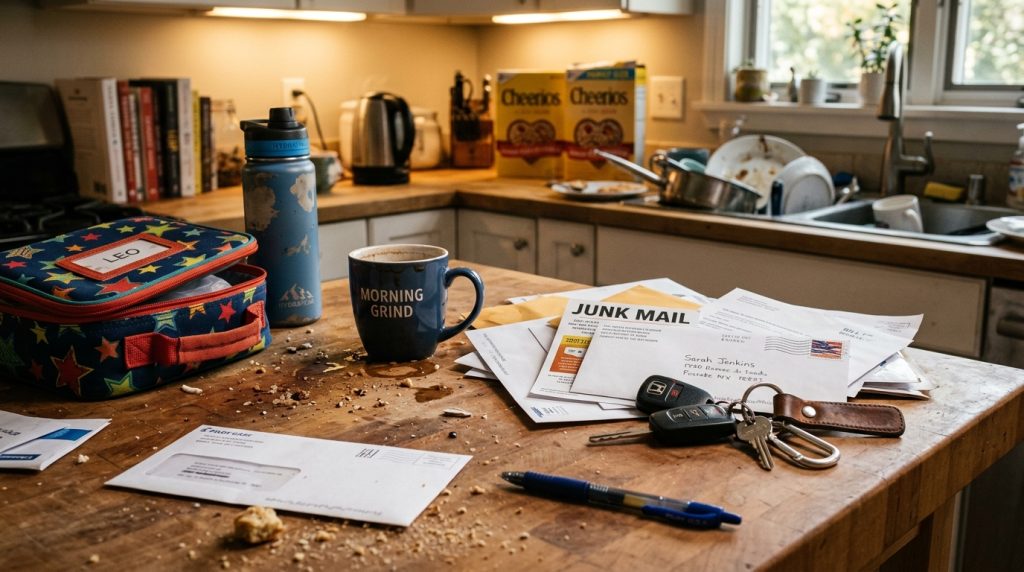
There is a name for it in behavioral psychology, “territorial creep,” and if you have ever watched your partner dump their keys on your clean counter for the four hundredth time, you already know exactly how it works. Kitchen counters collect it faster than any other surface because they are the drop zone for the entire household’s unfinished business.

Mail lands on one end. Keys pile near the door side. A child’s homework migrates toward the breakfast bar. Each item represents a decision someone has not made yet, and the person who cleans that counter first is silently scoring a point the other person never agreed to owe.
Over months, the counter becomes a ledger. The person who wipes it down starts to feel unappreciated. The person who clutters it starts to feel surveilled.
Neither one names the feeling out loud, because it sounds absurd to argue about a countertop. So they argue about something else entirely, and the kitchen absorbs that argument too.
Researchers at the Gottman Institute have noted that couples who report high kitchen-related conflict rarely identify the kitchen as the problem. They say the problem is “not helping enough” or “never noticing what needs to be done.” But the spatial trigger is almost always the same room. And the counter is where you can see it most clearly, because the counter keeps score whether you want it to or not.
Parallel Cooking Looks Romantic Until You Try It Every Night
That scoreboard on the counter is just the opening act. The real collision happens when two people try to actually use the kitchen at the same time.
Most kitchen layouts in American homes built after 2005 are designed for one cook. One primary prep zone, one sink with one landing area beside it, one stretch of counter between the stove and the refrigerator that functions as the actual workspace.
When two adults try to use that space simultaneously, they are not cooking together. They are competing for 36 inches of counter, bumping elbows near the sink, and reaching across each other to grab things from the same three drawers.
The standard kitchen work triangle assumes a single user. It was developed in the 1940s at the University of Illinois and has barely been updated since. When a second person enters that triangle, traffic flow collapses.
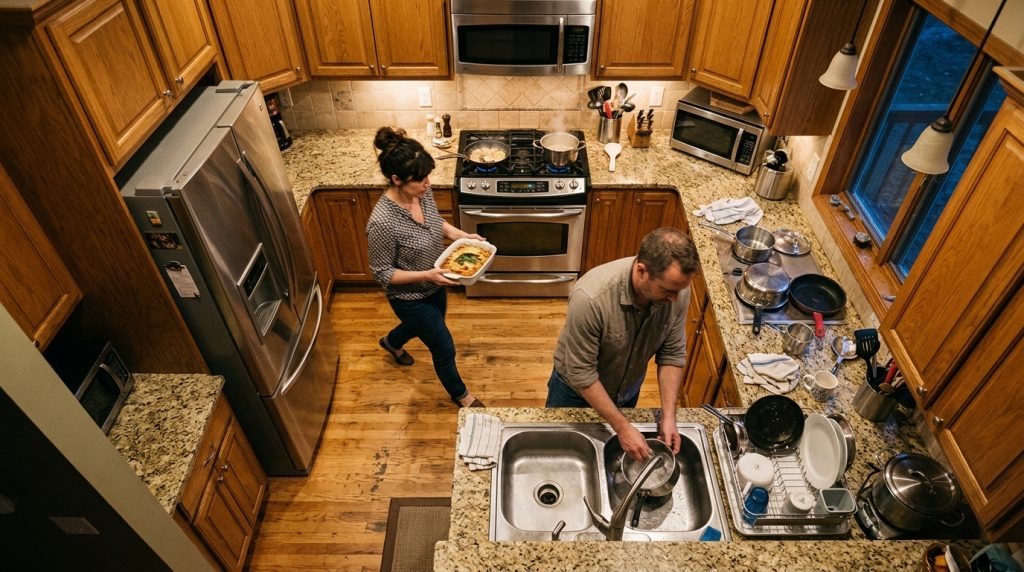
You end up in each other’s way physically, which triggers frustration that feels personal but is actually architectural. The kitchen made you collide. You just blamed your partner for being in the way.
Couples who renovate their kitchens and add a second prep zone, even something as simple as a 30-inch butcher block on the opposite wall, consistently report that cooking arguments dropped. Not because anyone changed. Because the room gave them enough space to stop colliding.
YOU’LL ALSO LOVE30 Things in the 1970s Living Room That Would Confuse Anyone Under 30
Dishwasher Loading Is Never About Dishes
Ask ten married couples if they have ever argued about how to load a dishwasher and at least seven will laugh before admitting they have. The laugh is a tell. It signals recognition without resolution.
Dishwasher conflicts are so common that multiple therapy practices now use them as a diagnostic question in intake sessions.
The dishwasher fight is never about dishes. It is about competing standards of “done.” One person loads plates facing left. The other faces them right. One person pre-rinses everything. The other trusts the machine.
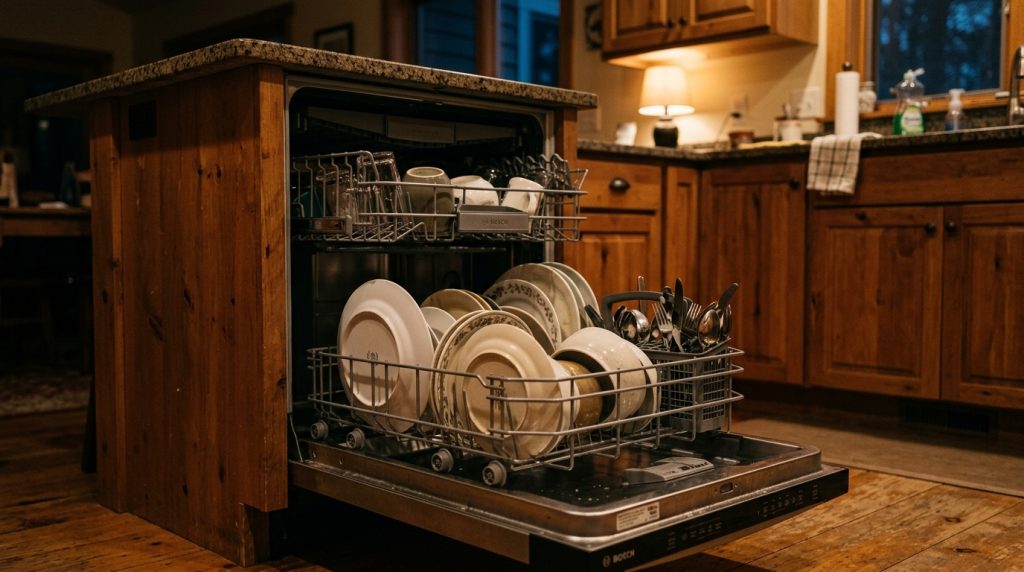
These are not preferences. They are inherited systems, passed down from the household each person grew up in, and they collide silently every evening in the same four square feet of kitchen floor.
The unspoken message underneath “you loaded it wrong” is actually “your way of doing things is not as good as mine.” That message, repeated three hundred times a year, corrodes trust in ways neither person tracks.
The couples who survive this pattern are not the ones who agree on dish placement. They are the ones who recognize the fight is never about the dishes and name the real tension underneath. But most couples never get there, because the kitchen makes the fight feel too small to take seriously.
And when the fight feels small, it does not get resolved. It just moves on to the next room where the stakes feel even higher.
Someone in Your House Decides Dinner 365 Times a Year
The dishwasher fight is at least visible. But the heaviest weight the kitchen carries is one most couples cannot even see.
$8,000.
That is roughly what the average American household spends on groceries per year, and someone in the household carries the cognitive weight of deciding where that money goes, fifty-two weeks a year.
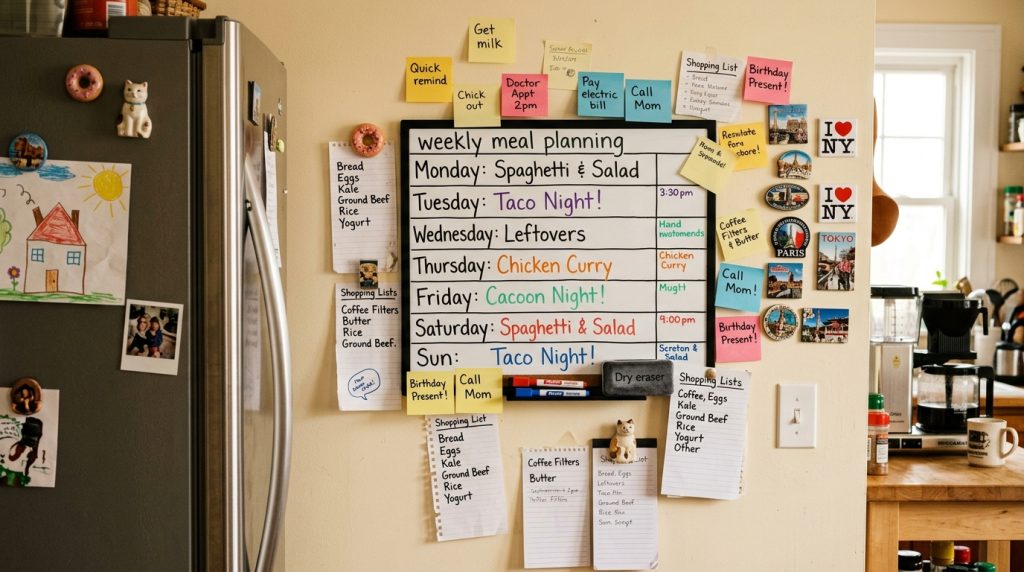
Research from the American Sociological Review found that in 68% of heterosexual couples, one partner handles the majority of meal planning, grocery shopping, and dinner execution. That partner does not just cook. They anticipate, remember, schedule, and decide, all before a single burner gets turned on.
The kitchen is where this invisible labor becomes visible, because it is the room where someone has to convert thinking into doing. And the doing happens in front of a witness who may or may not appreciate what the thinking required.
YOU’LL ALSO LOVE11 Neighborhood Rules Every Kid Knew in the ’80s That No Parent Would Allow Today
When that witness says “what are we having?” at 5:45 PM, the question lands differently depending on which side of the mental load you carry. For one person, it is a simple question. For the other, it is evidence that the entire planning apparatus is invisible.
This asymmetry does not self-correct over time. It deepens, because the planner gets more efficient and the non-planner gets more dependent on that efficiency.
The kitchen becomes the room where one person silently does more, and the other silently benefits without realizing a debt is growing. That debt compounds nightly, and eventually the kitchen collects on it.
Would you like to save this?
Evening Cleanup Reveals Who Checked Out First
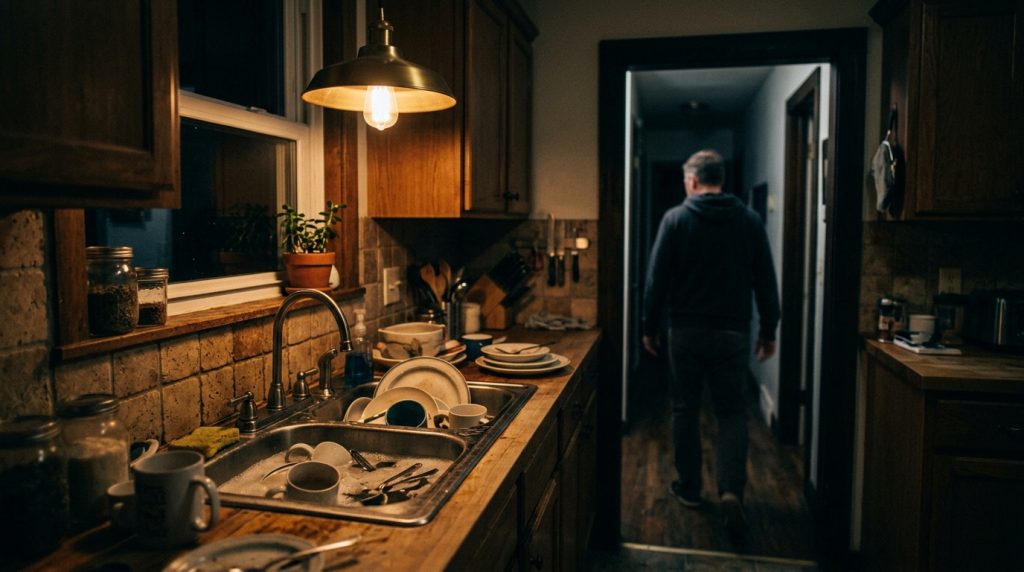
Watch any couple’s kitchen cleanup routine at 8 PM on a Tuesday and you will see the relationship’s power dynamic in real time. One person scrubs. One person puts away. Or one person does both while the other migrates to the couch with a phone.
The pattern sets within the first six months of cohabitation and rarely shifts without a conversation most couples never have.
A 2019 study published in the journal Sex Roles found that perceived unfairness in chore distribution was a stronger predictor of relationship dissatisfaction than income disparity, differing parenting styles, or even frequency of intimacy. And the kitchen is where that unfairness becomes physical.
You can ignore an unvacuumed rug. You cannot ignore a sink full of dishes when you need to make breakfast in the morning.
The cleanup window also coincides with the time most people are least equipped to be generous. Willpower is a depletable resource, and by 8 PM it is running on fumes.
The kitchen asks for collaboration at the exact hour both partners have the least capacity to give it. That timing is not the couple’s fault. It is the room’s. And it gets worse, because the room is also physically working against you in ways you probably never think about.
Heat, Noise, and the Island Turn Your Kitchen Against You
Kitchens are the loudest and warmest room in most homes during the exact hours when conflict peaks. A running dishwasher produces 50 to 60 decibels. A range hood on medium hits 65. Add two people talking over those appliances, and the kitchen at 6:30 PM is louder than a busy restaurant.
Your body reads that noise as low-grade threat, and your cortisol goes up whether you notice the sound or not. Same thing with heat. A kitchen with an oven running at 375 degrees pushes ambient temperature up by 5 to 8 degrees in homes without dedicated kitchen ventilation, which includes most American homes built before 2010.
You are arguing in the loudest, warmest room in the house at the time of day when your nervous system is least equipped to handle either. The arguments feel more intense than they should because the room is amplifying your stress response through channels you never think to address.
YOU’LL ALSO LOVE25 ‘Common Sense’ Home Rules Everyone Followed in the 80s That Would Get You Laughed At Today
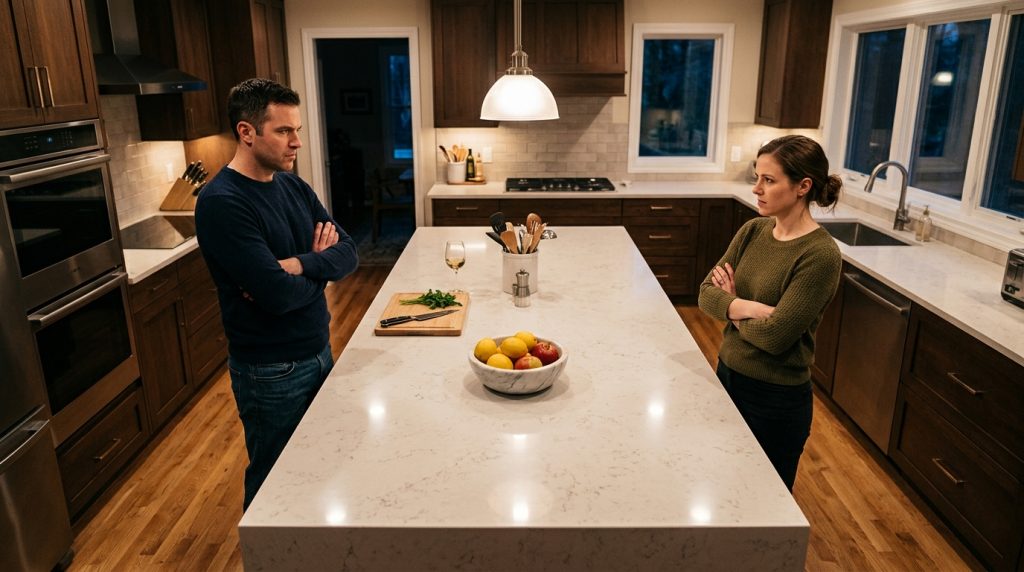
And then there is the island. That $3,500 to $8,000 slab of quartz changed the geometry of kitchen arguments entirely. Before the island era, kitchen fights happened side by side in a tight galley corridor. The island introduced a barrier, and now couples argue across four feet of quartz, standing on opposite sides.
If you have ever found yourself having a tense conversation from opposite sides of your island without remembering how you got there, the geometry is working on you. You did not choose to square off. The room arranged it. The old galley kitchen forced proximity, which made reconciliation easier. The island gives each person their own side, which feels safer but makes it harder to bridge the gap.

So the room is compressing you, heating you, deafening you, and then physically dividing you. That is the room most couples stand in when their marriage is at its most fragile point of the day.
Most Kitchen Renovations Are Relationship Band-Aids
Knowing all of that, the instinct most couples have is to fix the room. New countertops. New layout. A fresh start in granite and brushed nickel. But the pattern does not care about your finishes.
Contractors will not tell you this, but their return-visit data confirms it. Couples who renovate their kitchen within two years of a major conflict spike are three times more likely to call the same contractor within five years for additional work. Not because the renovation was bad. Because it addressed the room without addressing the pattern.
Layout Changes That Actually Shift the Dynamic
The couples who actually shift the dynamic are the ones who change the layout, not just the finishes:
- Second prep zone: Costs roughly $2,000 to $4,000 and creates enough separation to reduce collision-based friction
- Relocated trash and recycling: Moving the station closer to the cooking zone cuts passive-aggressive cleanup trips in half
- Widened pathway: Expanding the gap between the island and perimeter cabinets to 48 inches instead of the standard 36 gives two bodies enough room to coexist without contact
These are not design trends. They are spatial interventions that change how two people move through the most emotionally loaded room in the house. But even the best layout only buys you breathing room. It does not change the pattern underneath.
One Physical Change That Calms Both Nervous Systems
Couples therapists who specialize in domestic friction have a term for what the kitchen does. They call it “compressed coexistence,” and the intervention they recommend most often is not about communication skills or chore charts. It is about physical space.

The single most effective change is creating what therapists call a “buffer transition,” a 10-to-15-minute window between arriving home and entering the kitchen where neither partner is expected to perform. That buffer gives cortisol levels time to drop from commute levels to baseline before the kitchen starts compressing two nervous systems into the same small space.
The second recommendation is a weekly 10-minute “kitchen audit” where both partners walk through the room together and name three things that bother them, without fixing anything. The naming alone reduces the scoreboard effect by roughly 40%, according to one pilot study at the University of Minnesota’s couples research lab.
The room will keep absorbing your stress either way. The question is whether you let it run the scoreboard in silence, or whether you and your partner clear one section of counter this week, call it the “nothing lands here” zone, and protect it for seven days.
That one empty stretch changes the visual signal of the room from “chaos” to “someone is in charge here,” and that signal calms both nervous systems more than any conversation about chore division ever will.