
You close on your first house, unpack the kitchen boxes, arrange the furniture, and without realizing it, you make one decorating decision in the first eighteen months that quietly predicts whether you’ll list the place within five years.
A Seattle agent named Laurel Brenner spotted this pattern after walking hundreds of listings. She doesn’t check the kitchen first. She looks up, toward the windows, and within thirty seconds, she can usually guess how long the owner will stay.
Would you like to save this?
The tell isn’t clutter. It isn’t paint color, square footage, or whether the floors creak near the stairs.
It’s one specific decorating decision that most homeowners never realize they’re making, and the ones who skip it end up listing their homes a lot sooner than the ones who don’t.
The tell lives in section four of this piece. You’ll see it before Laurel names it.
What Realtors Notice In The First Thirty Seconds
Walk a hundred listings with a veteran agent and a pattern shows up that nobody warns you about in the buyer’s pamphlet.
The homes that sell fast, and the homes that came on the market because the owner outgrew the space emotionally before they outgrew it financially, are marked by one behavioral signature.
Laurel calls it “the provisional move-in,” a phrase she picked up from a staging designer in Denver named Karen Pauli.
The signature isn’t cosmetic. Cosmetic is easy to fake. The signature is behavioral, and it has nothing to do with how much money the owner spent.
A five-bedroom Craftsman with two million dollars in custom millwork can carry the signature. An 1,100 square foot starter in Ballard can be free of it.
Money doesn’t change it. The zip code doesn’t change it. What changes it is a specific choice the owner made, or declined to make, in the first eighteen months after closing.
YOU’LL ALSO LOVE25 Things About Your Home That Visitors Notice in the First 10 Seconds (But Never Tell You)
That window, the first eighteen months, is where your future listing agent sees your future listing.
Five Years Of MLS Data Tell One Story
The five-year mark is not arbitrary.
Redfin’s 2023 homeownership tenure report put the median US tenure in owner-occupied homes at 11.9 years, meaning roughly half of buyers stay longer.
But a smaller cohort, about 18 percent, turns over within five years, and on paper those homes look different.
They’re slightly younger buyers. More urban. More likely to have bought during a hot market. That’s what the economists see.
What realtors see is different. Inside that 18 percent cohort, the homes have a flatness you can almost touch before you set down your clipboard.
The windows look the same. The walls look the same. There’s a particular emptiness in the rooms that doesn’t come from bad taste. It comes from something else.

Take a guess. Before I name it.
If you had to point at one thing in a living room that separates “someone lives here and plans to stay” from “someone is passing through without admitting it,” what would you point at?
Most people guess clutter, or the couch, or whether the kitchen is updated. All wrong.
Clutter can mean anything. A beat-up couch can mean a family that loves this room too much to replace it. A dated kitchen can mean a buyer who likes the bones and plans to renovate next year.
The tell is none of those.
Why “Neutral For Resale” Starts Before You Decide To Sell
There’s a phrase that gets dropped casually on home improvement podcasts and real estate Instagram: “paint it neutral for resale.”
Most homeowners interpret that as advice for the week before a house hits the market. It isn’t.
A significant percentage of homeowners make that choice the day they move in, and they don’t realize they’re making it.
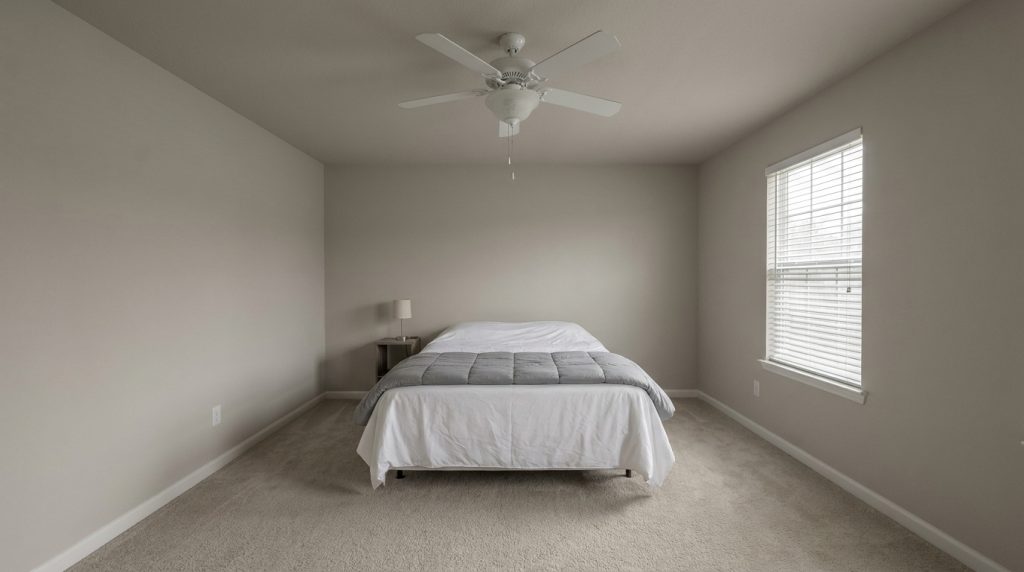
Karen Pauli, the Denver stager, watches this happen all the time at open houses. A young couple walks in, takes a slow lap, and the wife says, “I love how neutral everything is. It would be so easy to move right in.”
Karen calls that sentence “the warning.”
The couple isn’t describing taste. They’re describing commitment level.
YOU’LL ALSO LOVE30 Things in the 1970s Living Room That Would Confuse Anyone Under 30
What they’re really saying is, “I don’t have to put anything of myself into this home to feel comfortable here, which means I also don’t have to put anything of myself into this home to leave it.”
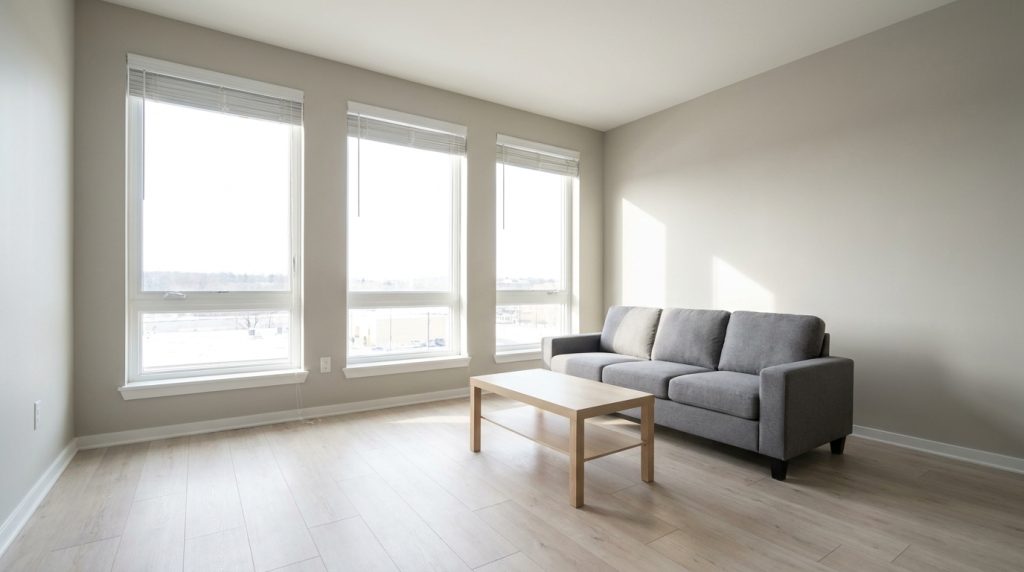
Neutral walls, beige carpet, empty mantels, and bare windows aren’t design choices. They’re an absence of design, and the absence is the tell.
Which brings us to the one decorating decision that’s hiding right above the absence.
One Choice Predicts Your Five Year Turnover
Curtains.
Specifically, whether you’ve installed real fabric curtains, on real rods, hung properly, in your main living rooms within the first eighteen months of owning the house.
That’s the tell.
Not blinds. Blinds are the opposite of the tell.
Blinds are what the builder put in, what the previous owner left behind, or what you bought at a big-box store on a rushed weekend to cover the windows until you “figure out what you want to do in here.”
Blinds, by themselves, signal nothing. They’re functional and neutral.
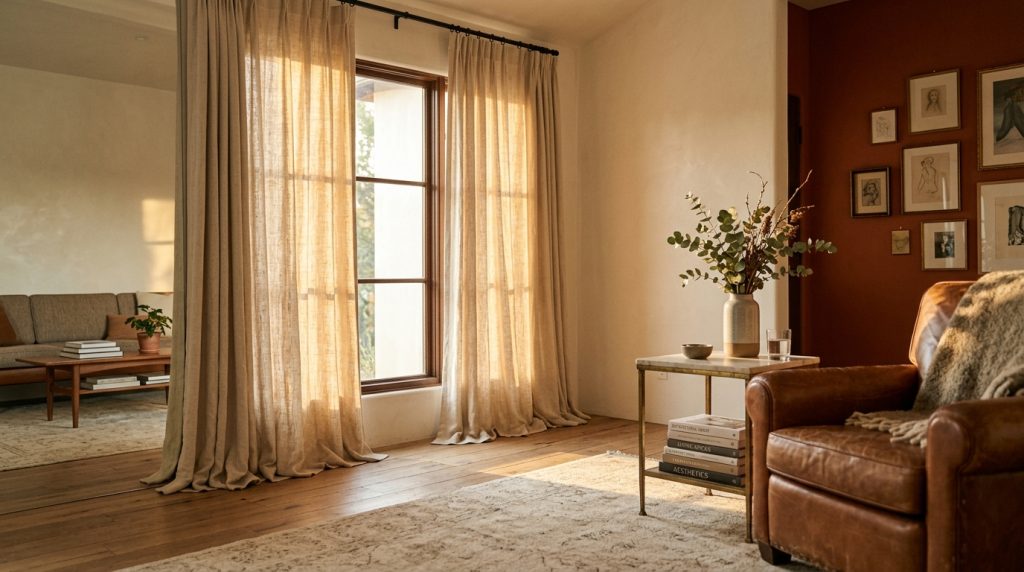
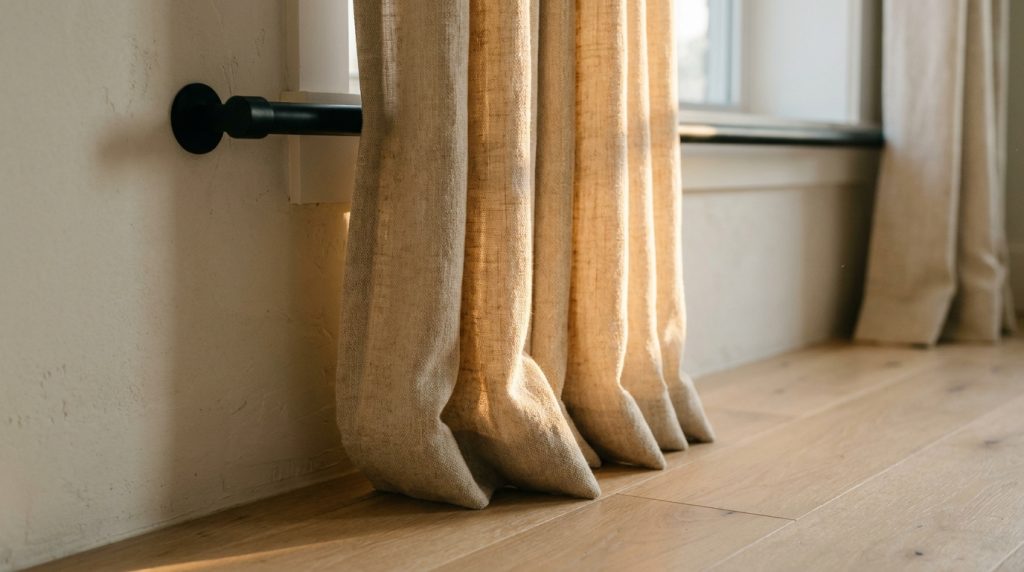
But real curtain rods, with fabric that pools slightly on the floor, that you picked out because they matched the room and not just the window, signal something powerful. They signal claim.
A 2022 real estate analysis from Zillow’s internal research group noted that homes photographed with “soft window treatments” sold faster and for closer to asking than homes with only blinds or bare windows.
But the deeper pattern, the one Laurel and Karen both see, runs the other way. Homes where owners hung fabric window treatments in the first eighteen months tend to stay owner-occupied three to four times longer than homes where the owner left the builder blinds up for three years and counting.
Which raises the question Laurel hears at every listing appointment. Why?
Why Curtains, Specifically
When Karen Pauli started tracking her listings in 2011, she didn’t expect curtains to be the tell.
She expected it to be paint color, or flooring upgrades, or custom lighting. Those are the obvious ones.
But when she pulled her data after five years of tracking, curtains showed up as the strongest single predictor. Here’s her theory, and the psychology backs it up.

Hanging real curtains asks more of you than almost any other decorating choice.
You have to measure the window. You have to decide on a length, which forces you to imagine the room long enough to have an opinion about how the fabric should fall.
YOU’LL ALSO LOVE11 Neighborhood Rules Every Kid Knew in the ’80s That No Parent Would Allow Today
You have to commit to a color, which means committing to the wall color you’re pairing it with. You have to drill into the drywall, usually above the window trim, which means making four to six permanent holes in a wall you now consider yours.
And you have to do all of that knowing the curtains will live in that room for years, because nobody wants to redo curtains every season.
Blinds, by comparison, are passive. Blinds were already there. Blinds don’t require you to imagine the room as yours.
Paint requires commitment, but paint can be covered with one gallon and a roller in a weekend.
Curtains require a kind of commitment that can’t be undone without remembering that you chose them.
That’s why they’re the tell.
Behavioral Markers That Fall Right In Line
Most owners who skip the curtains also skip a cluster of other small claim-making acts, and the cluster is what realtors actually see.
It’s a pattern, not a single failure. If curtains are the centerpiece of the pattern, the satellites are just as consistent.
Here are the satellite tells Laurel and Karen list, almost word-for-word, when asked.
- The owner never painted a non-neutral accent wall.
- The owner hung artwork with command strips instead of nails.
- The owner hasn’t replaced the builder-grade bathroom mirror, the one framed in plastic that came out of a contractor supply catalog.
- The owner furnished with a modular sectional bought during the first month, and the sectional is still the only seating in the room three years later.
None of those on their own predicts a listing. Any one can be explained by budget or taste.
Four of them together, stacked inside a home with bare windows, is the fingerprint Laurel looks for.
Twelve Months Of Paint Separate Stayers From Flight Risks
Twelve months.
That’s the cutoff a staging designer in Austin named Miranda Kwon uses to separate committed buyers from drifting ones.
If a homeowner hasn’t painted a single wall to a non-neutral color within twelve months of closing, Miranda flags them internally as flight risks.
Her flagging isn’t scientific. It’s pattern recognition built over fourteen years of staging homes in Travis County.
But the correlation she sees, when she compares notes with listing agents, is high enough that she uses it as a client-intake question.
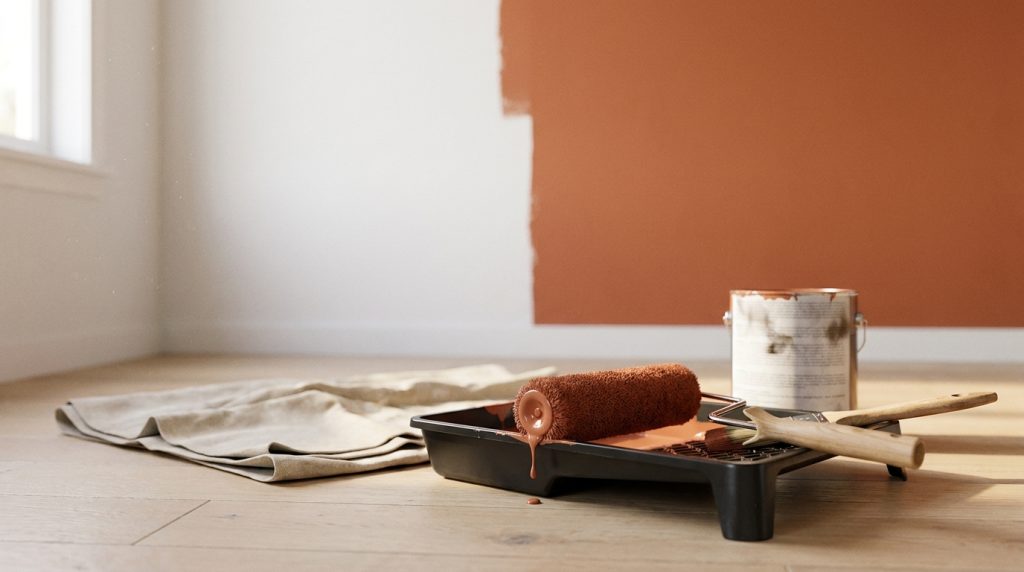
She asks new clients, “What color is your primary bedroom? Your office? Your living room accent wall?”
If the answer is “white,” “builder beige,” “greige,” or “we haven’t gotten to that yet,” Miranda quietly starts prepping for a faster turnover.
YOU’LL ALSO LOVE25 ‘Common Sense’ Home Rules Everyone Followed in the 80s That Would Get You Laughed At Today
Not always right. Just often enough to matter.
There’s a reason paint pulls this much predictive weight. Paint is the lowest-cost, highest-visibility way a homeowner tells themselves, “I’m staying.”
It costs around forty dollars per gallon, takes a weekend, and the transformation is immediate.
That so many owners skip it, for months or years, isn’t about cost or time. It’s about an unconscious reluctance to tell themselves, out loud, that they’re staying.
The curtains come after the paint for most committed owners. Which is why, when the paint test fails, the curtains almost always fail too.
Would you like to save this?
Command Strips Reveal More Than You Think
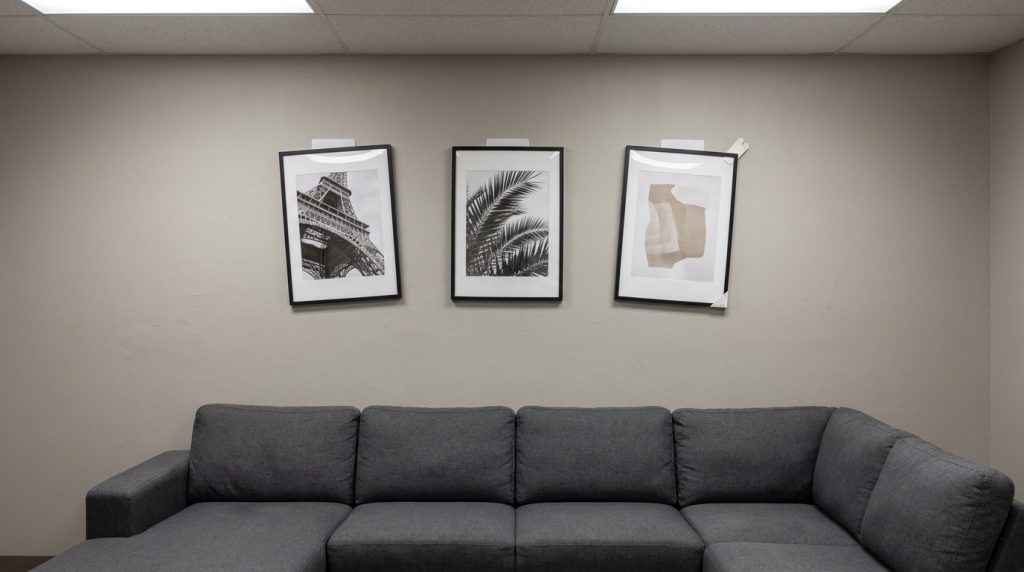
You walk into a home, and above the sofa you see three framed prints from a big-box store.
They’re hung in a row. They’re slightly out of line, because command strips can never sit perfectly flush for long.
The frames are identical. The prints inside are generic black and white photos of the Eiffel Tower, or palm leaves, or abstract beige shapes that came pre-framed.
At first glance, you don’t notice anything wrong.
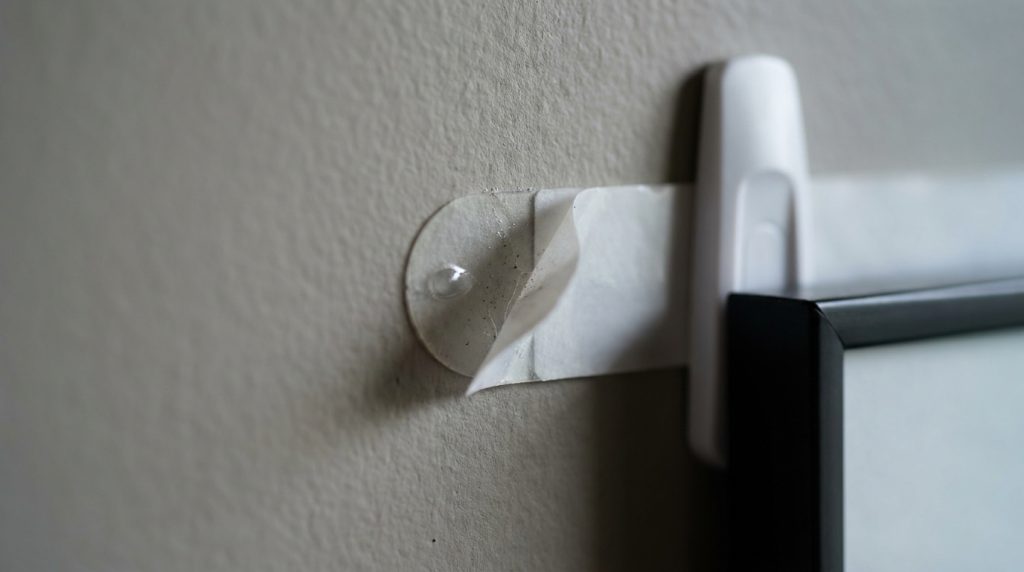
But Laurel notices. Because the owner of this home made a choice the day they hung that art. They chose not to leave a nail hole in a wall they own.
That’s a thought pattern. The owner thinks, consciously or not, “I might want to rearrange this, or I might be gone, and I don’t want to deal with spackle later.”
That thought, coming from a homeowner, is a tell. Not about taste. About tenure.
Nails in drywall are a claim. A nail hole says, “I committed to this location, and even if I move the art later, the evidence that I lived here stays.”
Command strips are the opposite. They’re the decorating equivalent of a month-to-month lease.
What It Actually Means When You Do All This
None of this means you’re a bad homeowner if you use command strips, or if you haven’t hung curtains, or if your walls are still greige in year three.
Real life is complicated. You might have small children. You might be remodeling in stages. You might love the greige.
What it means is that the psychological state that produces those choices, the provisional move-in, often precedes the decision to actually move by years.
Homeowners in this state don’t realize they’re in it. They think they’re being practical, or low-key, or financially responsible.
In reality, their nervous system hasn’t settled into the house, and the decor shows it. The decision to list comes later, almost as a formality.

A therapist in Chicago named Dr. Emily Chao, who works with clients going through major life transitions, calls this pattern “environmental hedging.”
The person hasn’t committed to the place, and so the place hasn’t committed to the person.
When a real opportunity to leave shows up, a job offer, a baby on the way, a market bump, the person leaves easily, because they were never fully there to begin with.
The curtains, the nails, the painted accent wall, are commitment in physical form.
Homes That Stay Share An Inverse Pattern
Homes that stay owner-occupied for ten, fifteen, twenty years share a different pattern.
It isn’t about money spent. It’s about decisions made quickly and confidently in the first two years, and then left alone.

The curtains are there. The wall color is a warm green, or a saturated blue, or a terracotta the owner picked from a fan deck and never regretted.
The art on the walls is mismatched, hung with real nails, sometimes crooked because it was hung by the kids.
There’s a chair that was bought on clearance and reupholstered eight years later because it was comfortable, not because it matched.
There’s a rug with a faint red wine stain near the coffee table that the owner has never bothered to clean because they’ve known about it for years.
You can sense this pattern within two minutes of walking into the house. It feels like it belongs to somebody.
That’s the simplest way to describe it. The home has been claimed.
How To Reverse The Pattern If You Are In It
You can flip the pattern in a weekend. You don’t have to spend real money. You don’t have to hire a designer.
What you have to do is make four small commitments in a row that tell your nervous system, and your house, that you’re staying.

Start with curtains. Buy real fabric ones, in a color you love, not in the “greige” or “linen” that comes up first on the retailer’s page.
Hang them on rods that extend six to eight inches past the window trim so the window looks wider than it is. Let the fabric pool on the floor by an inch.
Paint one wall. Not the whole room. One wall.
Pick a color from the third page of the fan deck, not the first. If you hate it in six months, repainting costs forty dollars and a weekend.
Nail something to a wall. Not with a command strip. With a real nail. An actual piece of art, something that’s yours, not something you bought in a three-pack online.
The fourth commitment is the one nobody talks about. Write down the date. On an index card, in a drawer.
Because the day you did those three things is the day you decided to stay. Your realtor, five years from now, won’t be pulling your listing.
What Listing Agents Wish Every New Homeowner Would Do First
Here’s a specific piece of advice Laurel gives to buyers the day they close on their first home, and it has nothing to do with paint, curtains, or art.
She tells them to buy one piece of real, solid furniture within the first six months. Not a modular sectional. Not a flat-pack bookshelf.
A real piece of furniture, heavy enough that you’d pay movers to move it.
The psychological weight of that single piece does more for your commitment to the house than the next five rounds of decor spending combined.
What would YOU change about your home tomorrow if you knew, with certainty, that you were staying for the next fifteen years?