
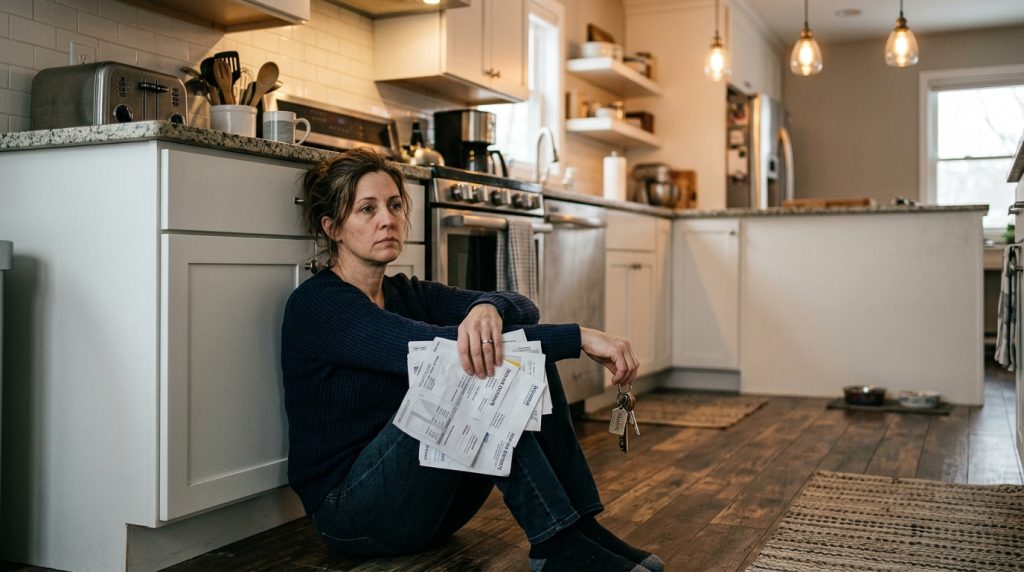
Nearly half the people who bought a house wish they could undo at least one part of the decision.
Not half of first-timers. Not half of buyers who rushed. Half of everyone.
That number comes from Bankrate’s 2025 survey of over 2,000 homeowners, and it has climbed every year since they started tracking it.
Would you like to save this?
I’ve spent the last three years collecting these regret stories, the ones people post at midnight on Reddit and Bogleheads when they cannot sleep, and the same seven complaints surface over and over.
Most buyers assume the mortgage is the big one. It is not even close.
The actual #1 regret is something most people never budget for.
It costs the average homeowner $21,000 a year.
Here are all seven, ranked by how often they show up and how much they hurt.
Most People Guess the Wrong Regret First
Ask someone who has never owned a home what they think the biggest regret is, and they will almost always say the mortgage.
YOU’LL ALSO LOVE25 Things About Your Home That Visitors Notice in the First 10 Seconds (But Never Tell You)
Too expensive. Rate too high. Stretched too thin.
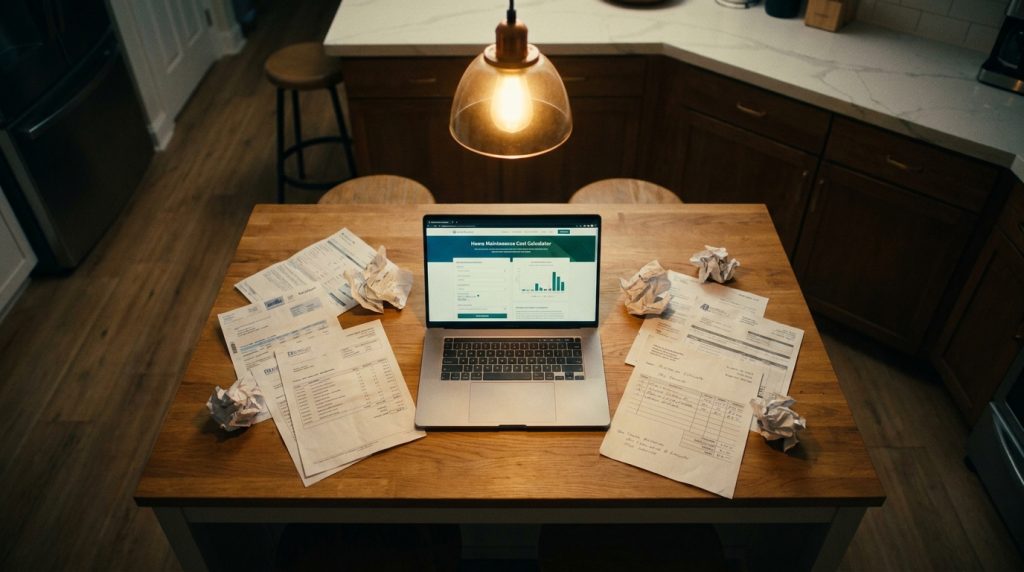
It makes sense. That is the number on every buyer’s mind at the closing table, the one that kept them up the night before signing.
But the mortgage is not the top complaint. Not even close.
In Bankrate’s 2025 survey, high mortgage payments ranked third, cited by just 16% of homeowners with regrets.
Overpaying for the house came in at 15%.
The interest rate, the thing every financial headline screamed about for two straight years, landed at a modest 20% in Clever Real Estate’s parallel survey.
The real #1 sits in a category most first-time buyers barely consider before the keys hit their palm. It is the thing that keeps compounding, that never stops billing, that somehow gets worse as the house gets older.
42% of unhappy homeowners named it first, unprompted, as the single thing they wish someone had warned them about.
The answer is not dramatic. That is exactly why it hurts.
1. $21,000 a Year Nobody Mentioned at Closing
Maintenance and hidden costs. That is the #1 complaint.
42% of homeowners with regrets named it, up from 40% just one year earlier, and the figure has been climbing since Bankrate started asking.
Here is the number that makes it real.
According to Bankrate’s 2025 study, the average American homeowner pays $21,400 a year in costs beyond the mortgage. That breaks down to:
- Maintenance: $8,808
- Utilities: $4,494
- Property taxes: $4,316
- Insurance: $2,267
- Internet and cable: $1,515
Zillow’s separate analysis put the total at $15,979, with maintenance eating $10,946 of it.
YOU’LL ALSO LOVE30 Things in the 1970s Living Room That Would Confuse Anyone Under 30
Neither of those numbers appeared on the Good Faith Estimate. Neither showed up in the mortgage calculator.
Nobody at the closing table said, “By the way, budget another $1,783 a month for the privilege of keeping this house standing.”
And that annual average is just the steady-state cost.
Hippo’s 2024 Housepower Report found that 83% of homeowners dealt with unexpected maintenance that year, up from 46% the year before.
Forty-six percent of them spent over $5,000 out of pocket on a single surprise repair.
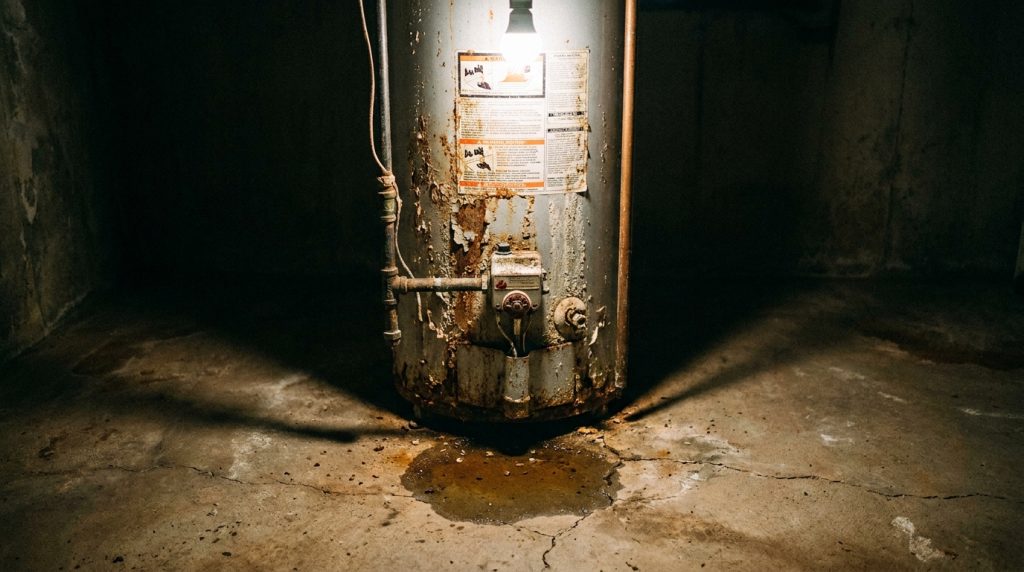
A water heater does not ask your permission. A sewer line does not wait for your bonus check.
The cruelty of this regret is its invisibility on day one.
You feel wealthy at closing. You feel broke by month eighteen.
2. 44% Hit a Surprise Repair Before the First Anniversary
The first year is supposed to feel like a victory lap. You painted the accent wall. You hung the shelves. You finally have a place that is yours.
Then the HVAC compressor dies in August.
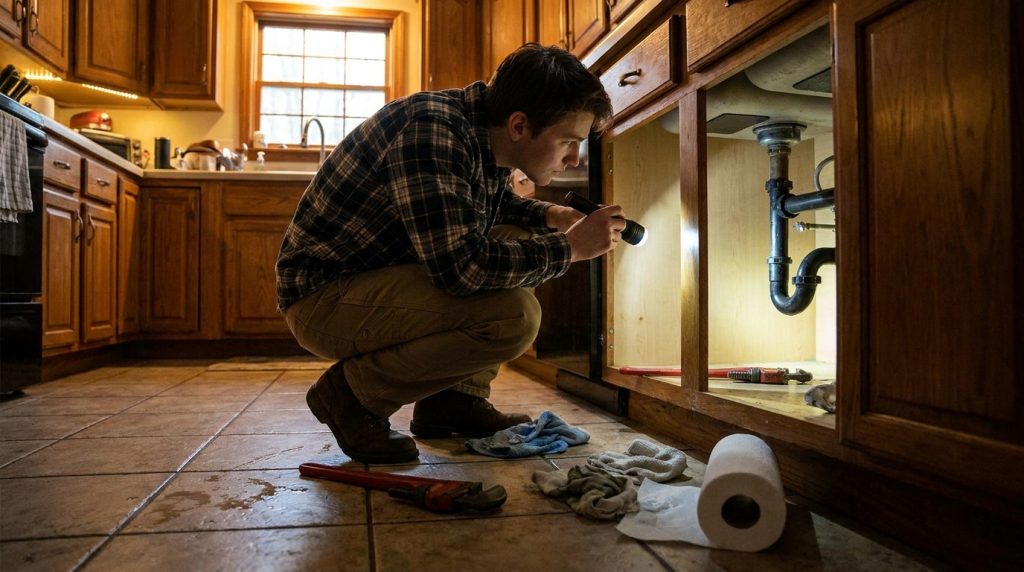
Ipsos survey data shows that 44% of homeowners encountered their first unplanned repair before their one-year anniversary in the house.
Twelve percent got blindsided in the first month.
One Redditor on r/homeowners described finding a $14,000 sewer line collapse six weeks after closing on a house that had passed inspection. “I cried in the driveway,” they wrote. “Not because of the money. Because I realized nobody was coming to fix it for me.”
That last part is the psychological shift renters never see coming.
YOU’LL ALSO LOVE11 Neighborhood Rules Every Kid Knew in the ’80s That No Parent Would Allow Today
In an apartment, a broken pipe is the landlord’s 2 AM problem. In your house, it is your 2 AM problem, your emergency fund, your Saturday, your contractor’s voicemail. You are now the person who gets called, and you are also the person who pays.
Insurance does not cover most of it, either. Homeowners insurance premiums have surged 48% over the past five years, according to Zillow’s 2025 data.
Even after that increase, most policies exclude the things that actually break – appliances, plumbing wear, HVAC failure, foundation settling. The stuff that ages with the house is the stuff you cover alone.
3. Buying Too Small Stings More Than Buying Too Big
Size is the second-most-cited regret in Bankrate’s 2025 data, and the split is lopsided.
Twenty-one percent of homeowners with regrets wish they had bought bigger. Only 9% wish they had gone smaller.
Combined, 33% of all homebuyers say they picked a place that was the wrong size for how they actually live.
You have probably felt this one without naming it. The closet that seemed fine during the walkthrough now cannot hold two seasons of clothing.
The second bedroom that was supposed to be a home office became the baby’s room, and now your desk is in the kitchen corner between the toaster and the wall.
The garage you planned to use for storage is full by month six, and you are renting a unit across town for $150 a month to hold the rest.
What makes this regret particularly sticky is that you cannot fix it without moving. You can renovate a kitchen. You can repaint every wall.
You cannot add 400 square feet to a house on a 6,000-square-foot lot in a subdivision with setback requirements and HOA restrictions. The size you bought is the size you live with, and every year the stuff accumulates and the walls feel six inches closer.
The Reddit threads on this topic are brutal. One poster in r/FirstTimeHomeBuyer wrote: “We bought 1,400 square feet thinking we’d be minimalists. We are not minimalists. We are people with a toddler and a dog and fourteen boxes of things we swore we’d get rid of.”
4. Wrong Neighborhood Costs More Than Wrong Countertops
Neighborhood regret does not always show up in the survey data as a top-line stat, but it saturates every Reddit thread, every Bogleheads post, every Houzz forum discussion about homeowner regret.
It is the one that feels the most permanent because it involves everything outside the property line, which is everything you cannot control.
YOU’LL ALSO LOVE25 ‘Common Sense’ Home Rules Everyone Followed in the 80s That Would Get You Laughed At Today
One Redditor described buying a house that seemed perfect during weekday showings, only to discover the street turned into a parking lot for a nearby stadium every weekend.
Another posted about a neighborhood where the closest grocery store closed six months after they moved in.
A Bogleheads commenter calculated that their 45-minute commute, which felt manageable during the honeymoon phase, was costing them 375 hours a year.
Would you like to save this?
That is nine full work weeks spent in a car.
The financial math on neighborhood mistakes is unforgiving. Selling a house you just bought means eating 8-10% in transaction costs between agent commissions, closing fees, and potential price drops.
On a $350,000 home, that is $28,000 to $35,000 gone before you even factor in moving expenses.
So most people stay. They absorb the commute. They adjust to the noise. They tell themselves they made the right call because the alternative is too expensive to face.
Your countertops can be swapped for $4,000. Your zip code cannot.
5. Your Mortgage Rate Follows You Home Every Night
Clever Real Estate’s 2025 American Home Buyer Report found that 20% of recent buyers regret locking in too high an interest rate.
Sixteen percent say their monthly payment is more than they can comfortably handle. One in eight, about 13%, feel they simply overpaid for the house itself.
These financial regrets hit younger buyers hardest. Gen Z homeowners report the highest regret rates of any generation, with 42% expressing some form of buyer’s remorse according to Kin Insurance’s 2025 survey.
Among Gen Z specifically, 39% have taken on additional debt just to cover home maintenance and upkeep, the highest of any generation. Millennials are close behind at 37%.
The generational gap matters because it reveals a timing trap.
Younger buyers purchased during a period of historically elevated rates after watching rates sit near 3% for years. They know, because social media will not let them forget, that the person who bought the same floor plan in 2021 is paying $600 less per month for the identical house.
That knowledge sits in the back of every payment, every budget review, every conversation about whether they should have waited.
And the advice they received before buying, “you can always refinance,” has started to feel less like wisdom and more like something people say when they do not want to tell you the truth.
6. What the Inspection Missed Shows Up on a Wednesday
Clever Real Estate’s 2025 data puts a sharp number on this.
44% of homebuyers say they later discovered problems that the seller never disclosed.
Thirty percent believe the seller was not upfront about the condition of the home. Twelve percent specifically regret that their inspection missed something significant.
The Reddit threads on missed inspections read like horror stories with price tags attached. Foundation cracks hidden behind finished drywall. Roof damage concealed under fresh shingles.
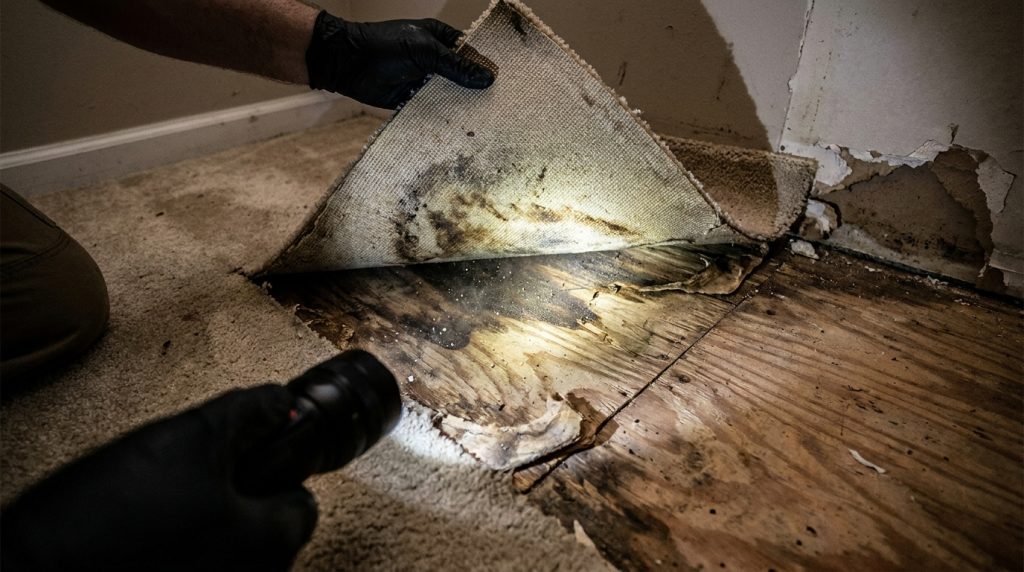
One poster described a $65,000 foundation repair that appeared when they pulled up carpet in the basement, something no standard home inspection would have caught because the inspector does not move furniture, pull up flooring, or open walls.
Another described mold behind a bathroom vanity that had been siliconed shut before the showing.
Standard home inspections cost between $300 and $500. They cover visible, accessible systems. They do not include:
- Sewer scopes: $100-$300 extra
- Radon testing: $150 extra
- Structural engineering assessments: $500-$800
Most first-time buyers do not know these add-ons exist. Some skip the inspection entirely to make their offer more competitive, a practice that surged during the 2021-2022 bidding wars and left a generation of buyers holding houses full of secrets.
The irony is painful. Buyers will negotiate $2,000 off the price of a kitchen appliance package but skip the $250 sewer scope that would have revealed a $14,000 problem underground.
7. Insurance Is the Hidden Cost Inside the Hidden Cost
Here is the number almost nobody tracks until it is too late.
Insurance premiums have increased 48% over the past five years, according to Zillow’s 2025 analysis.
The average homeowner now pays $2,267 a year in insurance alone, and in states like Florida, Louisiana, and California, that number is two to three times higher.
What makes insurance uniquely cruel as a hidden cost is that it compounds against you. Your home ages, your risk profile increases, your premium rises, and the coverage shrinks.
Deductibles have climbed. Exclusions have expanded. Wind, flood, and foundation damage require separate riders in most states.
The policy you signed at closing may not cover the thing that actually goes wrong in year five, and by then you are locked into a premium that has already jumped 30%.
The old rule of thumb, budget 1-2% of your home’s value per year for maintenance, does not account for insurance inflation, property tax reassessment, or utility cost spikes.
The more accurate number in 2025 is closer to 3-4%.
On a $400,000 home, that means $12,000 to $16,000 a year that has nothing to do with your mortgage.
What is the one cost of homeownership that caught you most off guard?