
New Jersey carries the highest property taxes in the country, an aging coastline that gets re-evaluated every storm season, and a healthcare consolidation pattern quietly reshaping where you can actually access cardiac care.
None of that lands on the listing photo of the porch.
Would you like to save this?
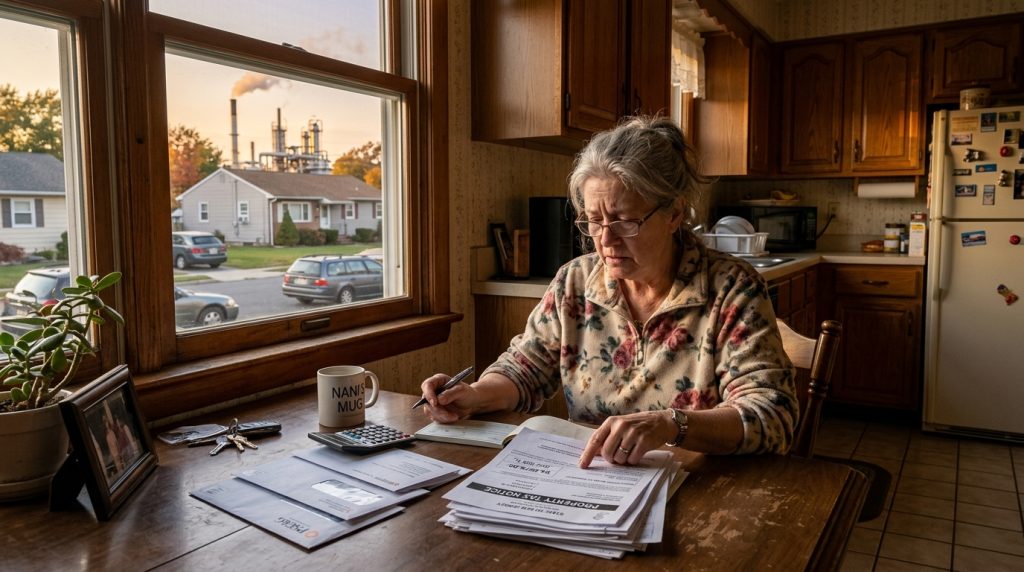
The statewide average property tax bill crossed $9,800 in 2024, and a long list of Bergen County boroughs blew past $20,000 per home.
On a fixed retirement income, that is the difference between traveling and not traveling for the next twenty years.
Most of these are recoverable mistakes, but the town at number twelve is the one nobody warns you about: the 2025 flood-insurance reset hit homeowners who had owned their houses for decades.
1. Tenafly
The average property tax bill in Tenafly crossed $26,000 in 2024, the highest in Bergen County and among the highest in the United States.
That is the average, not the high end.
A retiree who owns a home outright is still writing a check that exceeds what most Americans pay for housing total.
The town is beautiful. The schools are top-tier. The schools are also exactly what is funding that bill, and you no longer have any kids inside the building.
YOU’LL ALSO LOVE25 Things About Your Home That Visitors Notice in the First 10 Seconds (But Never Tell You)
Walkability is moderate, the GW Bridge is fifteen minutes south, and Englewood Hospital and Medical Center is right there for higher-acuity care, which is the thing keeping Tenafly on retirees’ lists at all.
But the math is what it is.
Twenty-six thousand a year, every year, indexed up. That is not a tax. That is a permanent subscription with no opt-out clause.
Better bet: Park Ridge, fifteen minutes north, has a walkable Main Street, top-tier hospital access at Hackensack Meridian Pascack Valley, and a property tax bill roughly half of Tenafly’s.
2. Edgewater
Edgewater sits at the foot of the Palisades on a thin shelf of land between the Hudson River and Route 5, and that geography is the problem.
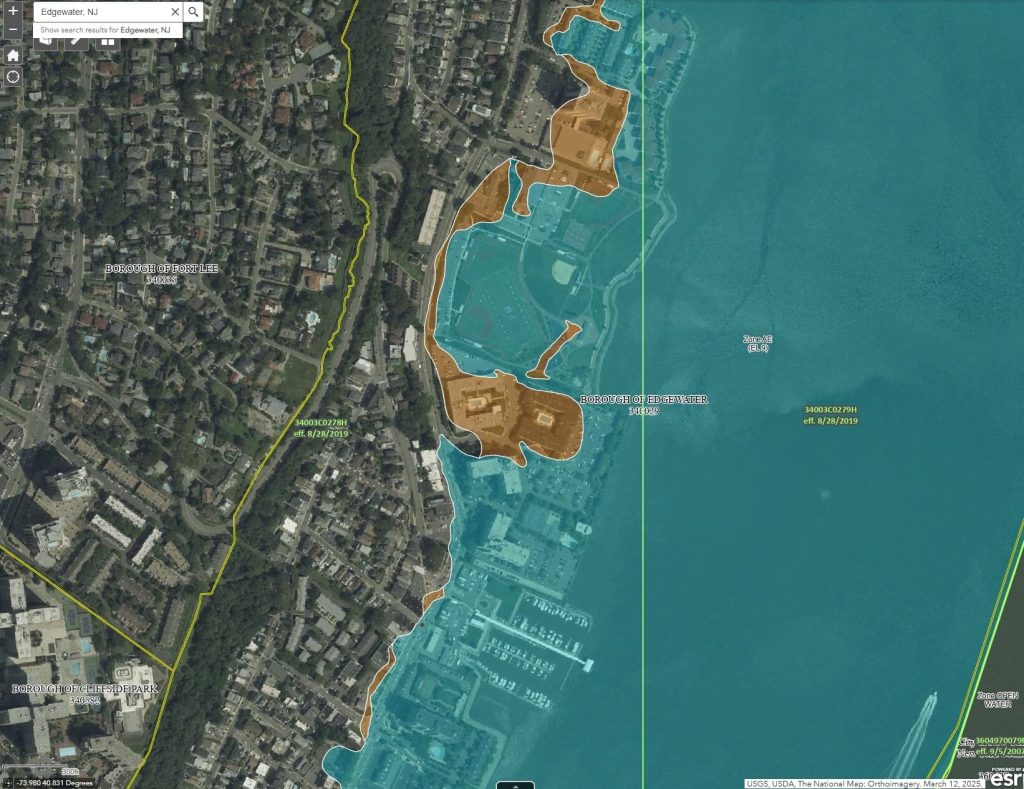
Coastal flooding events have hit the town repeatedly since Sandy, and FEMA flood-zone designations push insurance premiums on waterfront and near-waterfront homes past $5,000 to $9,000 annually.
River Road, the only artery through town, becomes a parking lot at rush hour and stays one for hours.
The GW Bridge sits a mile north, and the air-quality monitoring stations near it report particulate levels noticeably above suburban norms.
That is the kind of detail that does not appear in a listing but matters significantly to anyone with a respiratory or cardiac condition heading into their seventies.
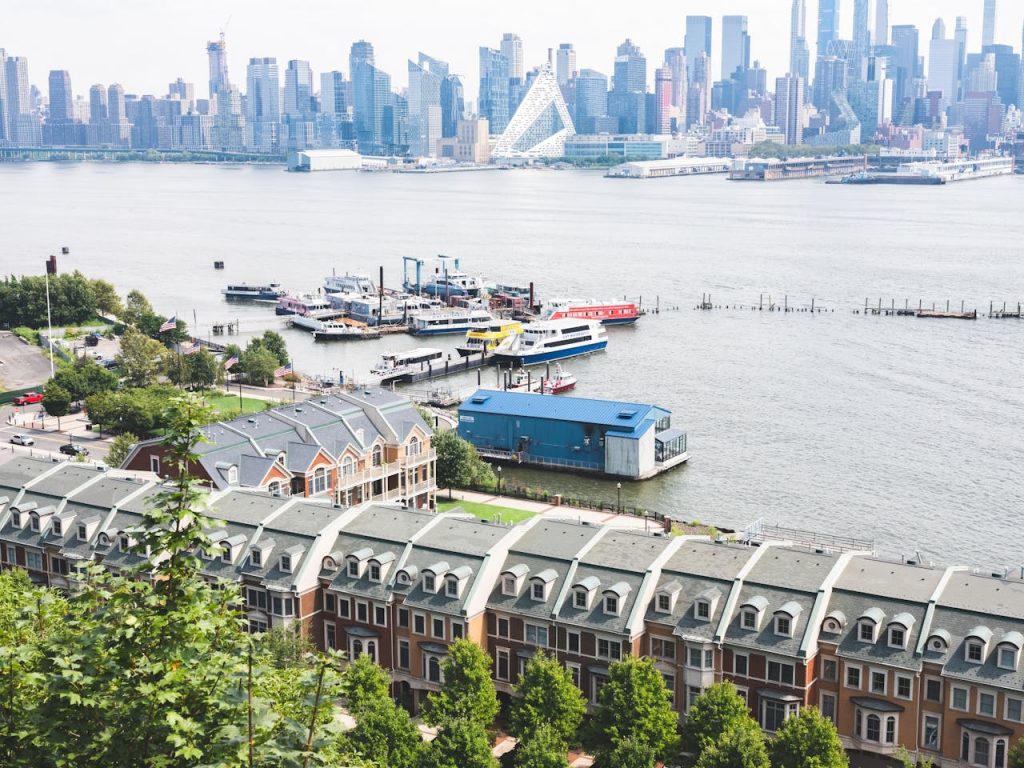
Better bet: Cliffside Park, just up the Palisades and slightly inland, gives you the same Manhattan views, the same proximity to Englewood and Holy Name hospitals, and a flood profile that does not exist because you are 200 feet above sea level.
3. Newark – A City With Real Hospitals and a Crime Map That Updates Hourly
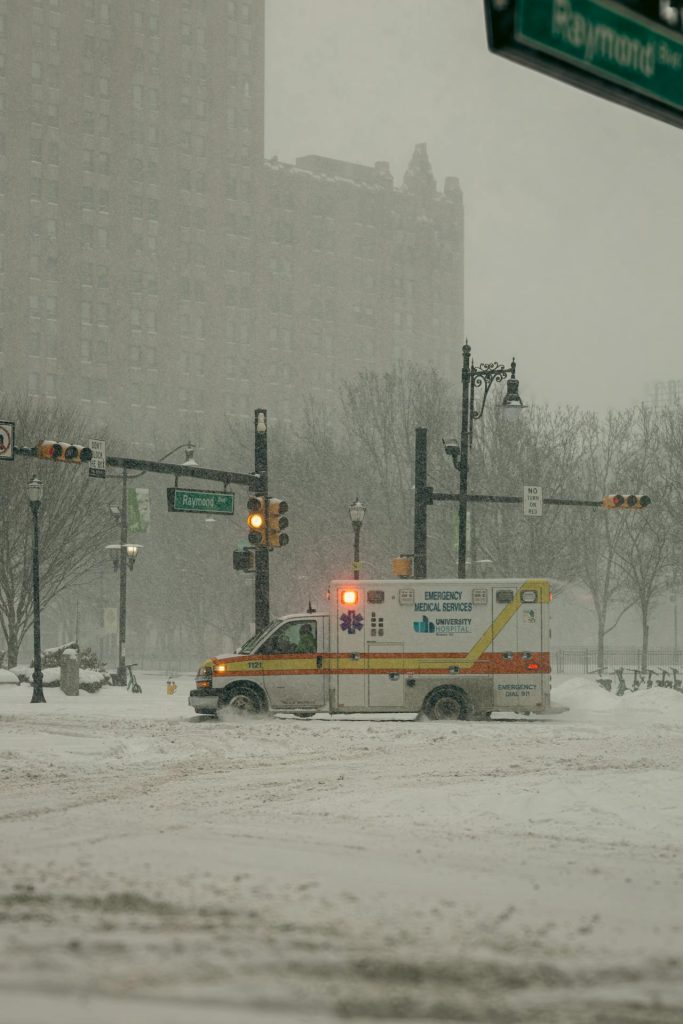
Newark has University Hospital and Saint Michael’s, both real medical facilities with strong specialty depth.
That is the upside. The downside is a violent crime rate that runs roughly 4 to 5 times the New Jersey state average and a property crime pattern that varies dramatically block to block.
A retiree using only listing photos to evaluate Newark neighborhoods is buying a lottery ticket.
Air Quality Near the Port and Refineries
The air quality is its own consideration.
Newark sits at the convergence of the port, the airport, three interstates, and the Bayway Refinery downwind. PM 2.5 measurements near the Ironbound and Vailsburg sections regularly run above EPA daily guidelines.
YOU’LL ALSO LOVE30 Things in the 1970s Living Room That Would Confuse Anyone Under 30
For someone with COPD or cardiac history, the long-term exposure math matters more than the listing price.
Better bet: Montclair, twenty minutes northwest, delivers the same hospital access at Hackensack University Medical Center Mountainside, a real walkable downtown, and a crime profile a fraction of Newark’s.
4. Trenton
Trenton’s violent crime rate runs roughly 3 to 4 times the New Jersey state average, and the city has lost approximately a third of its peak population.
Capital Health Regional Medical Center serves the area, and the proximity to Princeton specialists is real, but the neighborhoods directly surrounding the State House and the courts house some of the highest assault rates in Mercer County.
The infrastructure is also showing its age. Lead service-line replacement has been an ongoing project for years, with progress measured against a problem that grew while officials debated funding.
Property values have not recovered the way most of central New Jersey has, which sounds like a buying opportunity until you ask what the buying opportunity is on top of.
Better bet: Lambertville, on the Delaware River, twenty minutes northwest, gives you walkable Main Street, year-round restaurants, an artistic community, and the same access to Princeton’s specialists at a fraction of the safety risk.
5. Camden
Camden has Cooper University Hospital, one of the best Level I trauma centers in the region.
That is a real asset and the reason the city stays on a few retirement lists. It is not enough.
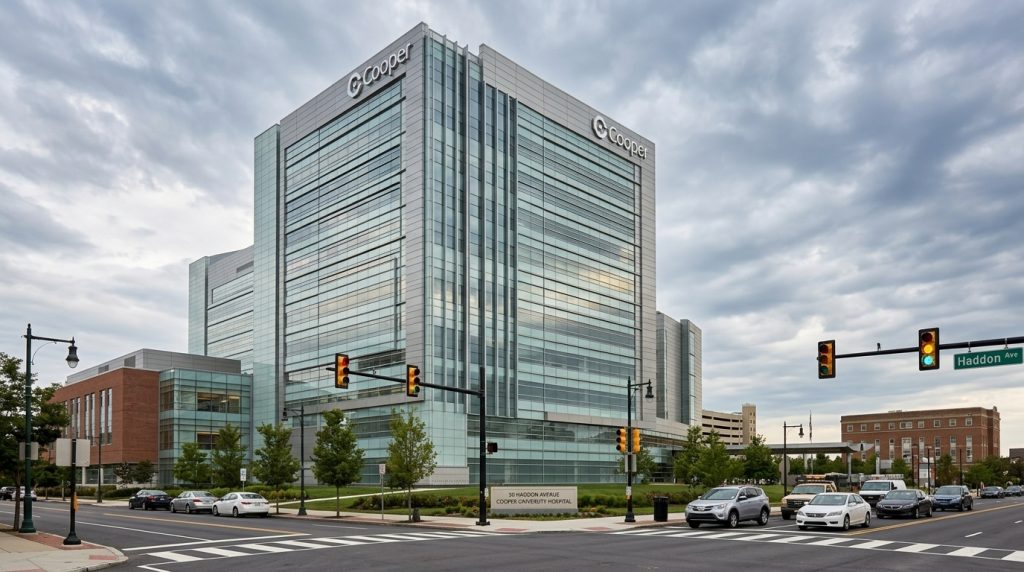
Camden’s violent crime rate has improved meaningfully over the past decade, but it still runs 3 to 4 times the New Jersey state average, and certain North Camden and Cramer Hill blocks carry numbers that look like a different planet.
The school system, infrastructure, and tax base have all been on a long climb back from a generation of disinvestment, and the recovery is uneven.
A retiree drawn by the cheap housing prices in some neighborhoods needs to ask the question nobody on the listing wants asked: am I willing to live where the police-call density is what it is, even with Cooper a mile away?
Better bet: Haddonfield, ten minutes east, has a perfectly walkable Main Street, the same Cooper access, top-rated schools that translate into stable property values, and a crime profile that registers as suburban-quiet.
6. Paterson – Density, Crime, and a Hospital System Still Recovering
Paterson’s violent crime rate sits among the highest in New Jersey, with property crime patterns that vary block by block.
Saint Joseph’s University Medical Center anchors local healthcare and has expanded specialty services, but the surrounding neighborhoods carry safety profiles that limit what evening life looks like for a 70-year-old.
YOU’LL ALSO LOVE11 Neighborhood Rules Every Kid Knew in the ’80s That No Parent Would Allow Today
[IMAGE: A densely packed Paterson street with multi-story apartments, double-parked cars, and the Great Falls visible between buildings]
Mill-district architecture beautiful, density overwhelming. Parking is theoretical. Walkability is constrained by the safety map.
Density is also a real consideration. Paterson is one of the most densely populated cities in the United States outside of the immediate New York metro core.
Parking is theoretical. Walkability is real but constrained by the safety map.
The historic mill district has charm, and pockets of restoration are happening, but the overall trajectory has been slow.
Better bet: Ridgewood, fifteen minutes north, has a year-round walkable downtown, top-tier specialty access at Valley Hospital, and a crime profile a small fraction of Paterson’s. Property tax bills are higher, but the trade is real.
7. Atlantic City
Atlantic City lost five major casinos in a five-year window, and the economic ripple is still working through the housing market and the local services.
AtlantiCare Regional Medical Center remains the primary hospital, and it is competent for community-level care, but specialty services often route to Penn Medicine in Philadelphia, an hour west.
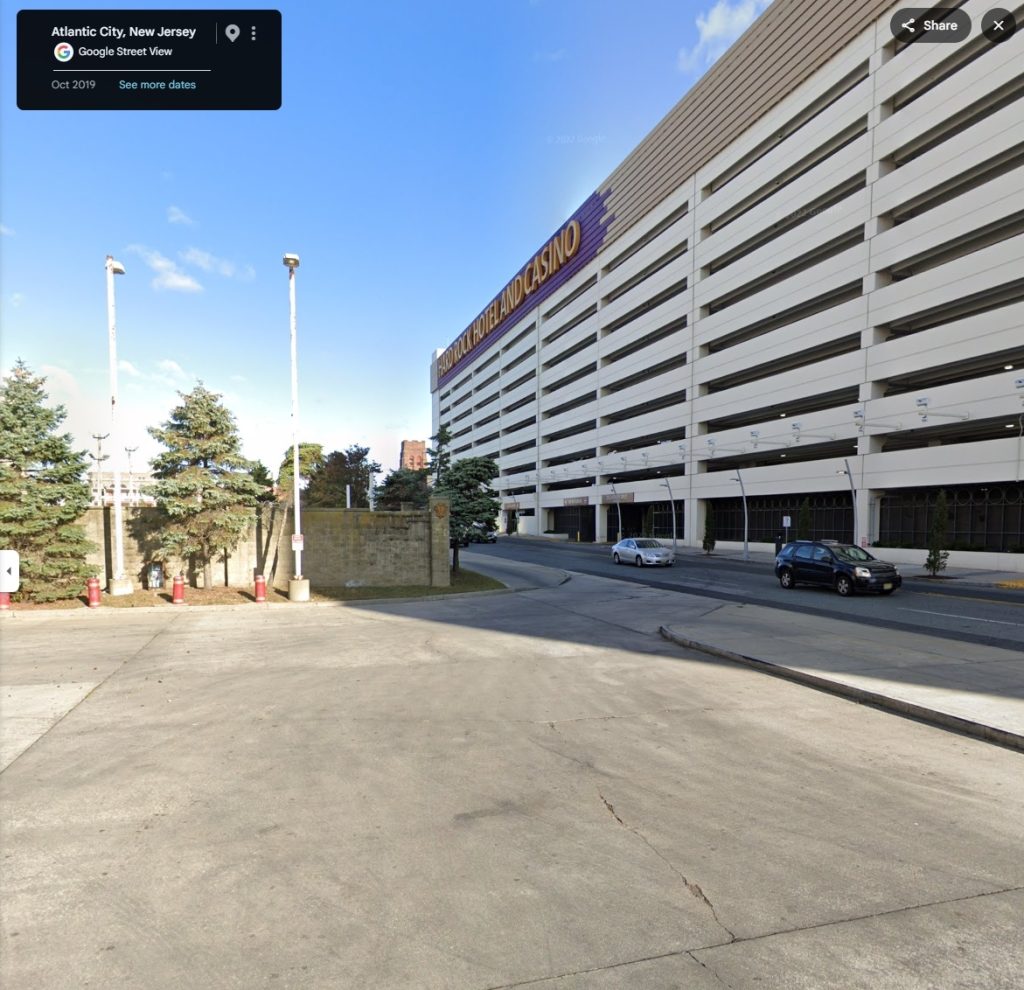
The cost of living is misleadingly cheap because what is cheap (housing in certain neighborhoods) is cheap for reasons.
Property crime in AC proper runs notably above the state average, and certain inland neighborhoods carry the same violent crime numbers as the worst of Newark.
The boardwalk is real. So is the rest of the city, which most tourists never see.
Better bet: Cape May, forty minutes south, has a year-round historic downtown, lower crime, a pharmacy that knows your name by November, and Cape Regional Medical Center for primary acute needs.
8. Wildwood
Wildwood transforms in summer into a working-class beach economy with motels, boardwalk concessions, and a full carnival of pizza-by-the-slice and arcade noise.
From October through April, two-thirds of the businesses close, the boardwalk vendors disappear, and the year-round population drops by roughly 75 percent.
The grocery store, when it stays open, charges summer prices into a town that no longer has summer customers.
[IMAGE: The Wildwood boardwalk in January with shuttered concession stands and a closed amusement ride covered in tarps]
Two-thirds of the businesses lock up in October. The grocery store charges summer prices into a town that no longer has summer customers.
25 ‘Common Sense’ Home Rules Everyone Followed in the 80s That Would Get You Laughed At Today
Healthcare access also thins fast. Cape Regional in Cape May is the nearest hospital, and the drive is 25 to 35 minutes depending on weather and tourist traffic.
Specialty appointments route to Atlantic City or Philadelphia, and the latter is two hours including bridge traffic.
Better bet: Ocean City, NJ, twenty minutes north, runs a more diversified year-round economy, has a quieter family-oriented profile, and the year-round services (pharmacy, grocery, doctor) actually exist twelve months a year.
9. Seaside Heights Shore Town, Flood Zone, Insurance Sticker Shock
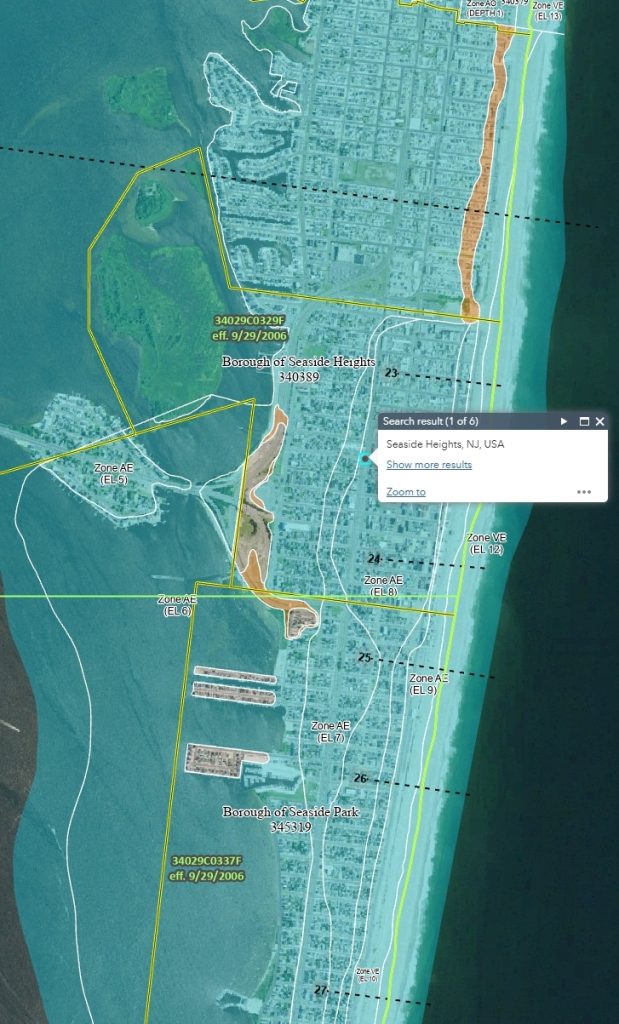
Seaside Heights took some of the worst Sandy damage in 2012 and has rebuilt, but it rebuilt as the same low-elevation Shore town it was.
FEMA flood-zone designations have expanded, not contracted, since the storm, and flood-insurance premiums on Seaside homes routinely run $4,000 to $8,000 a year on top of standard homeowners coverage.
Would you like to save this?
The 2025 NFIP reset pushed some longtime owners’ premiums up 60 percent over a single renewal cycle.
The summer crowd brings the kind of late-night noise (and the kind of late-night arrests) that retirees move away from.
The off-season is dead. Community Medical Center in Toms River is the closest acute care, and the drive is fifteen to twenty minutes in good conditions.
Better bet: Manasquan, forty minutes north, has a real year-round community, a walkable beach village with restaurants that stay open in February, and lower flood-zone exposure for homes that sit a few blocks back from the ocean.
10. Linden
Linden sits directly downwind of the Bayway Refinery, one of the largest petroleum-processing facilities on the East Coast.
EPA emissions data and state air-quality monitoring consistently show particulate and VOC levels in southeast Linden running above suburban norms.
For a 60-year-old in good health, this is a manageable variable. For a 72-year-old with cardiopulmonary history, the long-term exposure math is unfavorable.
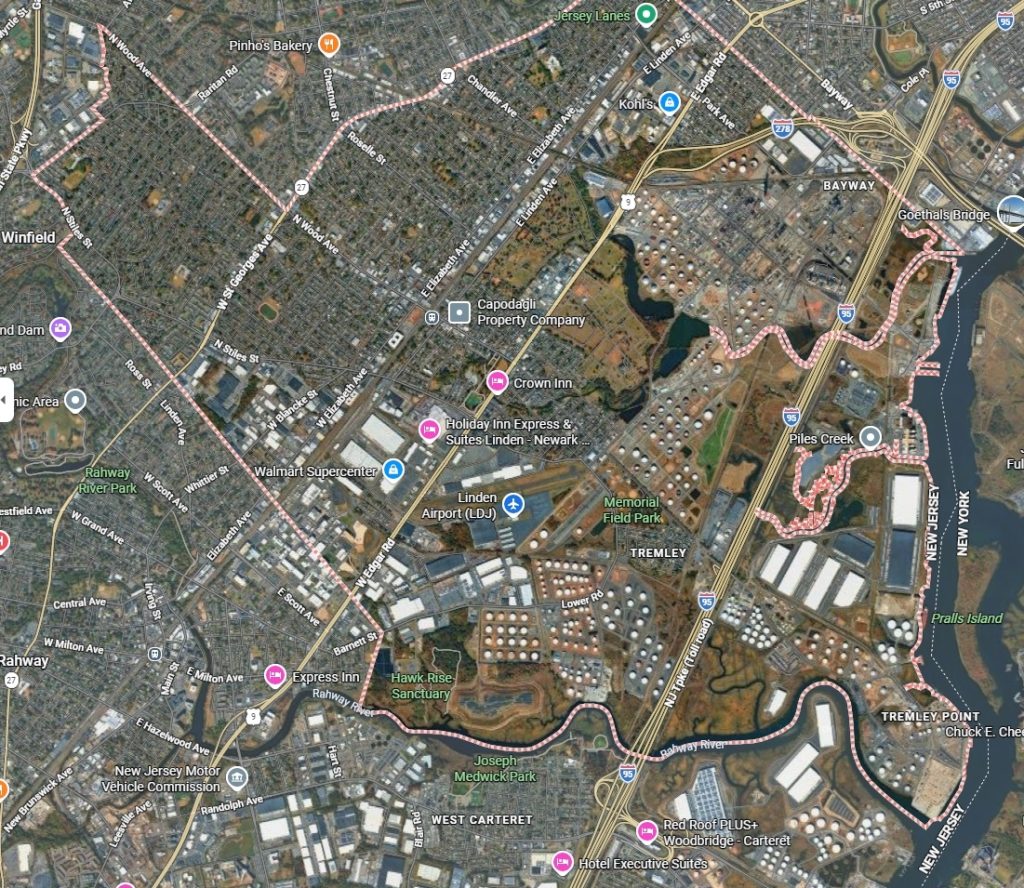
The town also carries the highway-adjacent profile that defines a stretch of central Jersey: NJ Turnpike noise, Garden State Parkway traffic, and the constant rumble of port-bound freight on the Chemical Coast Line.
Property taxes run $9,000 to $13,000 on modest homes that, in the same school district eight miles away, would carry no air-quality concern at all.
Better bet: Cranford, twelve minutes west and slightly upwind, has a walkable downtown, a Rahway River that is now part of a flood-control project that actually works, and air quality measurably better than Linden’s southeast quadrant.
11. Lakewood
Lakewood’s population roughly doubled in a generation, and the road network, school district, and emergency services have not kept pace.
Traffic on Route 9, Cedarbridge Avenue, and County Road 526 is bad on a Tuesday morning and worse on every other day.
School-related traffic in particular shapes daily life, and the modest three-bedroom tax bill routinely tops $9,000 despite a school district most retirees will never use.
Healthcare access is technically robust (Monmouth Medical Center Southern Campus is in town), but the volume the regional system absorbs from a fast-growing population means specialist appointment lead times stretch longer than the regional average.
Better bet: Whiting, the active-adult section of Manchester Township just south, gives you a 55-and-up community profile, dramatically lower property taxes, the same Monmouth Medical access, and Route 9 only when you choose to drive on it.
12. Toms River
This is the one I told you about in the intro.
Toms River absorbed catastrophic Sandy damage along its barrier-island and bayfront sections, and the 2025 NFIP rate reset (Risk Rating 2.0 fully implemented) pushed some longtime homeowners’ premiums up 50 to 70 percent over a single year.
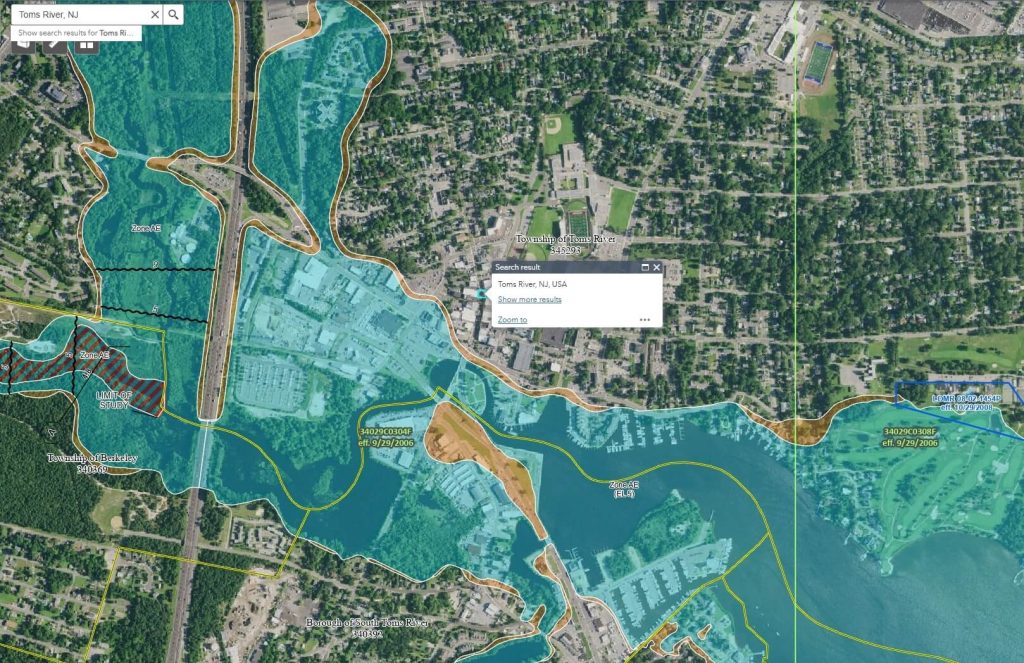
Many were retirees who had owned their homes outright for decades, suddenly facing $6,000 to $10,000 annual flood-insurance bills they had never paid before.
The mainland portions of Toms River are inland enough to dodge the worst of the flood math, but the property tax bills, the highway-adjacent traffic on Route 37, and the strained healthcare network add up fast.
Community Medical Center is competent, but the volume from one of the largest townships in the state means appointments fill quickly.
Better bet: Lewes, Delaware, two hours south on the Cape May-Lewes Ferry plus a short drive, gives you a coastal town with year-round services, Beebe Healthcare in town, and Delaware’s combination of no sales tax, low property taxes, and a senior school-tax exemption that adds up over twenty years.
13. Long Branch
Long Branch rebuilt aggressively after Sandy with high-end oceanfront condos, but the underlying flood-zone reality did not change.
FEMA mapping continues to designate large portions of the town as Special Flood Hazard Areas, and insurance bills on oceanfront and near-oceanfront properties run among the highest on the New Jersey Shore.
The summer economy is real and lively. The off-season is quieter than the new condos suggest, and the year-round services remain limited compared to nearby year-round towns.
Healthcare is one of the genuine assets here, anchored by Monmouth Medical Center, a teaching hospital with strong specialty depth.
That is the reason Long Branch keeps showing up on retirement lists. It is not enough by itself when the insurance math turns hostile.
Better bet: Red Bank, fifteen minutes inland on the Navesink, has the same Monmouth Medical access, a year-round walkable Main Street that runs hot in winter, and zero flood-insurance premium.
How to Read a Jersey Property Tax Bill Before You Sign
Before you sign anything, pull two numbers from the New Jersey Division of Taxation: the average residential property tax bill (last full year reported) and the equalized tax rate as a percent of true market value.
Anything above 2.5 percent of market value is a yellow flag. Anything above 3.0 percent is red.
On a $400,000 home, the difference between a 2 percent town and a 3 percent town is $4,000 every year, indexed upward as values rise.
The FEMA Flood-Zone Number Nobody Checks
A separate number to pull: the FEMA flood-zone designation for the actual parcel, not the town.
Some towns have small high-risk zones surrounded by low-risk neighborhoods, and that designation can swing your insurance bill by $5,000 a year.
Both numbers are public. Most retirees never look. The ones who do are the ones still solvent in year fifteen.
Which town surprised you the most? And if you already left one of these places, where did you actually land?