
California has some of the strongest consumer protection laws in the country. Tenant rights, environmental regulations, employment codes that make other states look like the Wild West.
And then there is the Davis-Stirling Common Interest Development Act, which hands your homeowners association powers that would make a city council blush.
Most homeowners sign the CC&Rs at closing without reading them. That stack of documents is doing more governing than your actual local government. I have spent seven years tracking HOA enforcement actions across California counties, and the escalation pattern is always worse than people expect.
But number eleven on this list is the one that has triggered more lawsuits than any other HOA rule in the state.

Would you like to save this?
1. Your HOA Can Fine You for Parking Your Own Car in Your Own Driveway
You pull into your driveway after work, the same driveway you pay the mortgage on, and three days later there is a $50 violation notice taped to your door because your truck has an open bed. Not on the street. Not on the lawn. In your driveway. That is the level of authority a California CC&R can hand to a volunteer board with almost nobody watching.
California CC&Rs routinely include clauses that restrict driveway parking to specific hours, ban commercial vehicles entirely, or require that all cars be stored inside the garage. Miss the rule and the fine starts at $25 to $50 per day and escalates weekly.
Under California Civil Code Section 4340, HOAs are required to follow a specific notice and hearing process before levying fines. But that process is controlled by the board itself, not an independent body.
The board sends the notice, holds the hearing, and decides the penalty. The homeowner’s recourse is to attend that hearing and argue their case to the same people who filed the complaint.
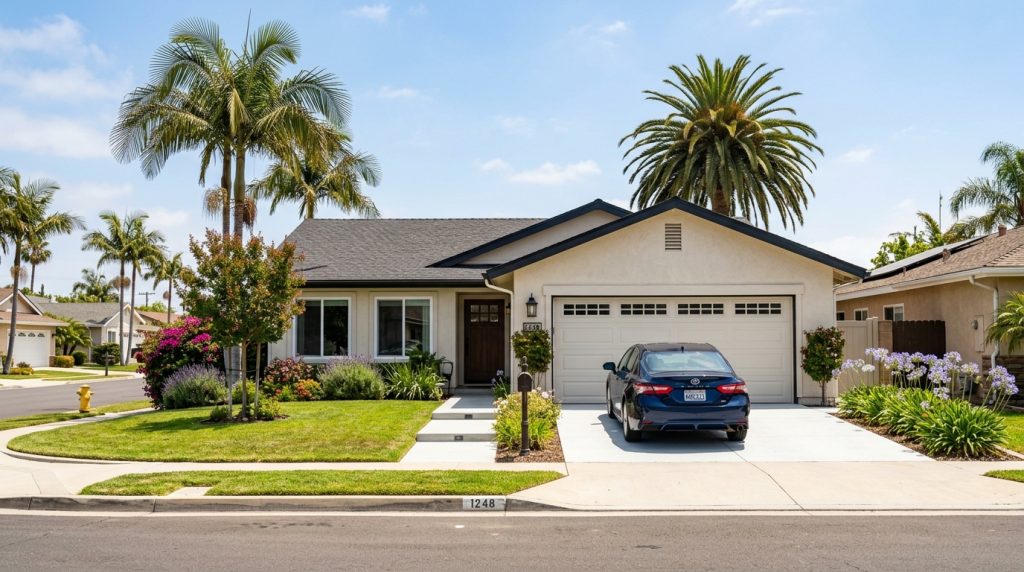
In a 2019 case in Elk Grove, a homeowner was fined $7,500 over three months for parking a pickup truck in his own driveway. The CC&Rs classified anything with an open bed as a “commercial vehicle.”
YOU’LL ALSO LOVE25 Things About Your Home That Visitors Notice in the First 10 Seconds (But Never Tell You)
The truck was a personal F-150. The fine stood.
That is annoying. But the next one hits your wallet harder.
2. Assessments Can Increase Without a Homeowner Vote
Most California homeowners assume their monthly HOA dues are locked in or at least require a membership vote to raise.
They are wrong.
Under the Davis-Stirling Act, California Civil Code Section 5605, an HOA board can raise regular assessments by up to 20% per year without any homeowner vote at all. A special assessment of up to 5% of the annual budget is also board-only.
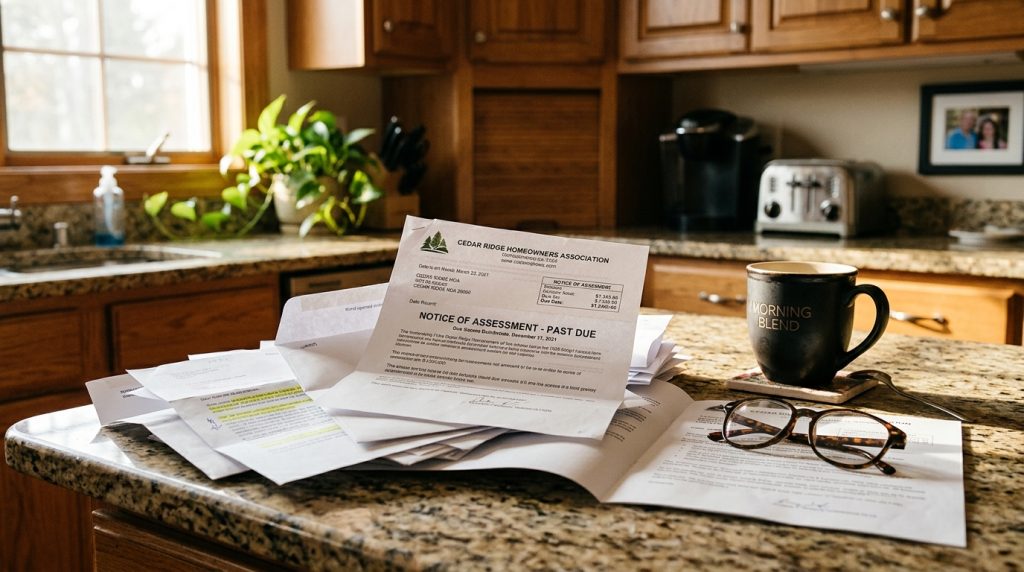
That means on a $3,000 annual assessment, the board can add $600 per year without asking anyone. Over five years, your monthly dues can nearly double through board action alone.
The only override mechanism is a petition signed by 5% of members to call a special meeting, and even then the board can argue that the increase is necessary for reserve funding under California Civil Code Section 5550, which requires HOAs to maintain adequate reserves.
The math gets worse fast. But at least you still control what happens inside your house, right? Not exactly.
3. Paint Colors for Your Front Door Require Board Approval
California Civil Code Section 4765 requires HOAs to allow drought-resistant landscaping. But that same progressive impulse does not extend to your front door.
Under most California CC&Rs, any exterior modification, including paint color, requires prior written approval from an architectural review committee.
The committee operates under CC&R guidelines that often limit exterior colors to a pre-approved palette of eight to fifteen shades, almost always some variation of beige, taupe, or greige. Choosing a color outside the palette, even by a shade, triggers a violation notice.
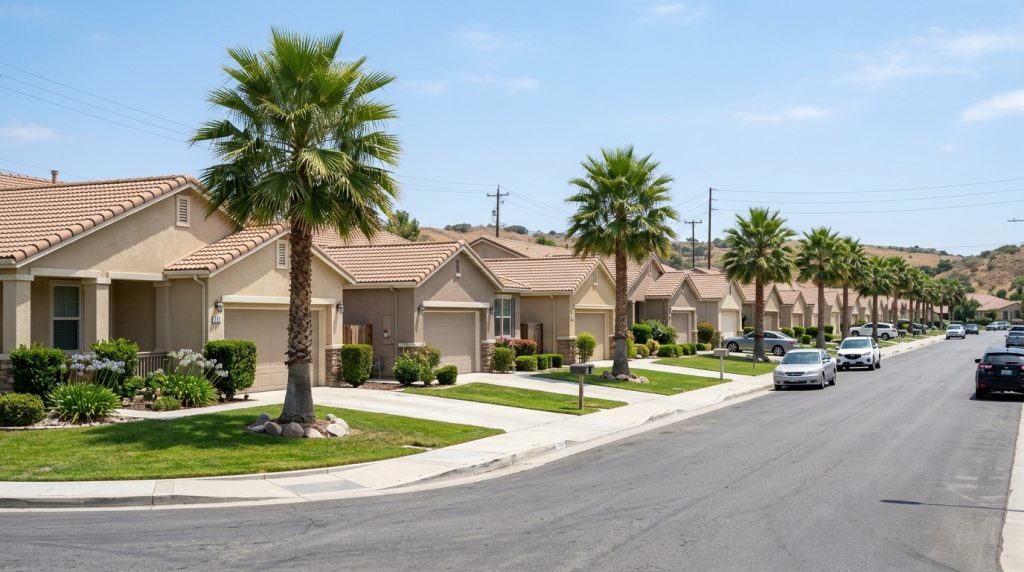
In 2021, a homeowner in a Riverside County HOA was fined $1,200 for painting their front door a shade of blue that was not on the approved list. The homeowner had submitted the color for approval and been denied, then painted it anyway.
The HOA placed a lien on the property for the unpaid fine. A lien. Over a door color.
The paint palette is one thing. What they can do about your landscaping is worse.
YOU’LL ALSO LOVE30 Things in the 1970s Living Room That Would Confuse Anyone Under 30
4. Artificial Turf Can Be Banned Even During a Drought
California leads the nation in drought-conscious water policy. The state offers rebates for removing natural lawns. Local water districts run campaigns encouraging synthetic turf.
And your HOA can still say no.
While California Civil Code Section 4735 prevents HOAs from banning drought-resistant plants, artificial turf occupies a legal gray zone. Courts have generally treated synthetic grass as a “product” rather than a “plant,” which means it does not fall under the same protection.
Multiple California HOAs have successfully fined homeowners for installing artificial turf, even during declared drought emergencies.
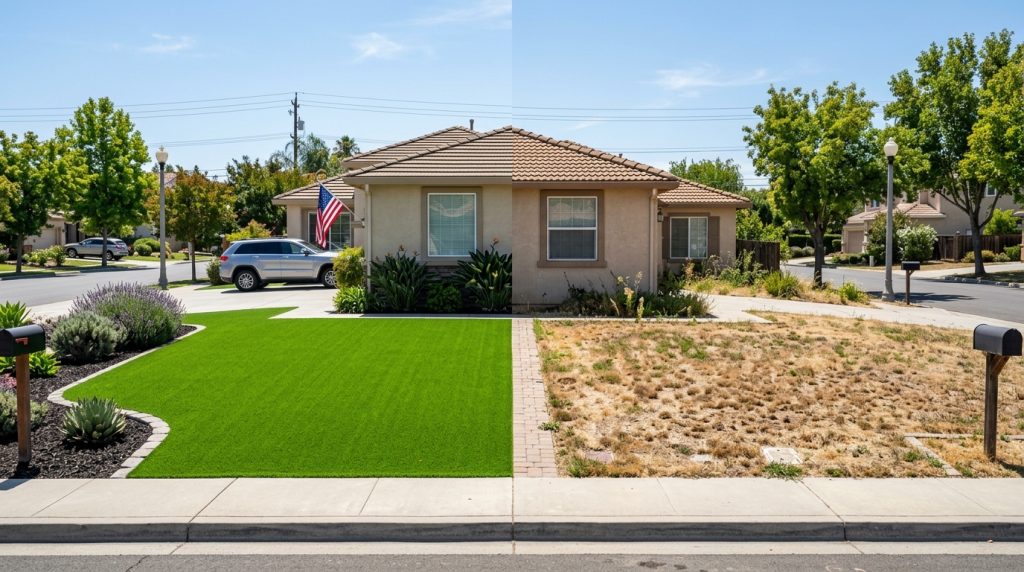
A Folsom community made headlines in 2022 when the board fined twelve homeowners a combined $18,000 for installing synthetic turf during a Stage 2 drought restriction.
The state was literally paying people to remove their lawns, and the HOA was fining them for doing it. The fines were later reduced after media coverage, but the CC&R language remains on the books.
If outdoor choices seem controlling, wait until you see what the board can say about your holiday decorations.
5. Holiday Decorations Can Be Restricted to a 14-Day Window
Most California HOAs restrict holiday decorations to a specific display window, typically two weeks before and two weeks after the holiday. Lights up on November 10? Violation. Lights still up January 5? Violation.
Some CC&Rs restrict the type of decorations as well, banning inflatables, limiting the number of string light strands, or prohibiting anything attached to the roof.
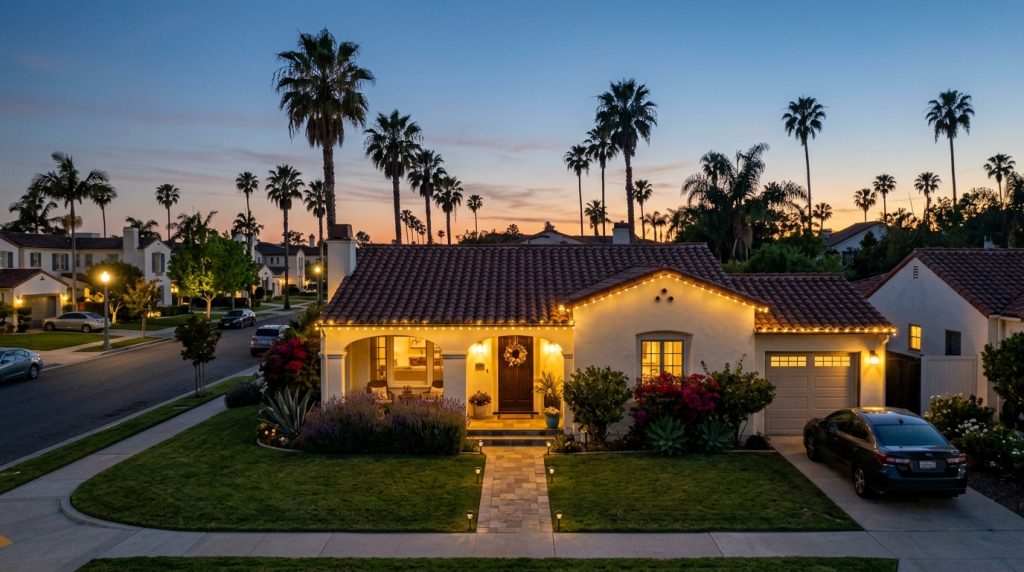
California Civil Code Section 4710 does prohibit HOAs from banning the display of noncommercial signs, flags, and banners related to elections or causes. But holiday decorations receive no such protection.
One San Diego HOA sent 47 violation notices the first week of January 2023 for decorations still displayed after the CC&R deadline of January 2. Average fine: $75 per household. Total collected: $3,525 for lights four days overdue.
The timing restrictions are petty. The next rule carries real financial weight.
6. HOAs Can Place a Lien on Your Home for Unpaid Fines
This is where the HOA enforcement model goes from annoying to dangerous.
Under California Civil Code Section 5720 and related provisions, an HOA can record a lien against your property for delinquent assessments and, in many cases, for accumulated fines. If the lien remains unpaid, the HOA can foreclose.
YOU’LL ALSO LOVE11 Neighborhood Rules Every Kid Knew in the ’80s That No Parent Would Allow Today
Let that settle for a moment. A homeowners association, not a bank, not a government entity, can foreclose on your home.
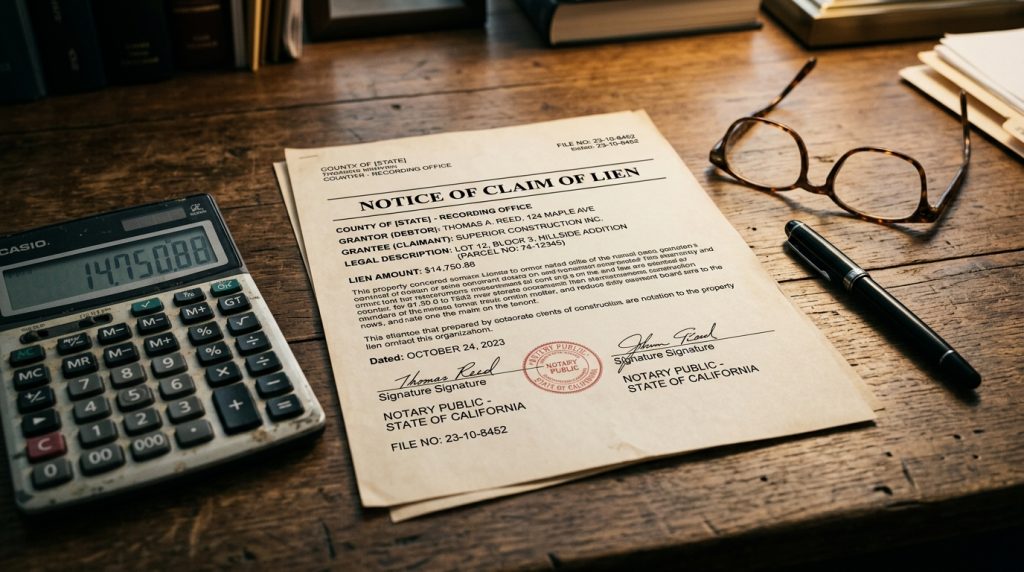
You imagine a homeowner getting foreclosed on by an HOA, and you picture some catastrophic decade-long debt spiral. The actual threshold is much lower than that. Under Civil Code Sections 5700 through 5740, the HOA has to give you notice, offer a hearing, and wait a stretch of time before recording the lien. Then the HOA can initiate lien proceedings once delinquency exceeds $1,800 or is more than 12 months past due. Once the daily fines stack at $25 to $100, you cross that threshold faster than most homeowners think.
Between 2015 and 2022, California recorded over 14,000 HOA liens. Not all led to foreclosure, but every one of them attached to a homeowner’s title and affected their ability to sell or refinance.
The lien power is shocking. The next rule is something most owners never even know exists.
7. Board Members Can Serve Indefinitely With No Term Limits
California law does not require HOA board members to have term limits. Under the Davis-Stirling Act, if no one runs against an incumbent, the incumbent keeps the seat. In practice, this means the same three or four people can control a community’s budget, rules, and enforcement for decades.
A 2020 survey by the Community Associations Institute found that 43% of California HOA board seats went uncontested in the most recent election cycle. In communities with fewer than 100 units, the number jumped to 61%.
No opposition means no turnover, which means rules and enforcement priorities reflect the same small group year after year.
The lack of democratic accountability is one issue. What the board can spend your money on is another.
8. Reserve Funds Can Be Spent on Things You Never Approved
California requires HOAs to maintain reserve funds for major repair and replacement costs under Civil Code Section 5550. But the definition of what qualifies as a “reserve expenditure” is broad, and the board controls the reserve study that prioritizes projects.
In practice, this means a board can redirect reserve funds toward projects that homeowners never anticipated.
A community in Orange County spent $340,000 from reserves to replace a perfectly functional community gate with an upgraded model that included license plate recognition cameras. The homeowners were not consulted on the technology choice, only informed after the contract was signed.
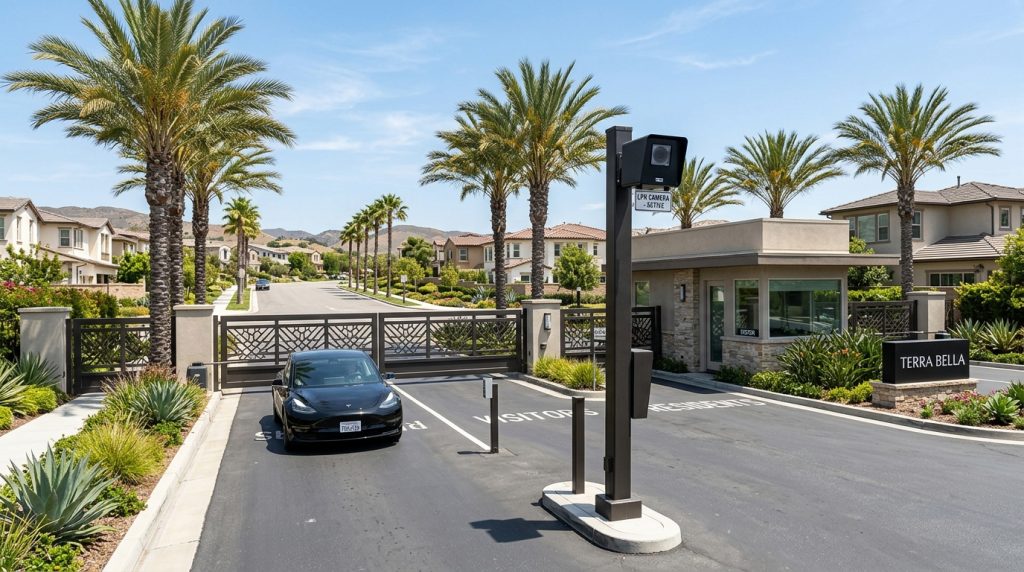
Under California law, the board must present a reserve study at the annual meeting and provide a summary of reserve fund balances. But homeowners do not vote on individual expenditures from reserves. The board approves them.
If the reserve study identifies “community security infrastructure” as a funded category, the $340,000 camera gate qualifies, whether the residents wanted cameras or not.
Board spending is frustrating. What they can do about your rental plans is even more consequential.
YOU’LL ALSO LOVE25 ‘Common Sense’ Home Rules Everyone Followed in the 80s That Would Get You Laughed At Today
9. Short-Term Rentals Can Be Banned Entirely by CC&R Amendment
California’s rental market is among the most expensive in the country. Many homeowners rely on short-term rental income to offset mortgage costs. But an HOA can amend its CC&Rs to ban short-term rentals entirely, even retroactively affecting homeowners who purchased their units specifically to rent them.
Under California Civil Code Section 4740 (effective January 1, 2021), the rules shifted. For CC&Rs created or amended after that date, rental restrictions require approval by a majority of homeowners. But for existing CC&Rs that already contained broad restriction language, the board may have wider latitude to interpret and enforce.
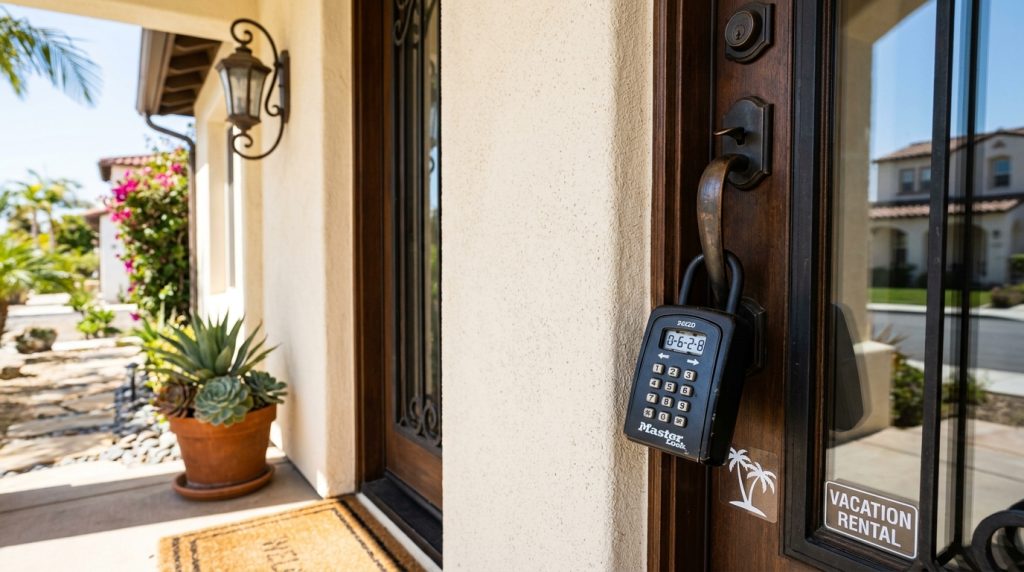
A 2022 CC&R amendment in a Palm Springs HOA banned all rentals under 30 days. Several homeowners who had been operating vacation rentals for years were forced to stop immediately or face daily fines.
One homeowner estimated lost income of $33,000 in the first year alone. The amendment passed with 52% of the vote, meaning 48% of homeowners who opposed it were overruled on how they could use their own property.
The rental ban hits the wallet. The next rule hits your privacy.
Would you like to save this?
10. HOAs Can Mandate Access to Your Property for Inspections
Under California Civil Code Section 4775, HOAs have the right to access a homeowner’s “separate interest” (your unit or lot) for maintenance, repair, and inspection of common area infrastructure. In practice, this power extends broadly.
Many CC&Rs include language granting the association the right to conduct exterior inspections without prior consent and to require interior access for plumbing, electrical, or structural inspections related to common elements.
Refusal can result in fines or legal action.
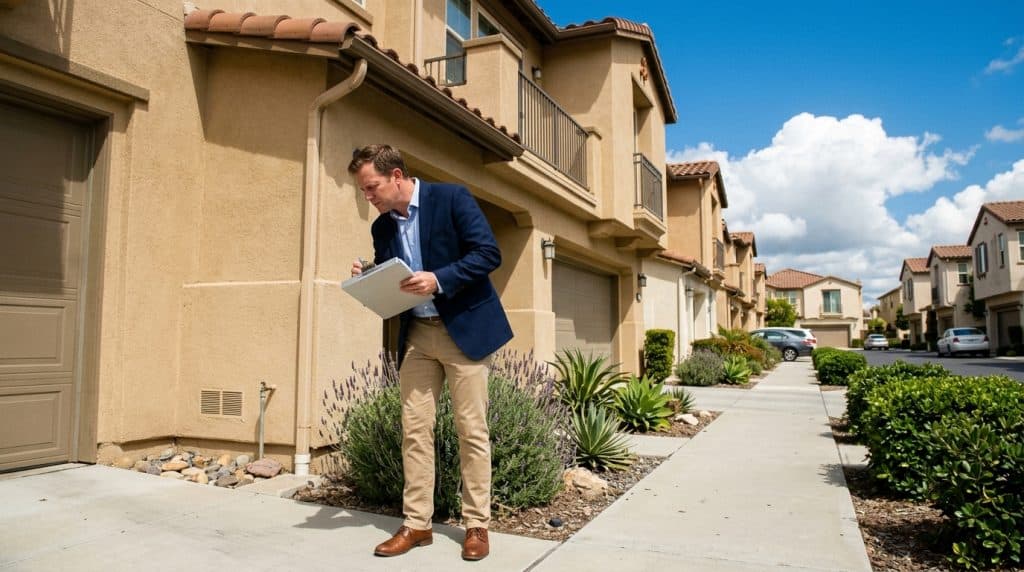
In a 2020 dispute in a San Jose condominium community, the HOA demanded access to a unit for a plumbing inspection related to a building-wide pipe replacement. The homeowner refused, citing privacy concerns.
The HOA obtained a court order within six weeks. The homeowner paid $4,200 in legal fees for the association’s attorney, plus the fine for the initial refusal. Total cost for refusing a plumbing inspection.
Inspections are invasive. What they can do with your rooftop is worse.
11. Solar Panel Restrictions Still Exist Despite State Law
This is the rule that has triggered more HOA lawsuits in California than almost any other, and it is the reason this list exists.
California Civil Code Section 714 specifically prohibits HOAs from banning solar panels. The Solar Rights Act, originally passed in 1978 and strengthened multiple times since, is one of the most protective solar access laws in the country.
On paper.
In practice, HOAs have found ways to restrict solar installation without explicitly banning it. Architectural review committees require specific panel placement, color matching, tilt angles, and screening requirements that can add $5,000 to $15,000 to installation costs or make rooftop solar geometrically impossible for certain units.
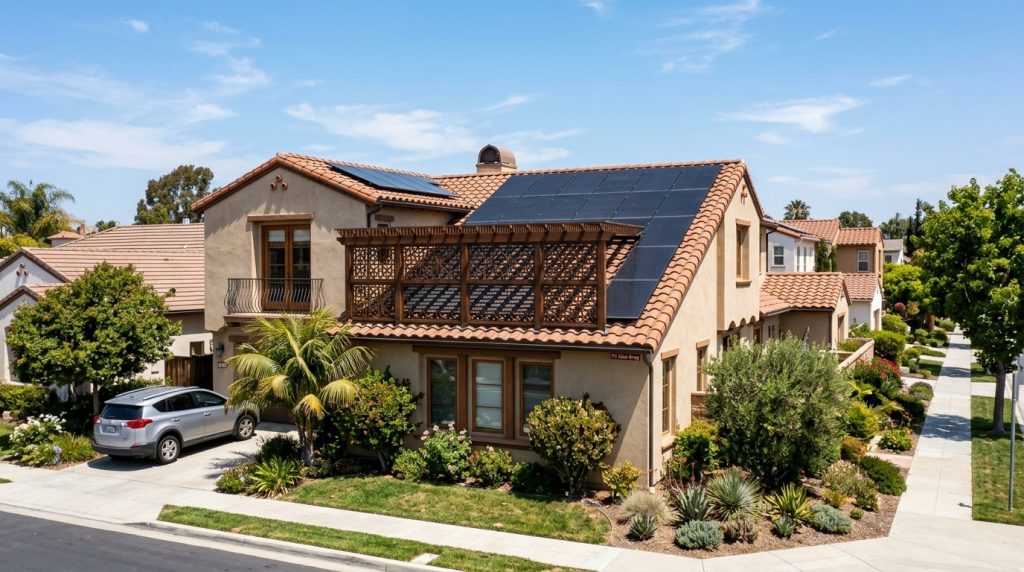
Winning Costs More Than the Panels
The law says an HOA cannot impose restrictions that “significantly increase the cost” or “decrease the efficiency” of a solar energy system by more than 10%. But “significantly” requires litigation to define.
Between 2018 and 2023, California courts handled over 200 HOA-solar disputes. The homeowner won in the majority of cases, but the average legal cost was $12,000 to $18,000. Winning the right to put panels on your own roof cost more than the panels themselves.
One homeowner in Temecula spent 14 months in litigation over a requirement that her panels be mounted flush with the roof pitch, which her installer said would reduce efficiency by 22%. The HOA argued the efficiency loss was “aesthetic” in nature. She won. Her legal bill was $16,500.
The solar fight is the most publicized. The next two are the ones that catch people completely off guard.
12. Emotional Support Animal Protections Do Not Always Apply
California is one of the most protective states for emotional support animals, with state fair housing laws that generally require HOAs to make reasonable accommodations.
But the intersection of ESA protections and CC&R enforcement is messier than most homeowners realize.
Under the Fair Employment and Housing Act and federal Fair Housing Act, an HOA must allow emotional support animals even if the CC&Rs ban pets. However, the HOA retains the right to request documentation, and the standard for what constitutes sufficient documentation has been tightening.
California Assembly Bill 468, effective January 1, 2022, imposed new requirements on ESA letters, including that the provider must have an established relationship with the patient for at least 30 days.
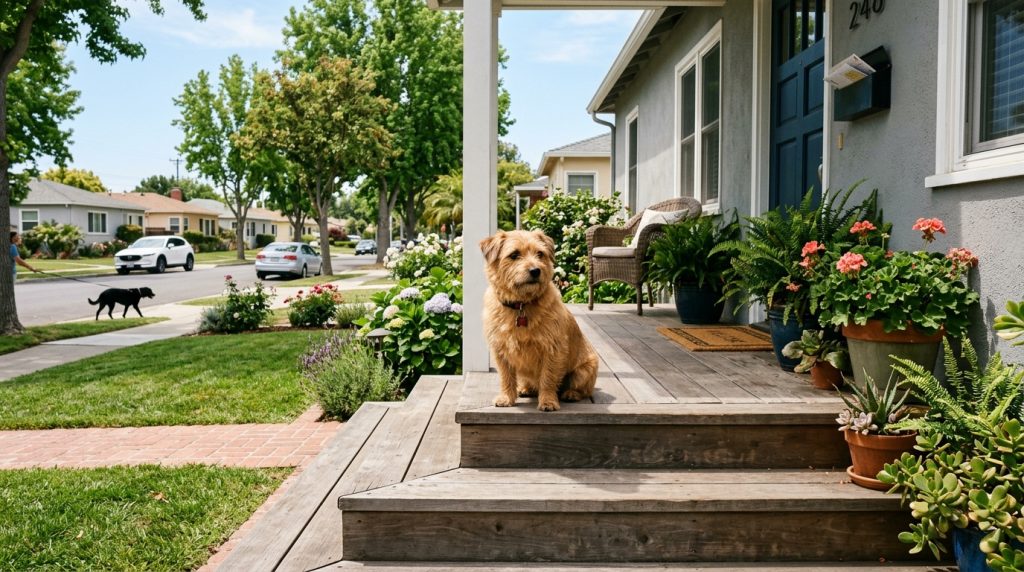
HOAs have used documentation challenges to delay accommodations for months. In a 2021 case in a Los Angeles condominium, a homeowner’s ESA request was denied three times over eight months, each time for a different documentation deficiency.
The homeowner ultimately filed a complaint with the California Department of Fair Employment and Housing. The case settled, but only after the homeowner retained an attorney.
The ESA loophole is frustrating. The final rule on this list is the one that affects every California homeowner in an HOA, whether they know it or not.
13. Mandatory Mediation Sounds Fair Until You See Who Pays
California Civil Code Section 5930 requires that either party in an HOA dispute offer to participate in alternative dispute resolution (mediation or arbitration) before filing a lawsuit. This sounds reasonable. Mediation is cheaper than court, faster, and less adversarial.
In theory.
Here is what mediation actually looks like for the homeowner. You walk in with a personal attorney you are paying out of pocket. The HOA walks in with a law firm whose bill gets split across every assessment in the community, including yours. You are funding both sides of the table. The mediator is usually picked from a list the HOA’s management company already has working relationships with. You are a first-timer in a process the board has run a dozen times before.

Who Absorbs the Loss
If mediation fails and the dispute goes to court, the CC&Rs in most California communities include an attorney-fee provision that allows the prevailing party to recover legal costs from the losing party. That clause cuts both ways, but in practice it favors the HOA because the association can absorb legal costs across the entire membership.
Average HOA litigation costs run $15,000 to $50,000 per side. For the homeowner, that is one person’s check. For the HOA, it is split across 200 units at $75 to $250 each.
This structural imbalance is why most California homeowners who have a legitimate HOA grievance never pursue it past the first demand letter.
What Real Estate Attorneys Actually Tell Clients Before Buying Into a California HOA
Every real estate attorney who handles HOA disputes in California says the same thing when friends ask about buying in a managed community. Read the CC&Rs cover to cover, not the summary, the actual document.
Look specifically for the fine schedule, the lien threshold, the assessment increase cap, and the architectural review approval process.
Request the last two years of board meeting minutes, which the HOA is required to provide under California Civil Code Section 4950. The minutes show you what the board actually cares about, and that tells you more about your future quality of life than any disclosure form.
One attorney advises counting violation notices issued in the past year. If the number is higher than twice the unit count, the board is running an enforcement-heavy operation, and you should price that into your decision.
Which of these rules surprised you the most?