
Every backyard in the 1970s had a particular smell to it. Hot metal, cut grass, and rubber hose.
I grew up in one of those yards, and I can still close my eyes and put every piece of it back where it stood. The metal swing set baking in the corner. The hose I drank straight from when I got thirsty. The slide hot enough to leave a mark on the backs of my legs.
So much of what filled my backyard, and probably yours too, has quietly slipped away since then. Replaced, banned, or simply hauled off and forgotten.
Here are the pieces of it worth remembering.
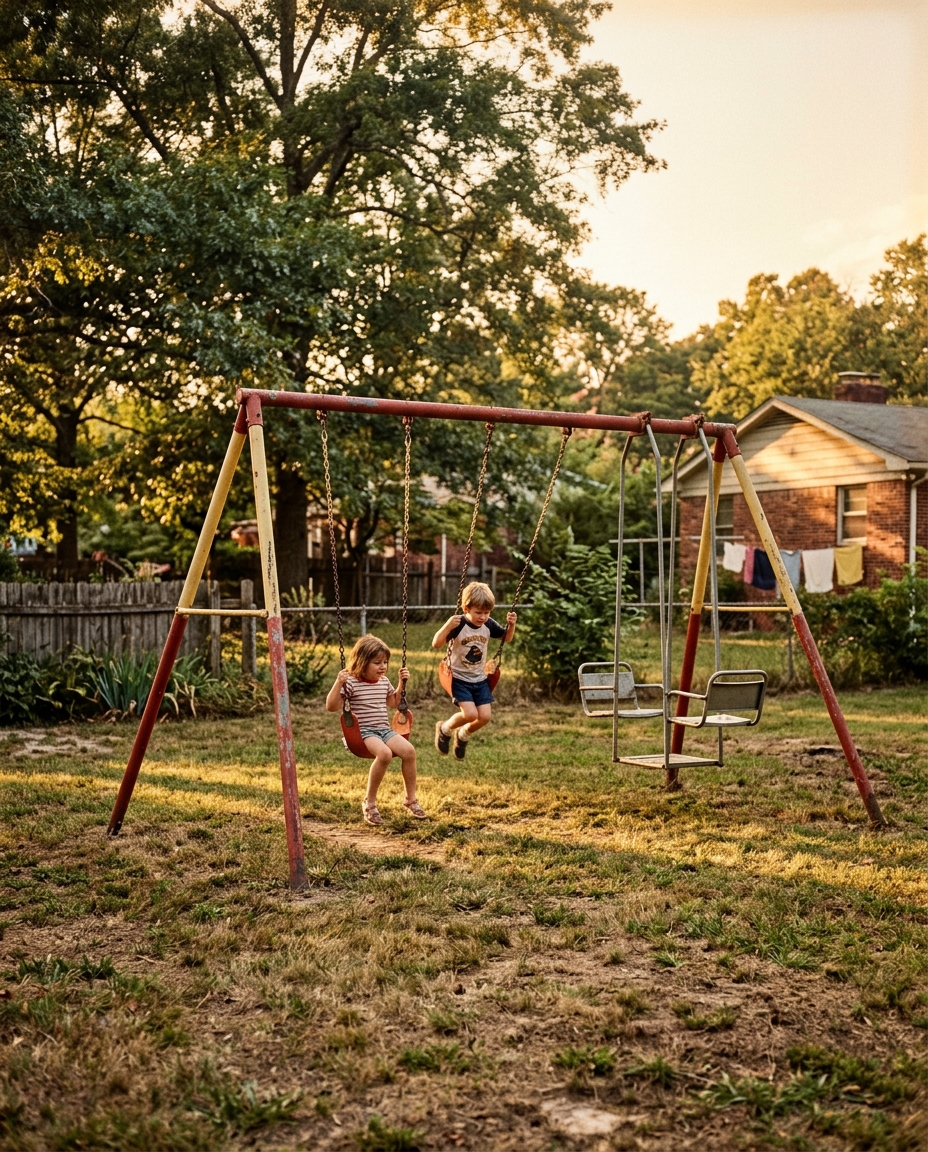
Tubular Metal Swing Sets That Walked Across the Yard
Would you like to save this?
I could hear ours coming half a block away. That rhythmic metal squeak of a chain pulling against a steel A-frame was the sound of summer itself.
The classic backyard swing set was tubular steel, painted in bright colors, and sold through the Sears and JCPenney catalogs to half the families on my street.
Here is the part nobody mentions now.
When you pumped high enough, the back legs of the frame lifted clean off the dirt and the whole thing rocked toward you.
Consumer Reports flat out told parents to sink the legs in concrete because the sets walked across the yard otherwise. We never did.
I just made my little brother sit on the crossbar to hold it down. The bare patches we wore into the grass under each swing were permanent.
The slide that stood next to it did its own kind of damage.
Metal Slides That Branded the Backs of Your Legs
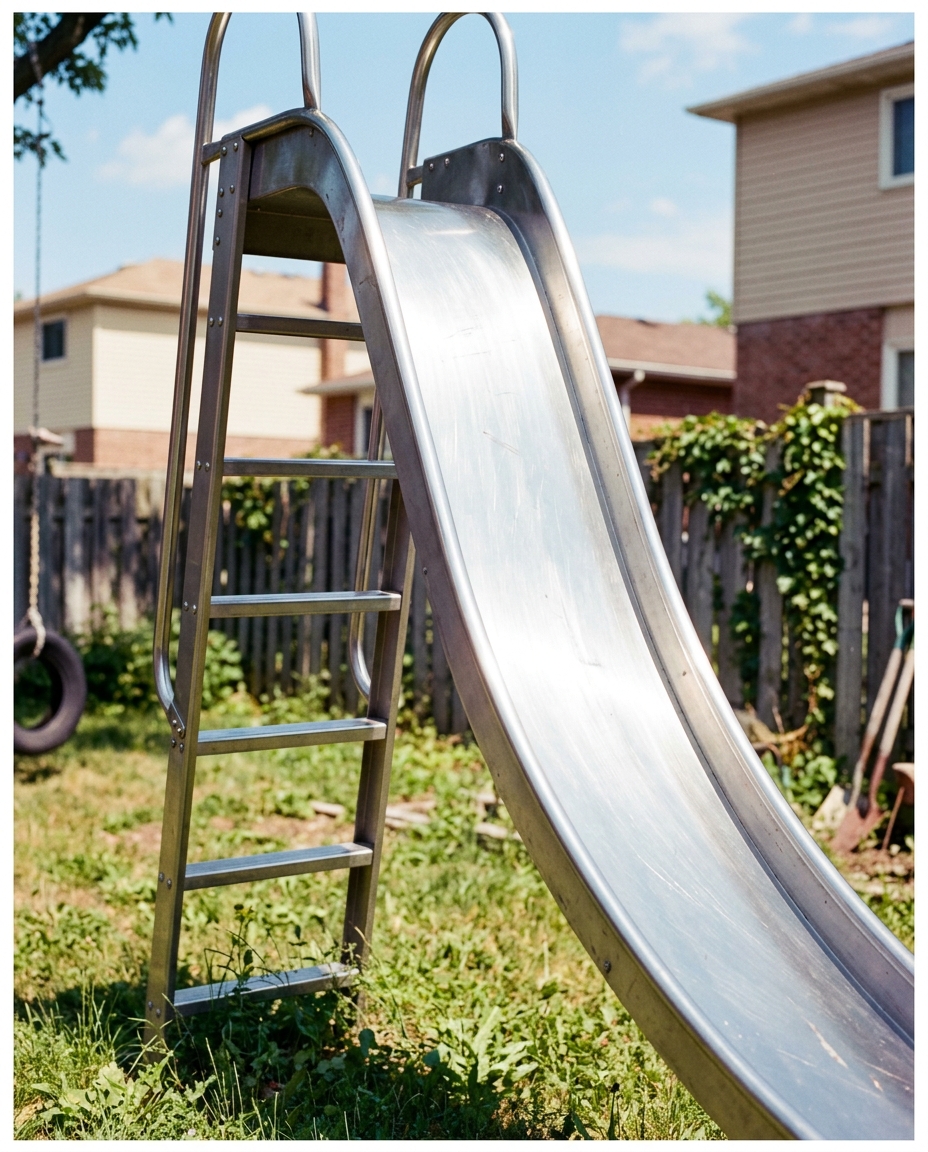
Our slide was a tall sheet of bare stainless steel with no shade over it, and on a sunny afternoon the surface temperature sailed past 150 degrees.
Sitting down in shorts was a genuine act of courage.
YOU’LL ALSO LOVE25 Things About Your Home That Visitors Notice in the First 10 Seconds (But Never Tell You)
You learned fast. I went down standing on my sneakers, or I brought a square of wax paper to sit on, which had the bonus effect of polishing the metal so the next kid went down twice as fast.
The colorful plastic slides that replaced them did not really take over until the late 1980s. For a whole decade, a summer slide ride came with a real chance of a burn, and we kept climbing back up the ladder anyway.
Down the row from the slide, the most dangerous thing in the whole yard was spinning.
The Backyard Merry-Go-Round
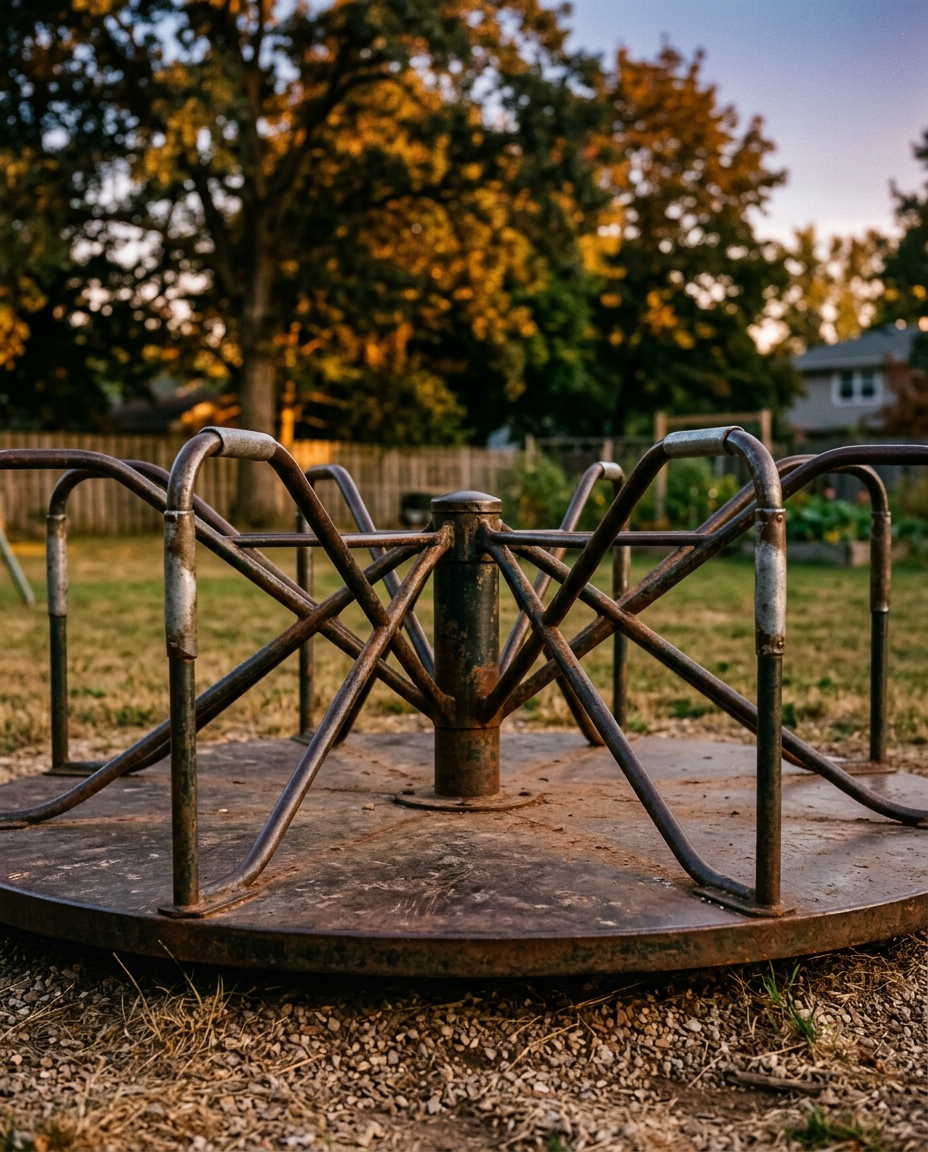
A few yards on my block had the heavy steel merry-go-round, a flat disc you gripped by the bars while somebody ran it up to a speed no sane adult would permit.
The physics were simple and the design was honest about its intentions.
One strong kid pushed faster and faster, the centrifugal force crept up your arms, and the only way off was to let go and get launched into the grass.
We took turns being the one who pushed and the one who flew. Nobody called it dangerous. We called it the best thing in the yard, and we lined up to go again.
When we got thirsty from all that spinning, we did not go inside for water.
Drinking Straight From the Garden Hose
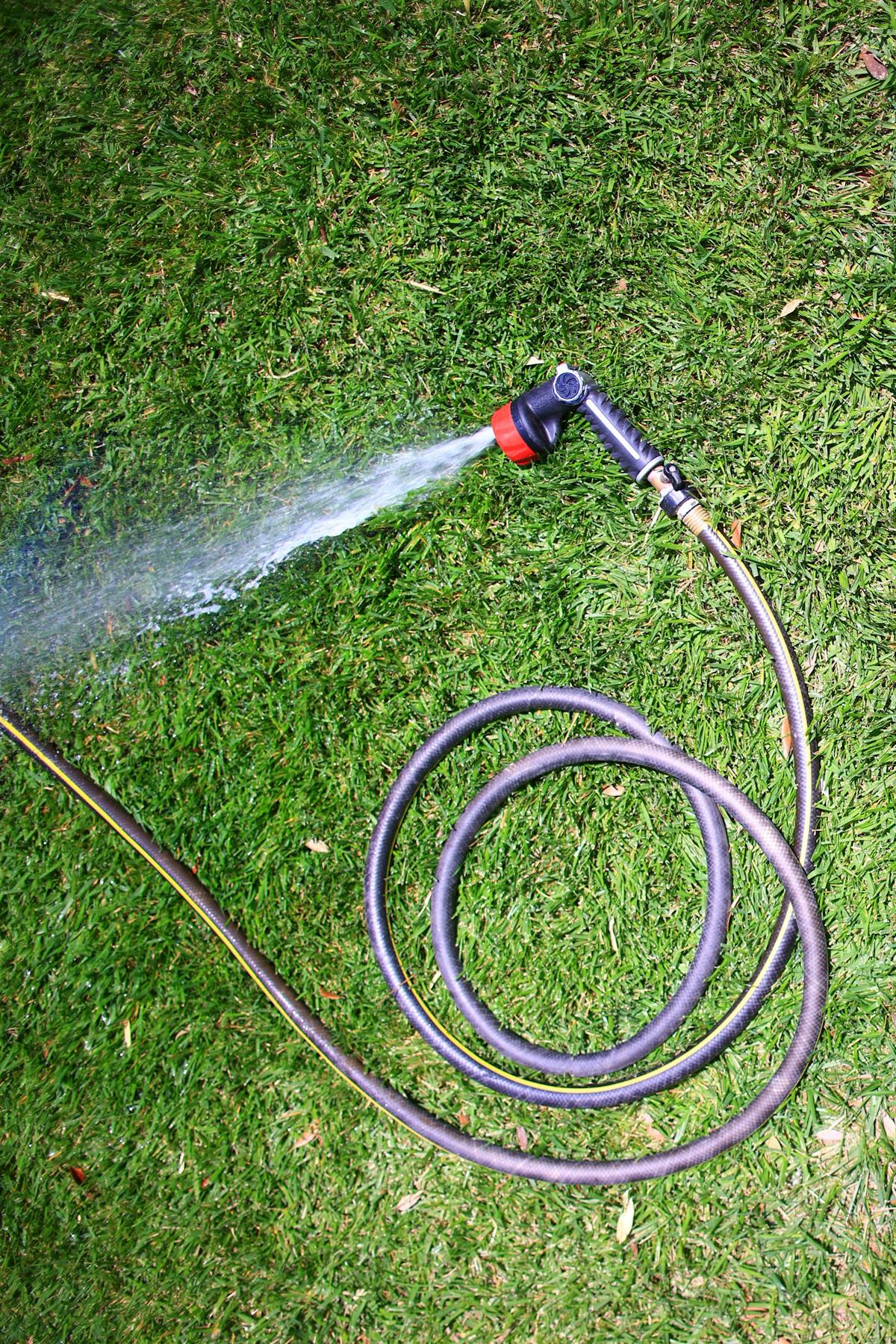
Photo: David Brown / Pexels
There was no filtered water and no splash pad back then, just a rubber hose, a galvanized tub, and a sprinkler we ran through until our lips turned blue.
When I got thirsty, I did not go inside and I did not ask. I walked to the side of the house, twisted the spigot, and drank straight from the hose.
The first gulp ran hot and tasted exactly like warm rubber, and then the cold water came through from underground and nothing in my life has tasted that good since.
That same hose filled the pool, washed the dog, and ran the sprinkler. None of us gave a single thought to what it was made of.
You drank, wiped your chin on your shoulder, and went right back to whatever you were doing.
The fanciest thing that hose ever fed was a strip of yellow plastic that was a bruise waiting to happen.
A Backyard Water Slide That Was a Bruise Waiting to Happen
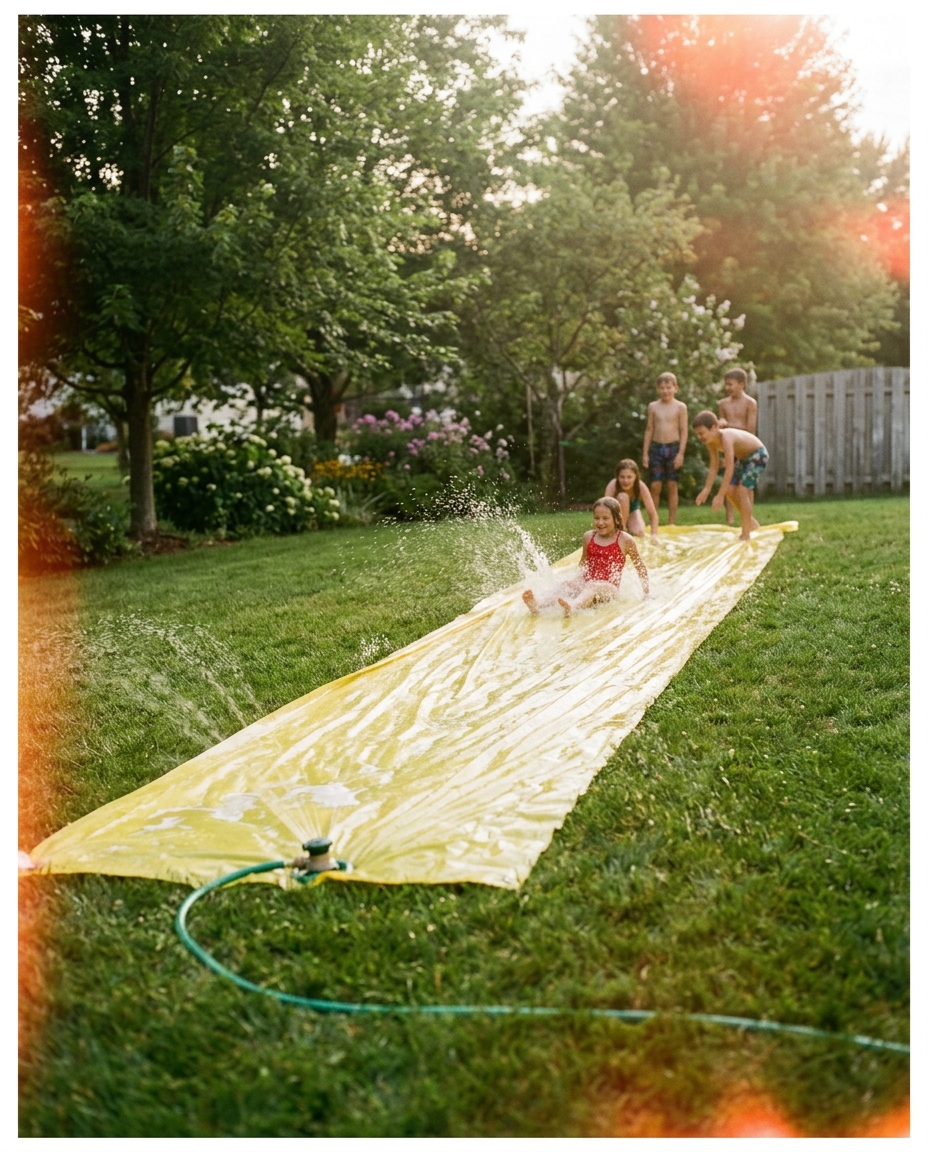
A man named Robert Carrier invented the backyard water slide in 1961 after watching his son skid across wet pavement.
It was thirty feet of slick plastic, forty inches wide, fed by a garden hose, and it sold for nine dollars and ninety five cents.
It moved 300,000 units in a matter of months, and one of them was ours.
Here is the detail almost nobody knew at the time. The thing was engineered for bodies under 125 pounds, so when my dad took a running dive he tended to stop short instead of gliding.
You hit the seam where two sheets met, you bruised a hip on the hard ground underneath, and you got right back in line soaking wet.
If you wanted real water, though, you wanted the family on the block that had the pool.
The Above-Ground Pool the Whole Block Shared
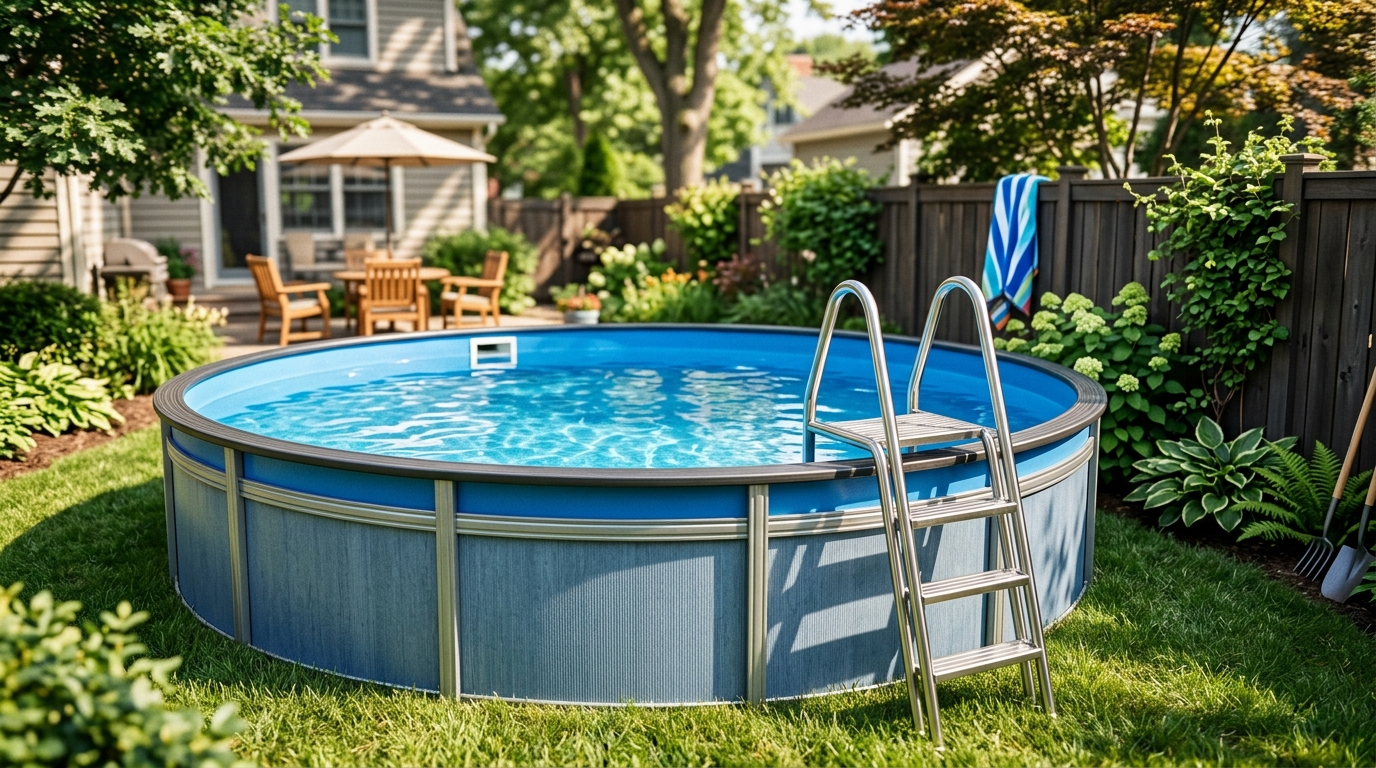
The Hendersons two doors down had the above-ground pool, which made their kids the most popular on the street from June through August.
YOU’LL ALSO LOVE30 Things in the 1970s Living Room That Would Confuse Anyone Under 30
I spent half my summers in that water on an invitation I never stopped angling for. The numbers tell the whole story.
The country went from about 2,500 backyard pools in 1950 to over 200,000 by 1970, and a lot of those were the round vinyl-and-steel kind you could buy at the department store.
They were even sold door to door by salesmen carrying little display models. One knocked on our door once, and my mother stood there listening to the whole pitch.
The water was freezing in the morning and bathtub warm by four, the bottom liner felt slick and slightly alarming under your feet, and the ladder always had one bent rung nobody ever fixed.
The rest of us, the ones with no pool, made do with a lot less and somehow did not feel cheated.
Oscillating Sprinklers That Ran the Whole Afternoon
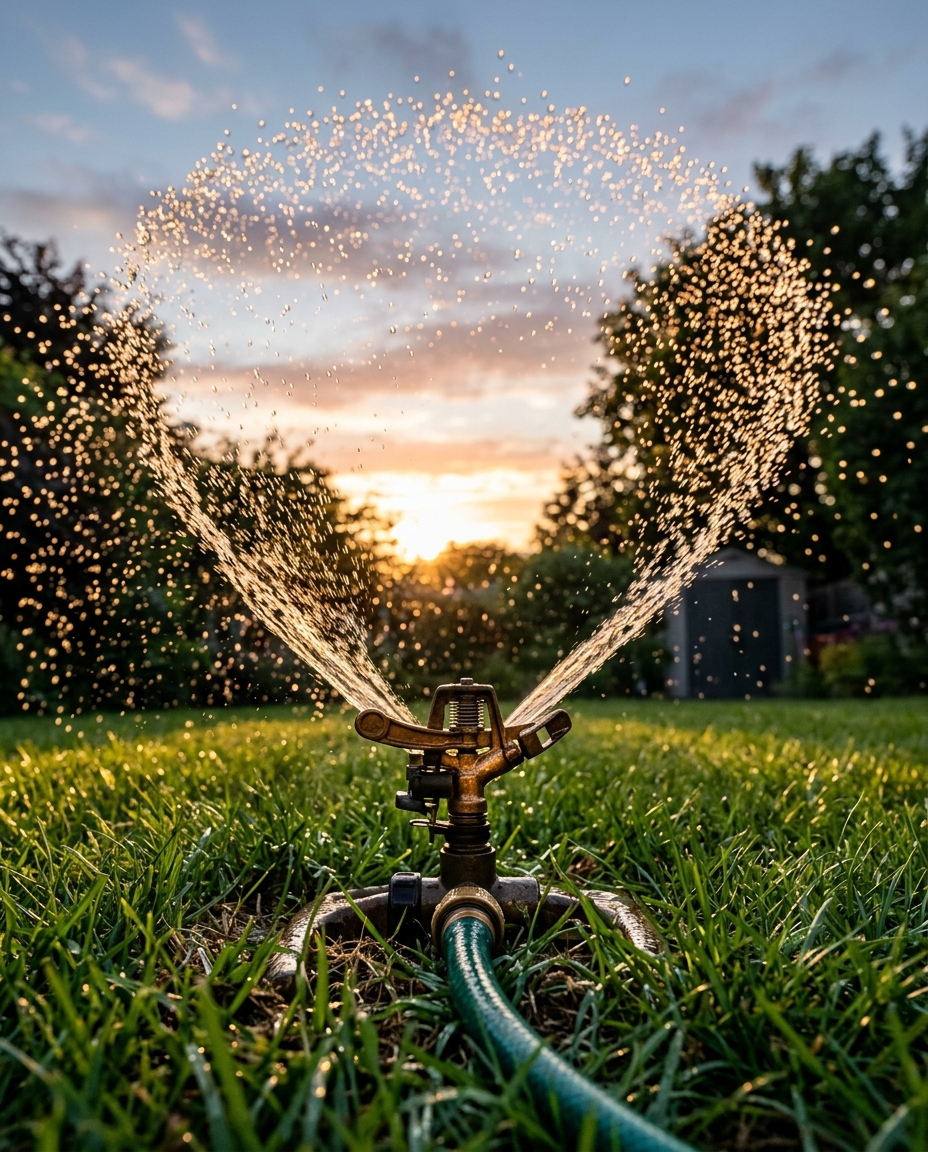
No pool was no problem at our house.
I dragged the oscillating sprinkler to the middle of the yard, cranked the spigot wide open, and spent the entire afternoon running through the arc of water as it swept back and forth.
I timed my sprint to clear it at the top, then turned and did it again a hundred times.
The grass turned to cool mud under my feet, my fingertips pruned up, and I stayed out there until my lips went a little blue and my mother finally called me in to sit on a towel and warm up.
A sprinkler, a hose, and a flat lawn. That was our whole water park, and I would not trade it.
Not every working part of the yard was built for fun. Some of it was just my mother’s labor, out in the open.
The Backyard Clothesline

Photo: Sergey Filippov / Pexels
A 1970s backyard was not staged for relaxing. It was a working yard, and some of its hardest-working features have nearly vanished from the modern lot.
Nearly every backyard on my street had a clothesline, often the umbrella kind that spun on a center pole, and my mother hung the wash out to dry in the sun even though the electric dryer was sitting right there in the house.
That sun-dried smell baked into the sheets is something no fabric softener has ever managed to fake.
Here is what would shock her today.
More than half of homeowner associations now restrict or outright ban clotheslines, and over a quarter million of those associations govern roughly 60 million people.
Florida had to pass an actual law in the 1970s making it illegal to forbid line drying.
The free smell of sunshine became a thing you need legal protection to enjoy. And it was not the only backyard chore that got legislated out of existence.
Burning the Trash in a Backyard Incinerator

Before everybody had weekly pickup, a lot of yards had a burn barrel or a little brick incinerator in the back corner where the household trash simply went up in smoke.
My dad would light ours after dinner and I would stand there feeding it scraps of cardboard, watching the embers float up into the dark.
YOU’LL ALSO LOVE11 Neighborhood Rules Every Kid Knew in the ’80s That No Parent Would Allow Today
Los Angeles banned backyard incinerators outright back on October 1 of 1957 to fight the smog, and over the following decades town after town followed, until burning your own garbage in the yard went from a normal Tuesday chore to a thing that gets you a ticket.
The smell of that smoke is locked in the memory of everyone who lived it. So is the patch of ground where we played in something modern parents would never allow.
An Open Sandbox the Neighborhood Cats Treated as Their Own
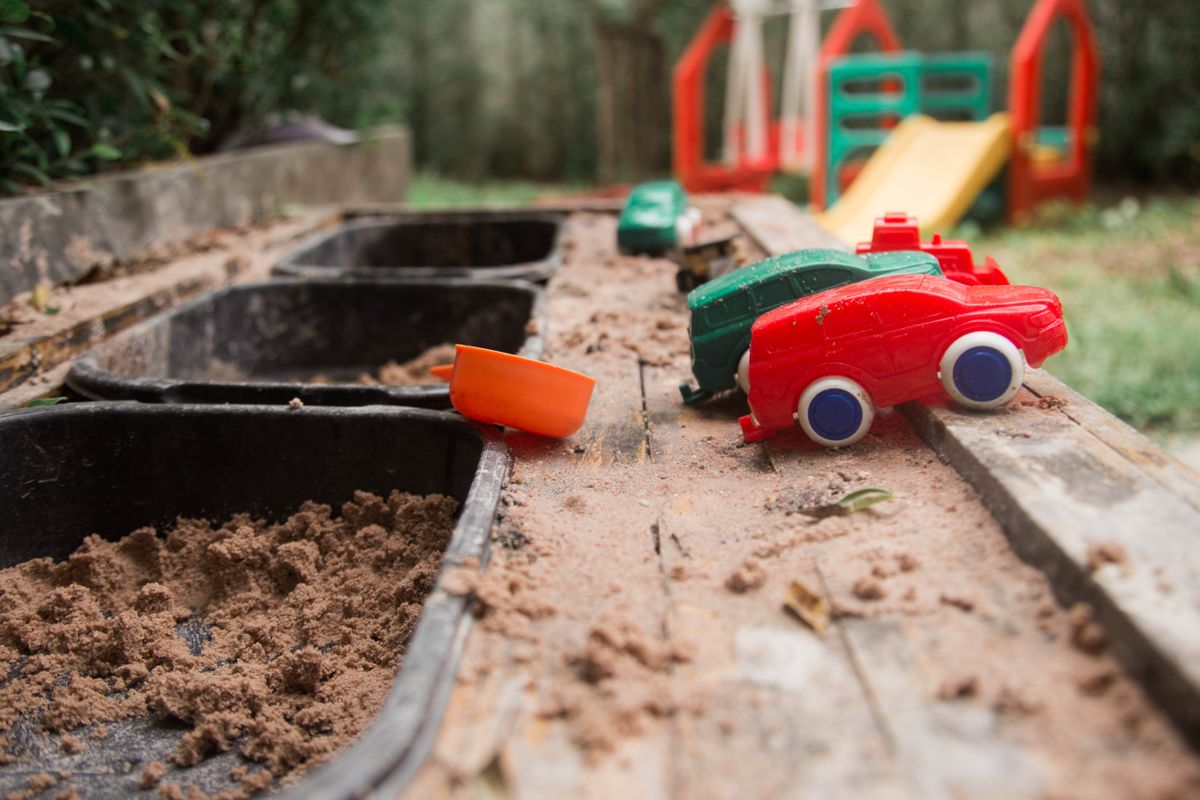
Photo: Micah Eleazar / Pexels
My sandbox was a simple wooden frame full of sand, left wide open to the sky day and night, and it was where I spent whole mornings running toy trucks through tiny dirt roads.
Nobody on my street owned a cover for one. The thing modern parents fixate on, we never thought about for a second.
Every cat in a three-house radius used that sandbox as a litter box after dark, and one later study of public sandboxes found 12 of 13 of them contaminated.
The U.S. Public Health Service had already started warning people about it back in 1971.
We just brushed the surface off, dug down to the clean sand, and built our roads. Speaking of digging, the next thing in the yard was a hole all its own.
Steel-Tipped Lawn Darts You Threw Near Actual Humans
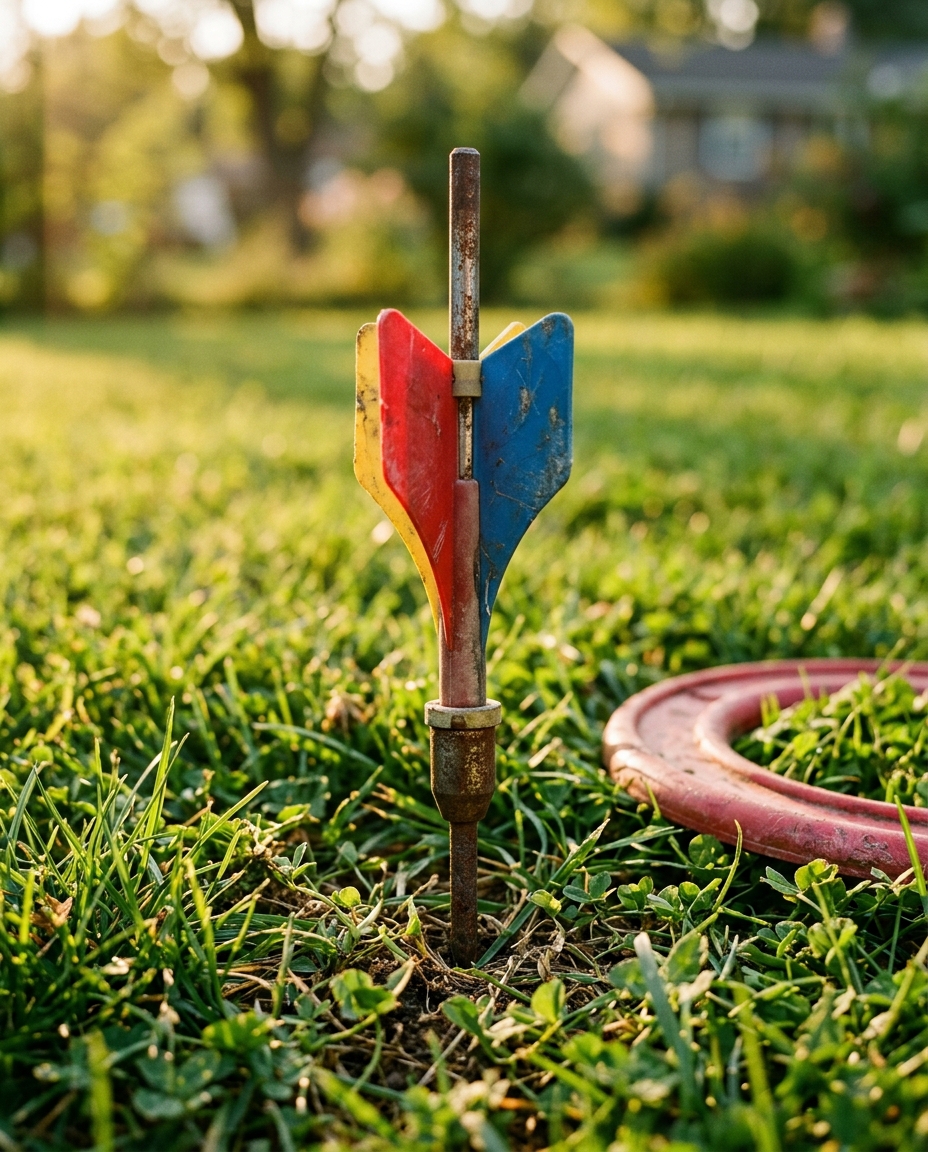
Not every backyard game involved running. Some of the ones I loved best were the ones where the whole point was to stand still, take aim, and try not to hit your cousin.
Lawn darts were weighted spikes of solid metal with little plastic fins, sold right there in the toy aisle, made to be hurled across the yard at a plastic ring on the grass.
Before you scroll, estimate how many Americans those spikes sent to the emergency room.
Between January 1978 and December 1986 the count was about 6,100, and 81 percent of them were under the age of 15.
After three children were killed, the government banned the sale of lawn darts outright, and they were pulled from store shelves the week before Christmas in 1988.
We had been lobbing them around the family cookout for years by then. The grown-ups had a heavier game going in the far corner.
The Horseshoe Pit Where the Grown-Ups Held Court
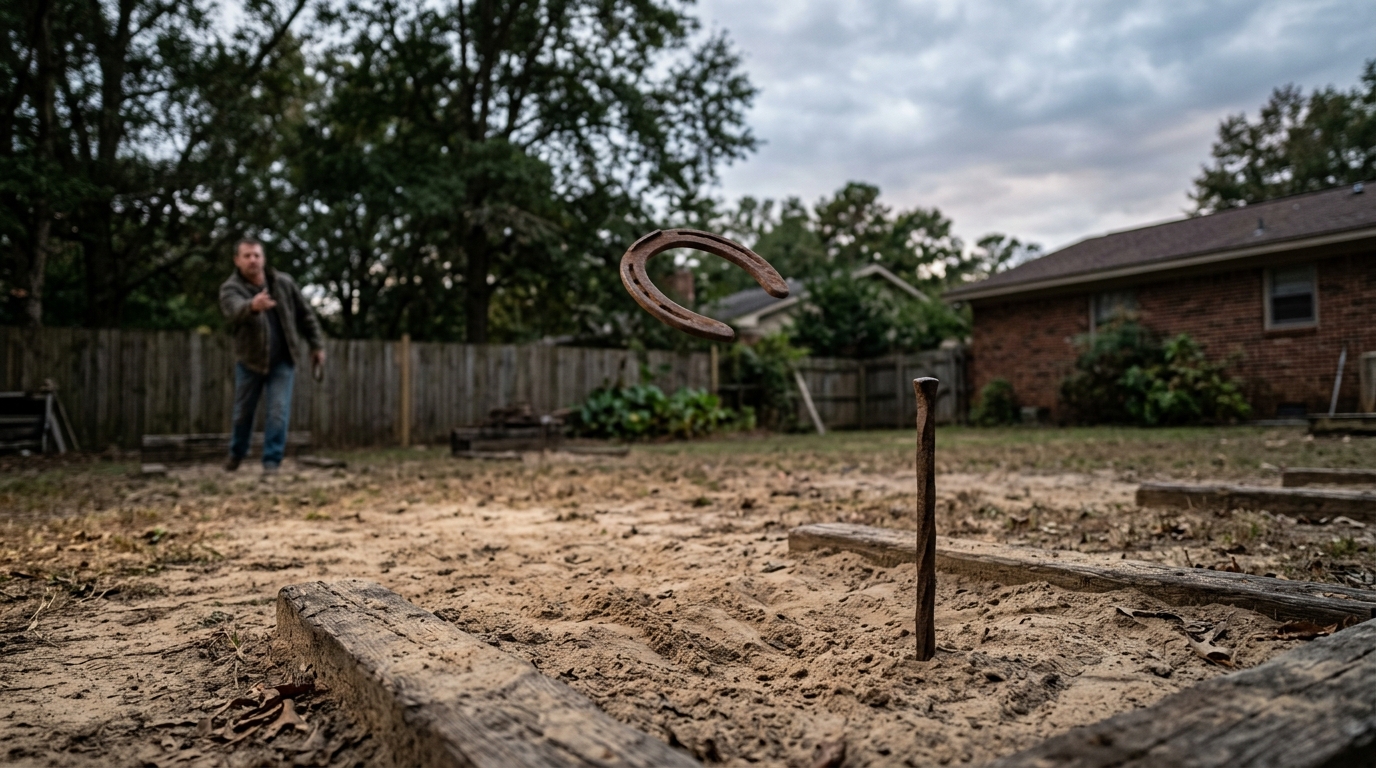
In the far corner of our yard sat the horseshoe pit, two metal stakes driven into patches of dirt about forty feet apart.
This was where my dad and my uncles gathered after the burgers came off the grill, beverages in hand, lobbing heavy iron shoes through the evening air. The clang of a ringer and the collective groan that followed a near miss were the soundtrack of every cookout.
I learned the game by being trusted to stand at the far stake and call the points, which meant standing fairly close to where grown men were throwing chunks of iron.
I felt important. Nobody worried.
The game the kids fought over was gentler to look at and twice as vicious to play.
A Croquet Set That Started More Fights Than Any Sport
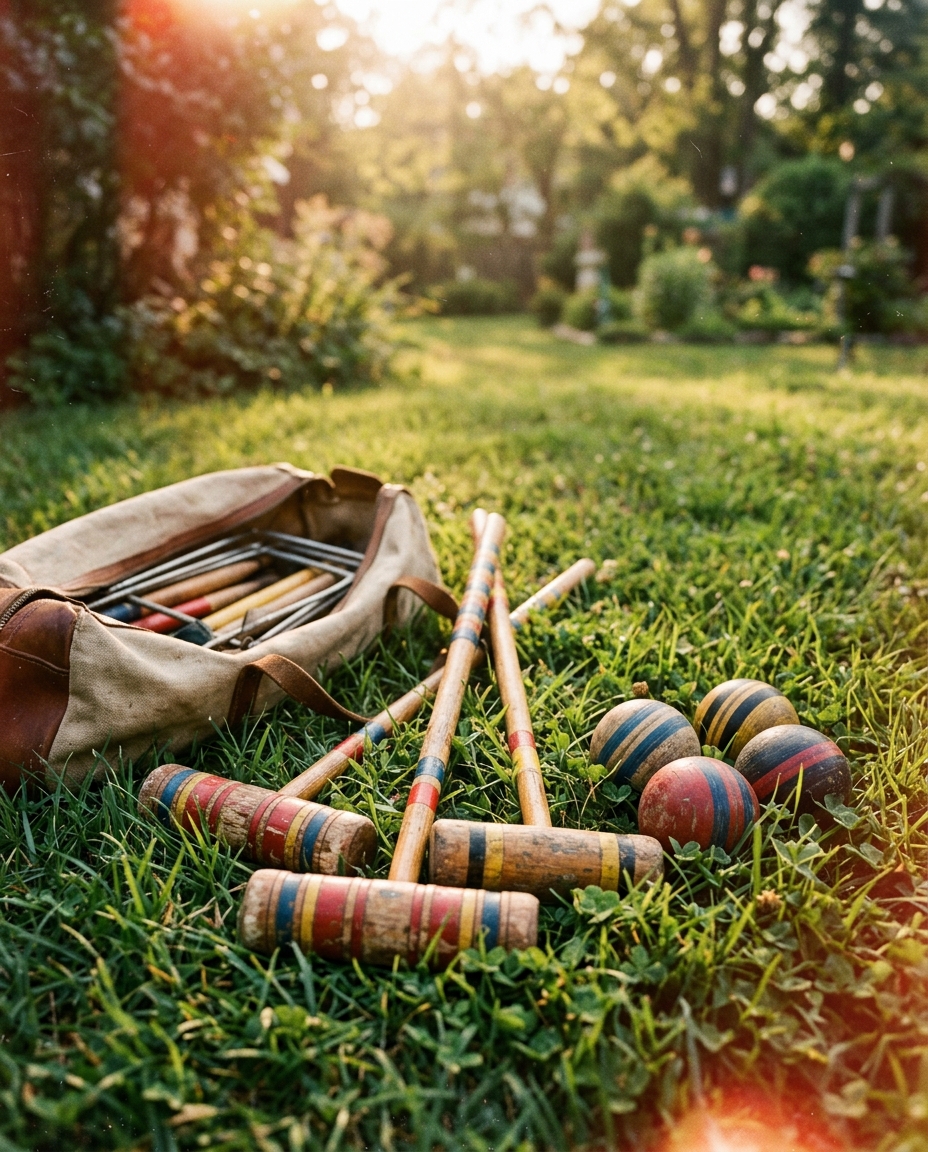
The croquet set came out of the garage and the wire wickets went into the lawn, where they stayed all summer long until the mower found them.
The game looked gentle and genteel right up until my cousin used his turn to knock my ball into the flower bed, and then it was war.
YOU’LL ALSO LOVE25 ‘Common Sense’ Home Rules Everyone Followed in the 80s That Would Get You Laughed At Today
We argued the rules nobody actually knew, we cheated by nudging the ball with a foot, and we settled the whole thing ourselves because the adults were busy at the horseshoe pit.
A wooden mallet, a striped ball, and a grudge that lasted until dinner. That was a full afternoon.
Not all of the yard was for games, though. A serious chunk of it was dinner.
Warm Tomatoes From the Garden That Filled Half the Yard

Photo: Jonathan David / Pexels
Beyond the games and the gear, our yard had a handful of living, growing fixtures that asked for patience instead of energy.
A serious chunk of it was given over to the vegetable garden, rows of tomatoes and beans and zucchini that my dad tended on weekends and put me to work weeding on threat of no allowance.
I learned that a tomato still warm from the sun, eaten standing right there in the dirt with the salt shaker I snuck out from the kitchen, tastes like something the grocery store has never once managed to sell.
Would you like to save this?
The whole family shelled peas on the back step.
The garden was chore and reward in equal measure, and the payoff showed up on our dinner table all season long.
After dark, that same patch of yard turned into the place we gathered around a fire.
The Fire Pit That Was Just a Ring of Stones
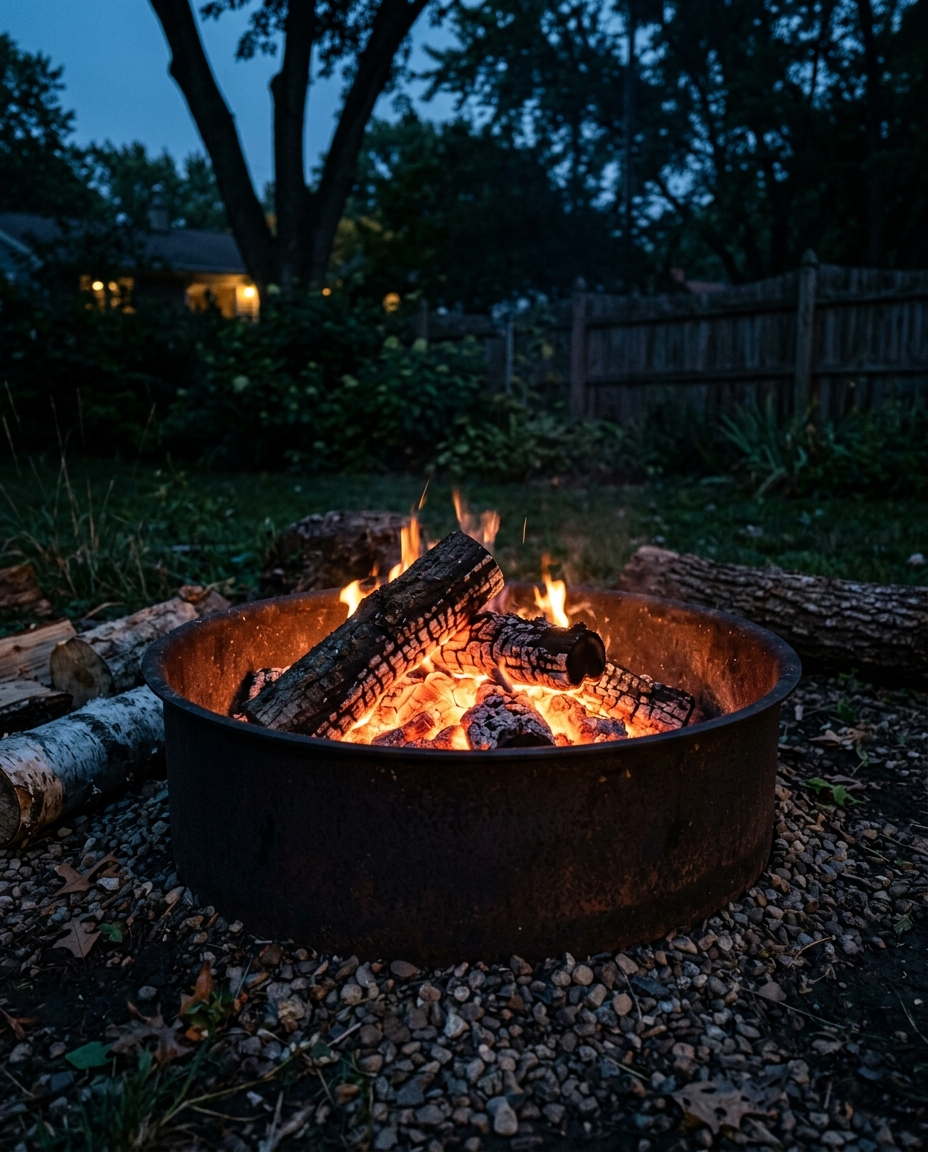
Long before the outdoor living room and the gas fire feature, the backyard fire was a ring of stones or an old steel rim with logs thrown in and a book of matches.
Somebody dragged out the lawn chairs, somebody found the marshmallows, and the whole family sat around it as the sky went dark and the stories got taller.
I learned that the smoke followed me no matter which chair I moved to.
I went to bed smelling like woodsmoke and bug spray, and I considered it the best smell there was. A pile of wood and a circle of stones did the whole job.
The quietest fixture in the yard belonged entirely to my grandmother.
Grandma’s Concrete Birdbath, Guarded Like Treasure

Photo: Rodion Kutsaiev / Pexels
My grandmother’s backyard birdbath was a heavy concrete bowl on a pedestal, usually a little cracked, usually a little green, and it was the center of her whole outdoor world.
She kept the water topped off, she knew which birds were regulars, and she narrated their squabbles like a sportscaster.
If you ever wondered why she cared so much about the birds, you understand it perfectly now, because the same thing happens to all of us.
You wake up one day a little older, you fill a feeder, and suddenly the backyard is the best show in town.
That birdbath was where the quiet obsession started for a whole generation, mine included.
Back at the swing set, there was a seat built for two that none of us could share in peace.
That Two-Seat Glider That Pinched Everyone’s Fingers
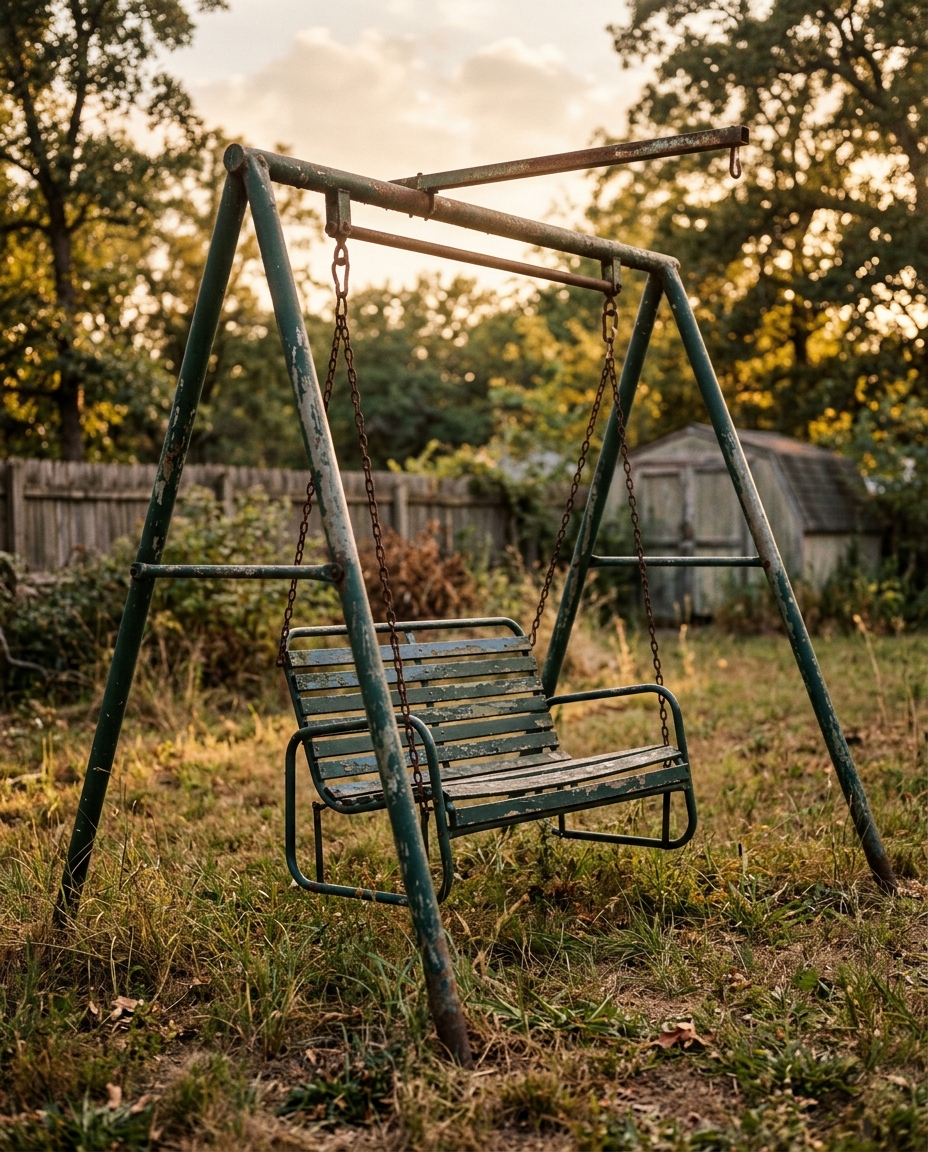
Some yard features had no practical purpose at all. They existed because a kid with a long summer afternoon and no schedule needs something to climb, hang from, or hide inside.
Bolted to our swing set was the glider, that two-seat metal bench where two kids sat facing each other and pumped in unison to make it swing forward and back.
It was the cooperative ride, which meant it only worked if my brother and I agreed on the rhythm, which meant it mostly ended in a fight.
The hinge where the seats met had a genuine appetite for fingers, and just about every kid on my street pinched one in there at least once a summer.
You sat across from your best friend or your worst enemy, you pumped until the whole frame groaned, and you tried to launch the other kid off the back.
The next fort I climbed into had no factory and no inspector at all.
Building a Treehouse From Scrap Lumber
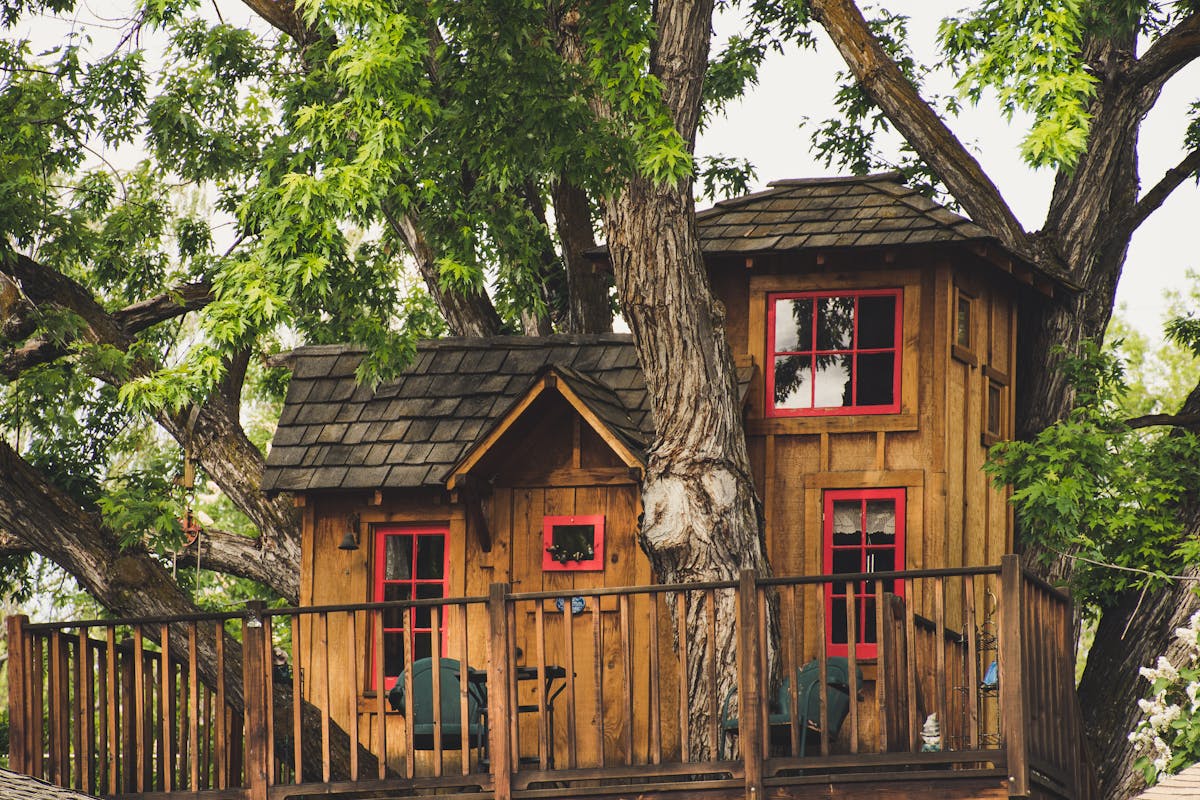
Photo: Brett Sayles / Pexels
A good number of backyards on my block had a treehouse, and the key fact is that the kids built it.
We borrowed Dad’s hammer and a coffee can of bent nails, dragged scrap plywood out of the woods behind a construction site, and nailed together a platform ten feet up that no building inspector would ever have signed.
It was framed by children and held together mostly by enthusiasm. I hammered my thumb, I dropped the hammer on somebody below, and we kept building.
The treehouse was a clubhouse, a fort, and a lookout tower, and the fact that it was slightly unsound was the entire point of it.
The next piece of the yard, by contrast, never needed a single friend.
A Tetherball Pole You Could Beat Up All By Yourself
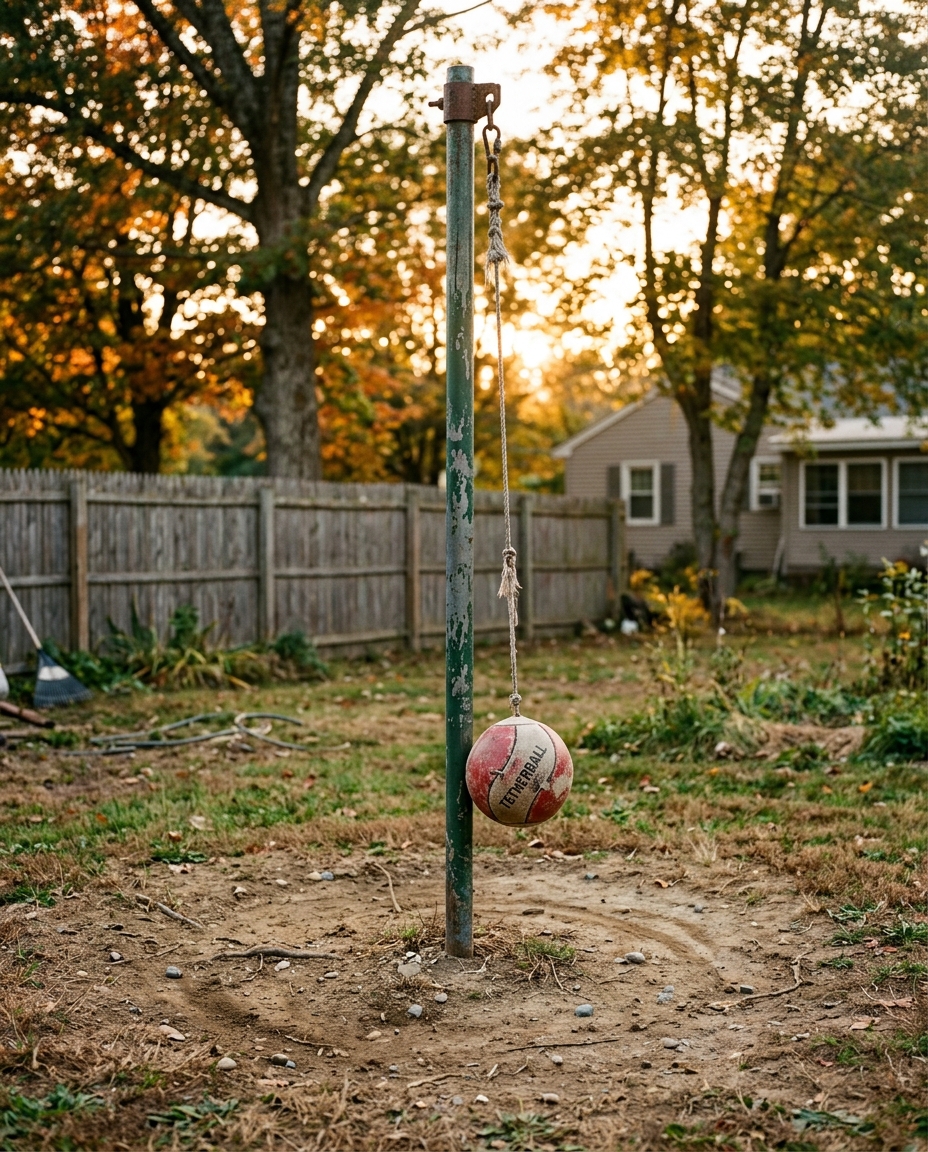
Some yards had the tetherball pole, a metal post sunk in the ground with a ball on a rope, and its great gift was that you needed exactly nobody else to play.
I could go out there alone and wallop that ball around the pole for an hour, working out my whole day on it.
When a friend showed up it turned competitive, two kids swatting the ball in opposite directions until the rope wrapped tight at the top.
The grass around the base wore down to a bare dirt ring by the middle of August.
It was the most reliable companion in the yard, always there, always ready, never needed a second player.
There was only one spot more peaceful, and getting into it was the hard part.
The Rope Hammock That Flipped You Onto the Ground

Photo: azra irem Topcu / Pexels
Strung between two trees in the shadiest corner sat the rope hammock, the one piece of backyard equipment that was actually built for resting and still managed to be a challenge.
Getting into the thing was a coordinated maneuver that went wrong about half the time, dumping me straight onto the grass while everyone watching howled.
Once I was finally settled, the rope pattern pressed a waffle grid into my back and the whole world swayed slowly through the leaves overhead.
I read comic books in it, I napped in it, and I got flipped out of it, and somehow it was still the best seat in the entire yard on a hot afternoon.
What That Backyard Was Really Giving You
Here is the part none of us could see at the time. That cluttered, slightly hazardous, gloriously unsupervised backyard was quietly doing a job far bigger than keeping us busy.
The posted purpose of the yard was play.
The three things it was actually delivering never showed up on any list.
The first was unstructured time. Hours with no schedule and no adult running the show, which is the exact condition researchers now link to creativity and independence.
The second was low-stakes risk. The burned legs and pinched fingers and hammock spills that taught your body where the edges were.
The third, the one that mattered most, was a place to simply be a kid outdoors with no one filming it and no one keeping score.
Our swing set rusted, the Hendersons’ pool sprung a leak, and the sandbox got hauled away.
What that backyard gave me went with me, and it never cost a thing.
Which backyard fixture do you miss the most, the swing set, the above-ground pool, or the smell of the clothesline drying in the sun? Tell us in the comments.