
Nobody decided to stop building houses this way.
It happened one quiet code change, one cost cut, one new material at a time. I’ve owned three since my starter ranch outside Dayton in 1991, and I still catch myself reaching for things newer homes don’t have.
Twenty-five of them, and the years they disappeared surprised even me.
Dropping Towels Down the Hallway Chute
I knew the laundry chute as the spot where I dropped dirty towels and waited for the thud two floors below. They showed up in American homes in the late 1800s, borrowed from grand Victorian houses in England.
By the 1930s they’d settled into ordinary hallways.
Builders phased them out by 1965. Fire inspectors saw any open shaft as a chimney waiting to happen. Once washers moved upstairs, nobody could justify the hole.
Would you like to save this?
Cold Bottles Waiting in the Milk Door
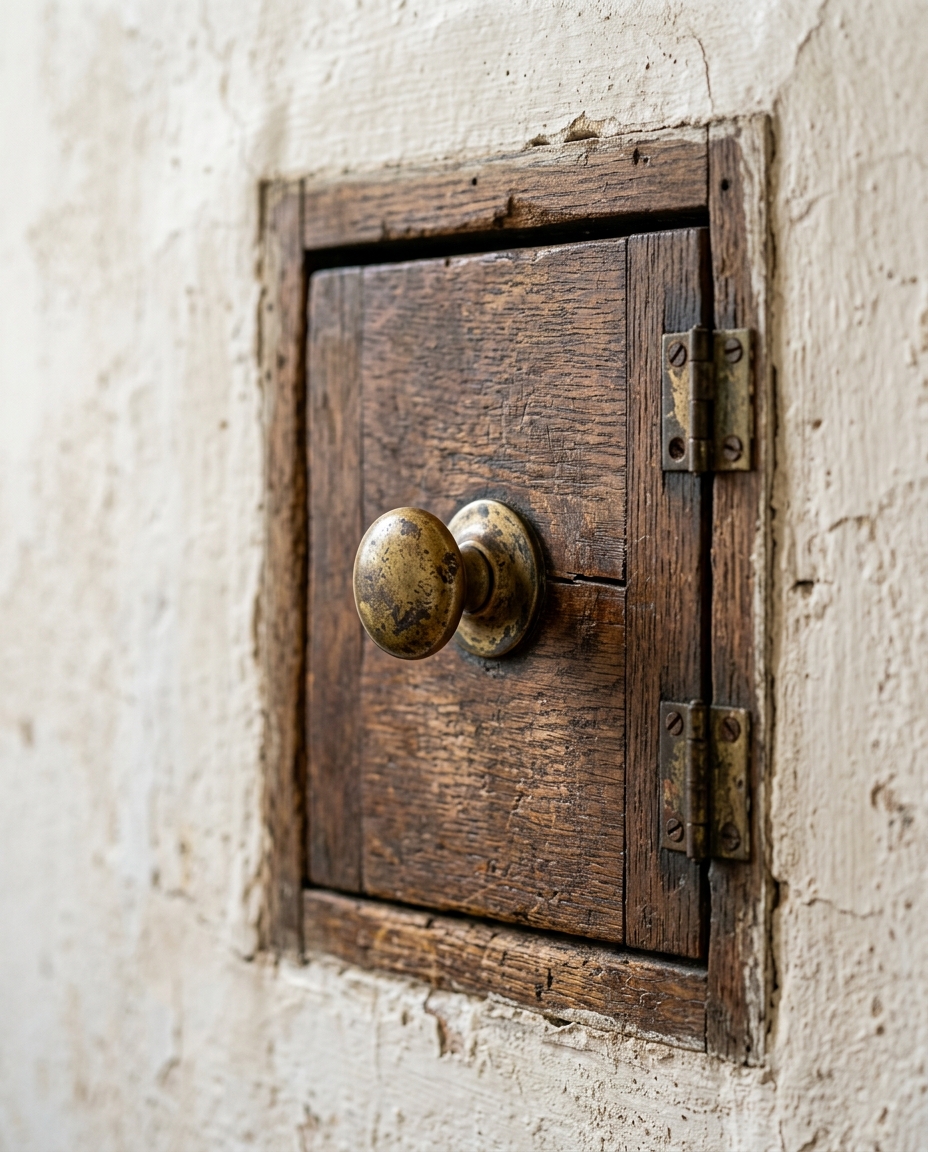
I never figured out, as a kid, why our back entry had a cabinet with a door on the inside and another on the outside. The milkman tucked cold glass bottles into that insulated box before sunrise.
Here’s the number.
In 1963, roughly 30 percent of America’s milk still arrived on the doorstep.
YOU’LL ALSO LOVE25 Things About Your Home That Visitors Notice in the First 10 Seconds (But Never Tell You)
By 2005 that figure had collapsed to 0.04 percent.
Refrigerators got big, supermarkets got cheap, and the little door got plastered over.

Little Windows Above the Bedroom Doors
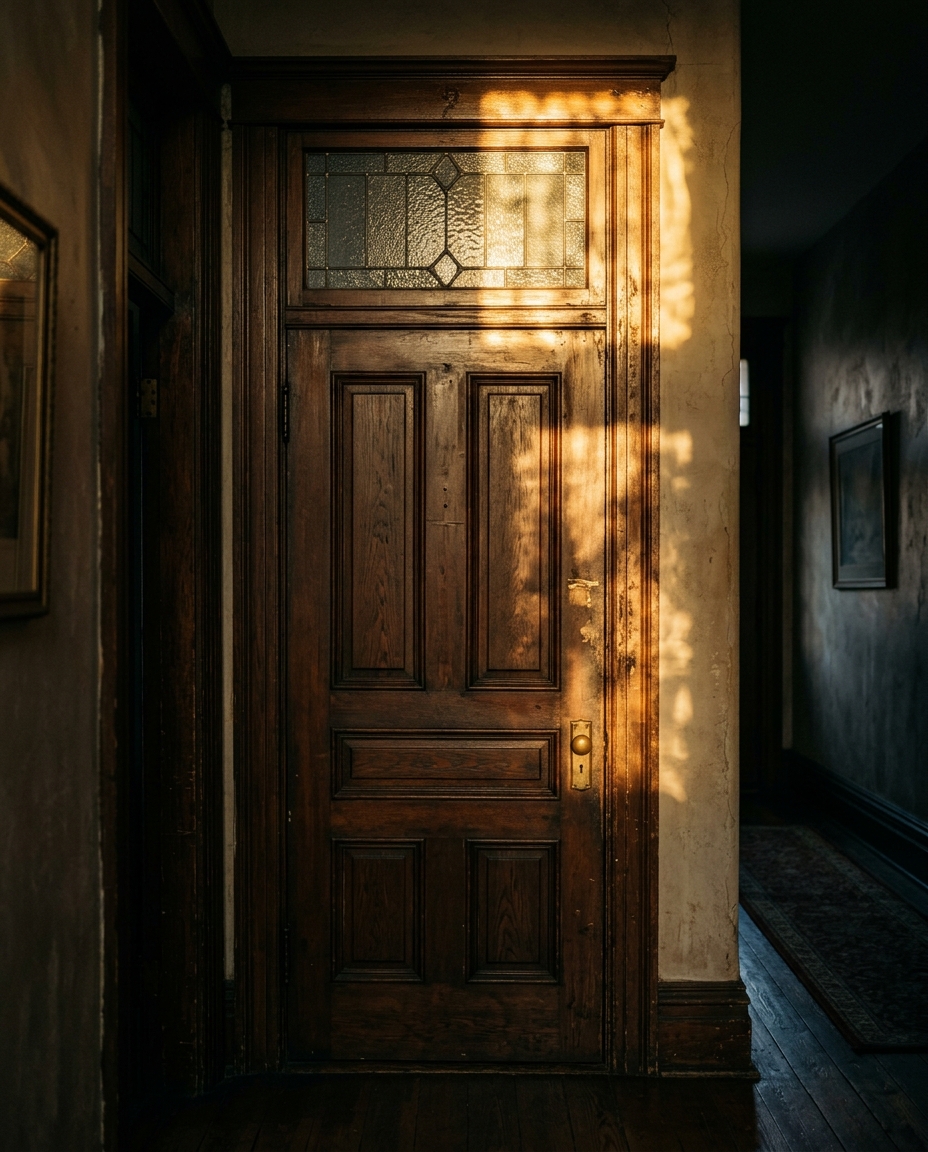
If your old house had them, you remember. Small windows perched above interior doors, sometimes on a hinge you tilted with a long brass pole.
They did real work. Doors shut, they let warm air rise out and pulled cooler air across the house.
After World War II, ranch houses traded delicate trim for big picture windows and flat ceilings. The detail that once moved air through my grandmother’s house vanished almost overnight.
Walls That Sounded Like They Meant It
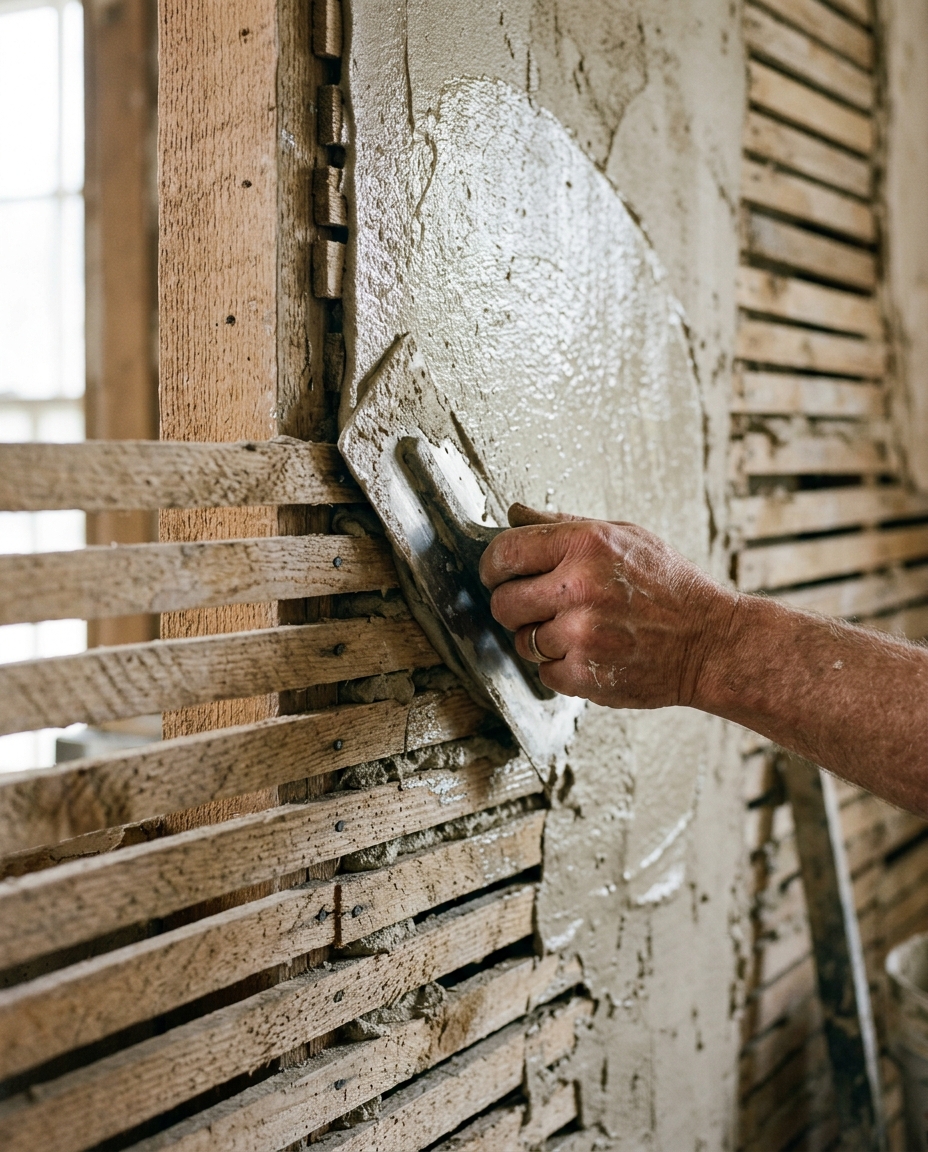
Knock on the wall of a house built before 1950 and you hear it. A dense, dull thud. Lath and plaster, built up by hand over thin wooden strips.
Drywall took over because it was cheaper and faster. By 1955 about half of all new homes went up with drywall.
My brother-in-law Dave inspected houses for 30 years. “You’re comparing a hand-plastered wall to a sheet of paper with chalk in the middle,” he told me once.
Replastering today runs $10 to $15 a square foot, that’s four times what drywall costs.
A Wooden Rail for Every Frame
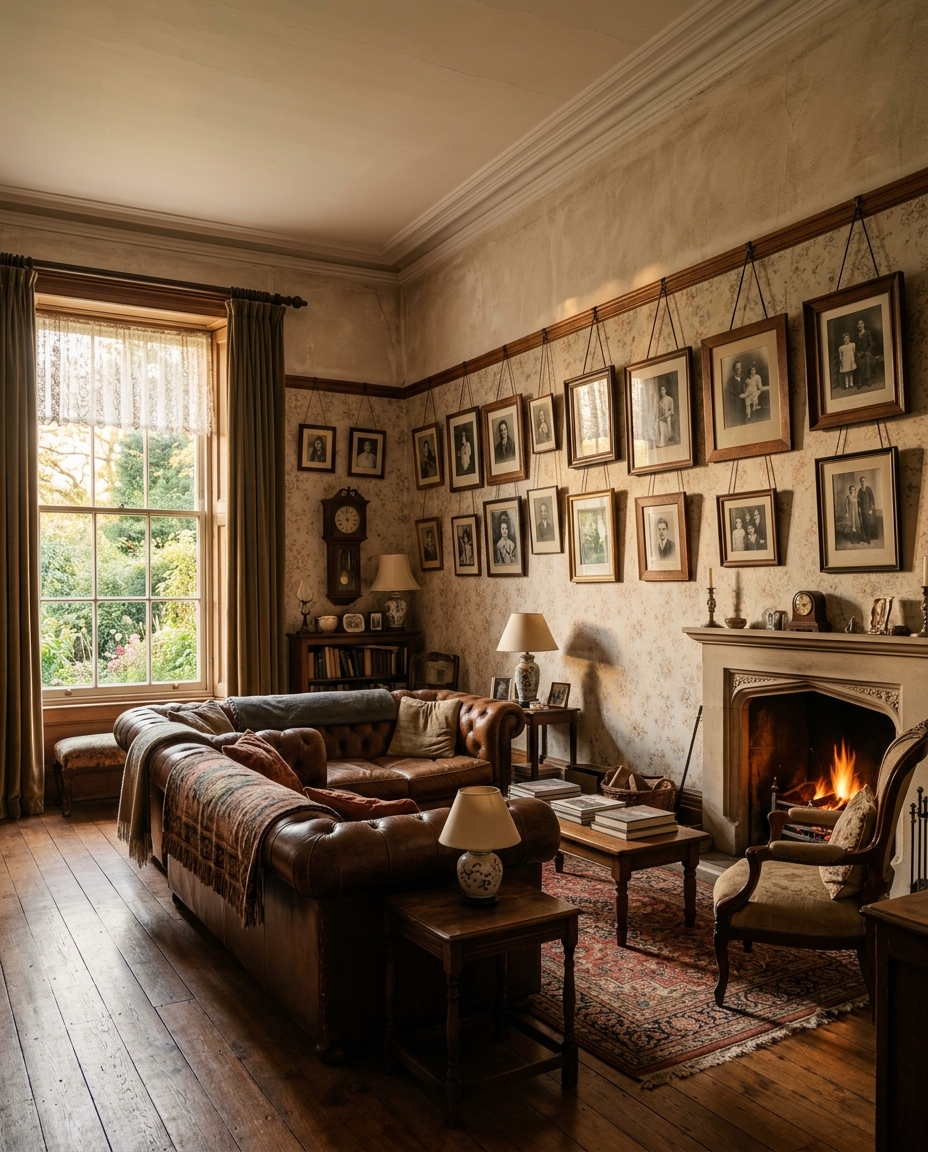
Run your eye around the top of a room in an old home and you’ll find a wooden rail circling the walls. I remember ours held every framed photo in the good room nobody was allowed to sit in. Little hooks and wires, nothing ever driven into the plaster.
Once drywall arrived, you could bang a nail anywhere and patch it. The whole point evaporated. If you grew up in the 1970s, that room had 30 things your grandkids couldn’t identify hanging from the same kind of rail.
One Phone, One Spot, One Little Shelf
We had one phone and it had one home. A shallow alcove carved into the hallway wall. The nook held the heavy rotary set, a shelf for the phone book, and the family address book in three different handwritings.
These niches were built 14 inches wide on purpose, the exact gap between two wall studs.
YOU’LL ALSO LOVE30 Things in the 1970s Living Room That Would Confuse Anyone Under 30
When phones went cordless and then went in our pockets, the shelf lost its purpose.

Photo: Maksim Yurchenko / Pexels
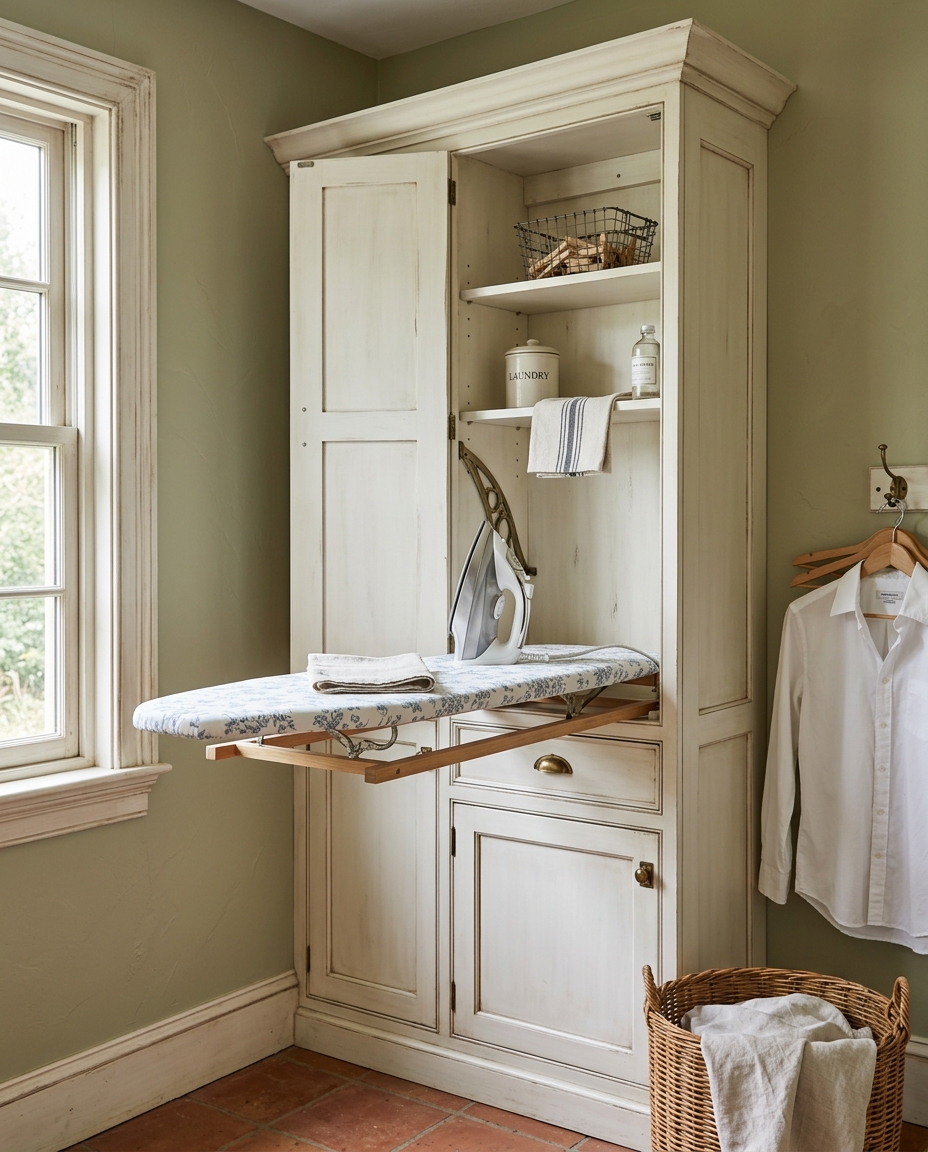
An Ironing Board Hidden Inside the Wall
What looked like a skinny cabinet door opened to a board that swung down ready to use, then folded flat and vanished. Same 14-inch stud gap.
It disappeared with permanent-press fabrics, and my wife Linda still talks about her mother’s fold-away board. “I would trade our whole laundry room for that one cabinet door,” she told me once. She brings it up twice a year.
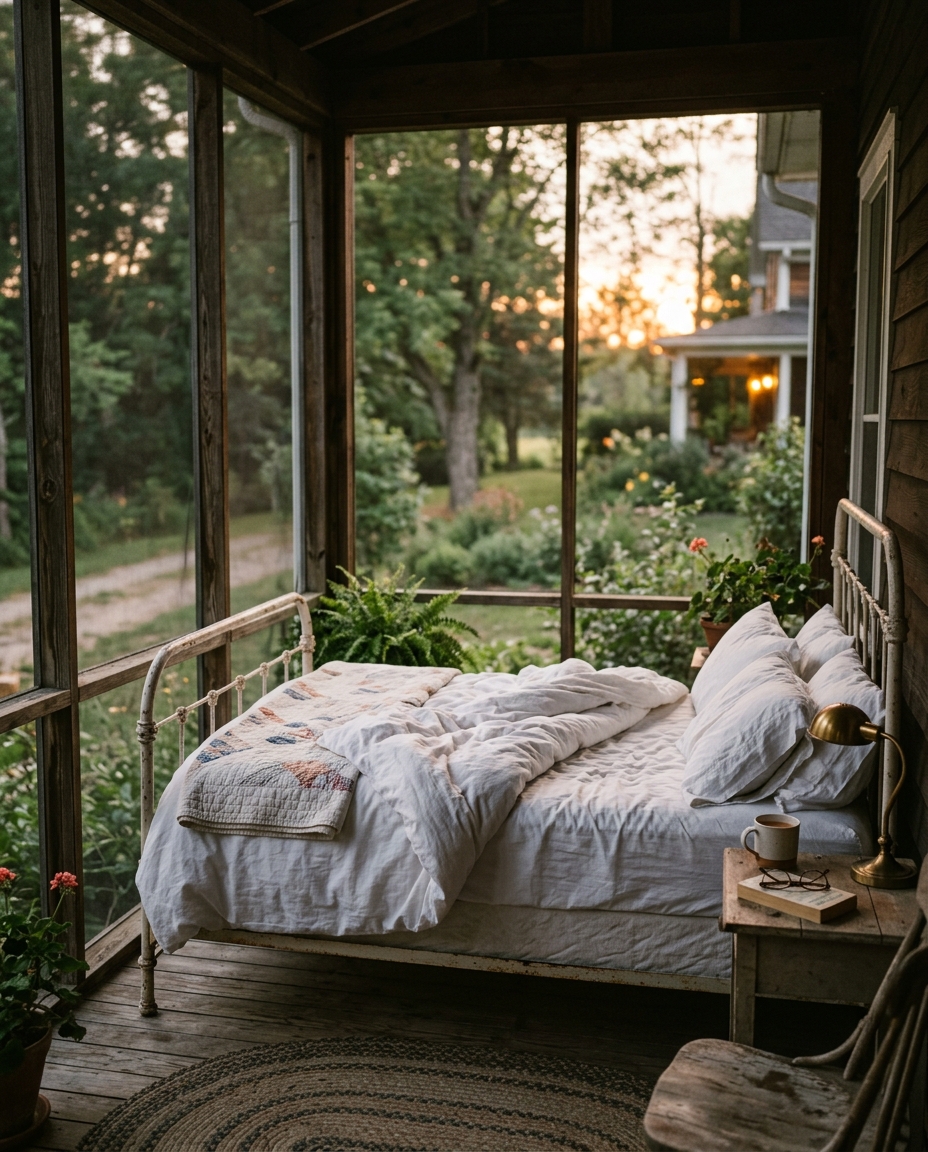
Sleeping Outside When July Got Unbearable
Before central air, families had a sleeping porch. A screened room off the back where everyone dragged out in July. My cousins had one, and a night out there is still one of the clearest memories I own.
Doctors in the early 1900s believed fresh air helped fight tuberculosis. Then air conditioning and antibiotics arrived almost together. The medical reason vanished and the comfort reason got a machine.
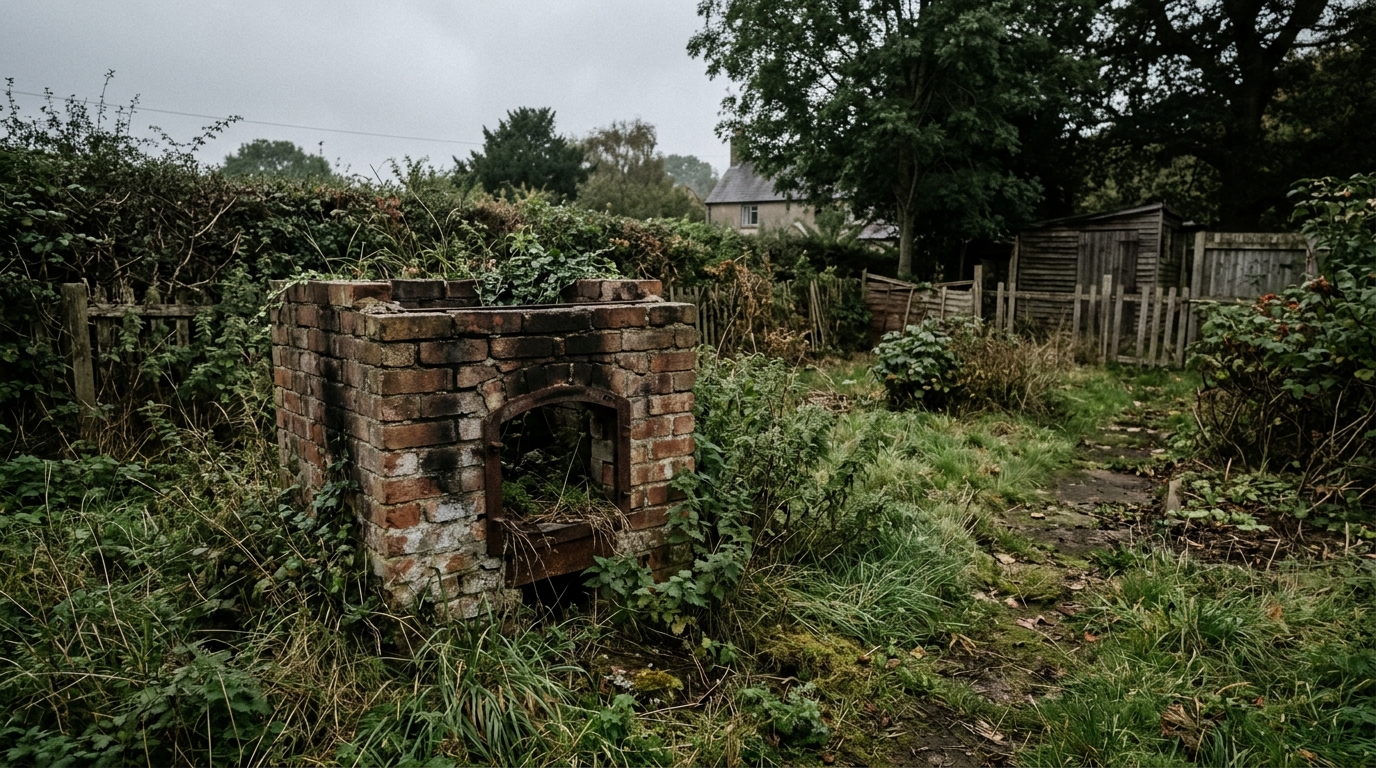
That Backyard Burner the Government Outlawed
Plenty of older homes had a small incinerator. Brick in the yard, or a metal chute in the basement. Feeding the fire was just a chore.
The Clean Air Act took effect in 1970 and ended backyard burning. Through the 1970s, towns banned it outright. It’s not just the incinerator. 27 things vanished from American homes so quietly that most people don’t even remember them leaving.
Sheets on a Line for Free
Few smells stay with me like sheets dried on the clothesline. Stiff, sun-warmed, faintly grassy.
The electric dryer arrived in the 1930s. The 1950s “Live Better Electrically” campaign taught America that drying indoors was modern.
Here’s what most people miss. The clothesline didn’t just fade. It got banned.
HOAs forbid them to this day, and as of 2025, 19 states have passed right-to-dry laws protecting homeowners. A rope between two poles became a legal battlefield.
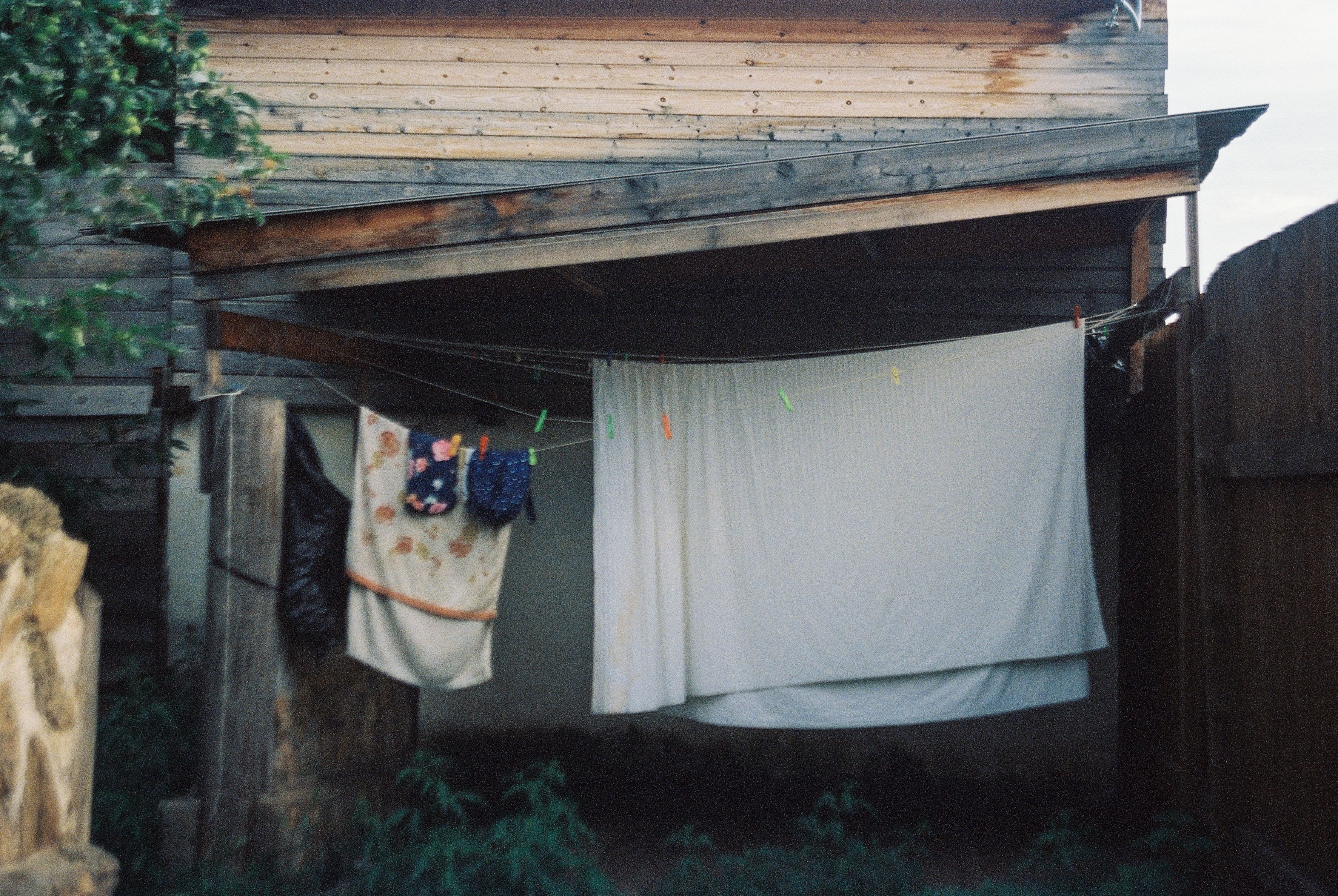
Photo: Alyona Pastukhova / Pexels
Cool, Dark, and Dug Into the Earth
Down a few steps, behind a heavy door, the root cellar stayed cool and damp all year. I can still call up the smell without trying.
Before refrigeration, this kept potatoes, carrots, and beets firm through a long winter. Nothing but the steady chill of the earth.
YOU’LL ALSO LOVE11 Neighborhood Rules Every Kid Knew in the ’80s That No Parent Would Allow Today
Once a refrigerator hummed in every kitchen, there was no reason to keep a buried room stocked with sand-packed vegetables. Most people today have never stood in that particular mineral darkness.
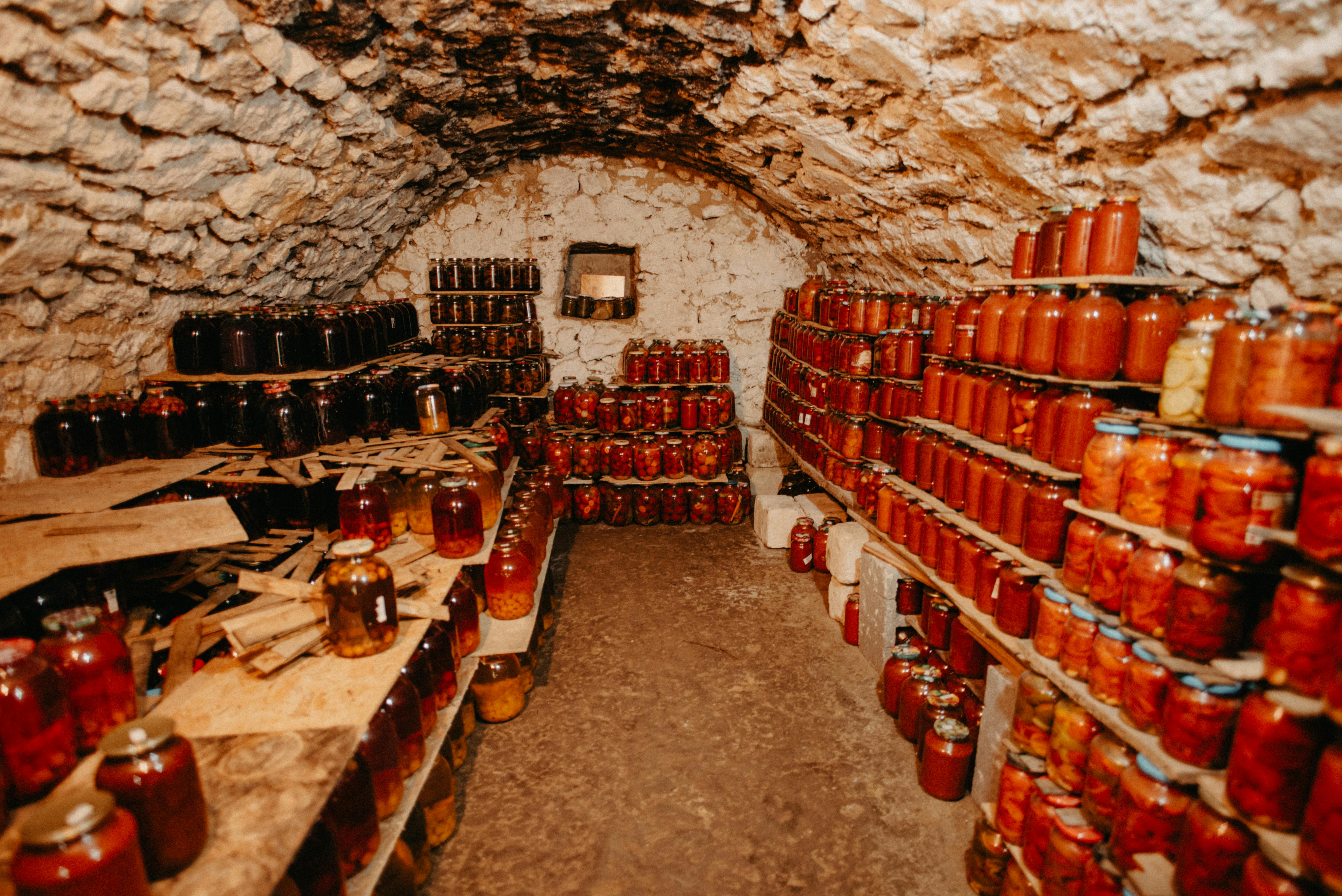
Photo: dumitru B / Pexels
One Switch and the Whole Day’s Heat Left
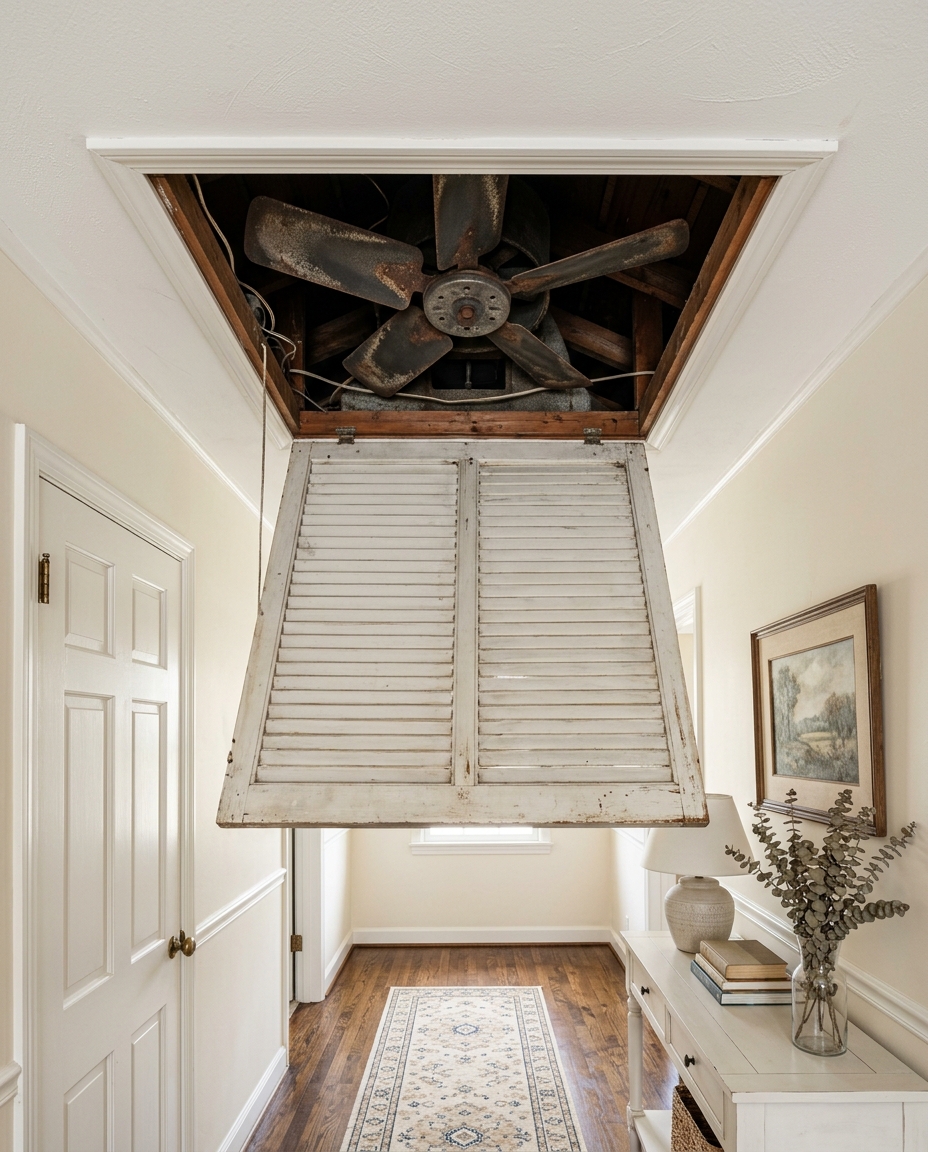
Summer evenings, my father cracked the windows and flipped a switch. A giant fan in the ceiling roared to life and pulled the day’s heat up through the attic. The whole-house fan made a hot night sleepable.
Central air pushed it aside. But here’s what changed.
A 2025 whole-house fan runs $600 to $2,300 installed and saves roughly $80 a month on AC.
The IRS 25C credit covers 30 percent of the cost.
Dave put one in last spring and says it paid for itself before August.
A Real Basement With Room for Everything
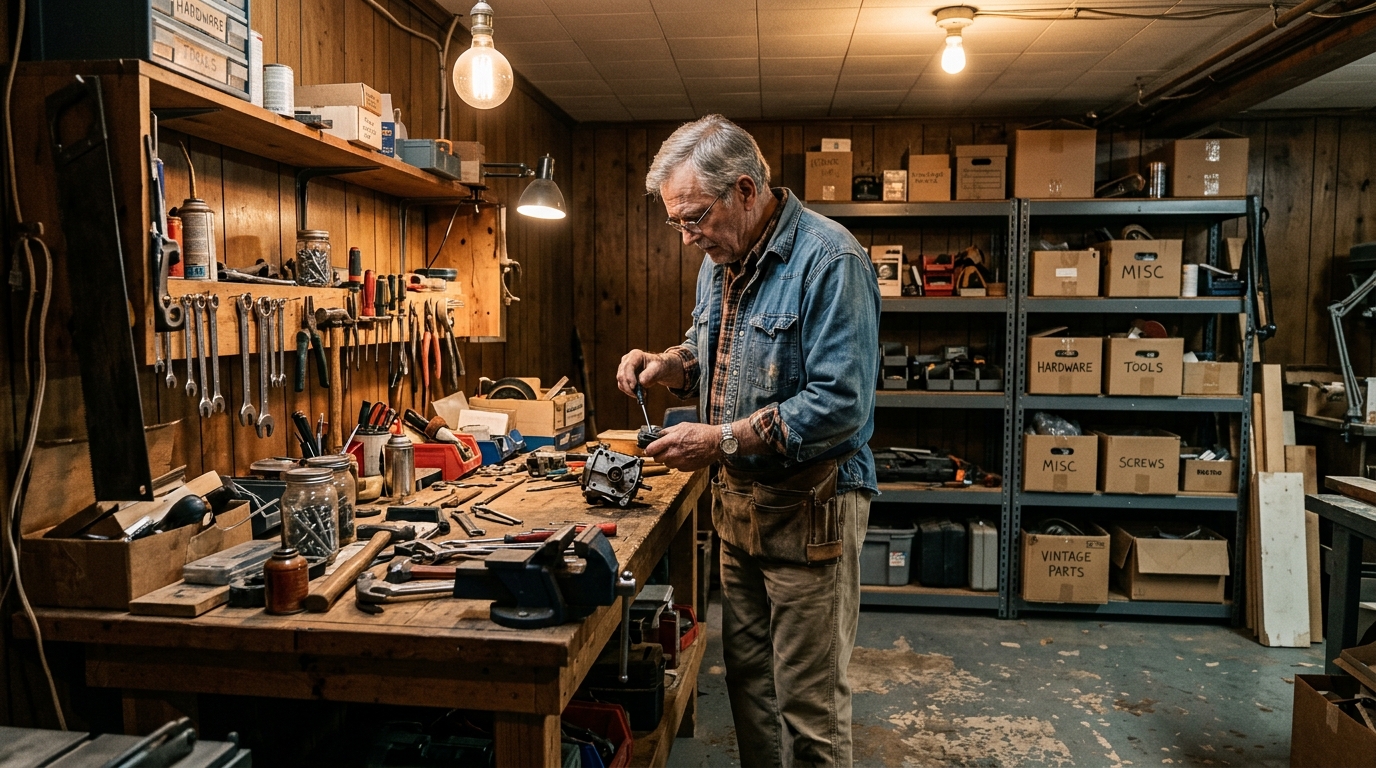
The house I grew up in had a genuine full basement. Workbench, chest freezer, the good Christmas boxes, concrete floor cool in August.
After World War II, Veterans Administration loans pushed builders to pour fast, cheap slabs. Whole regions of newer subdivisions sit on slabs with no downstairs at all.
If a new build feels like something’s missing, it might be. Seven regrets come up in every homeowner survey, and not having enough space sits near the top.
Cabinets That Chilled Food on Outside Air
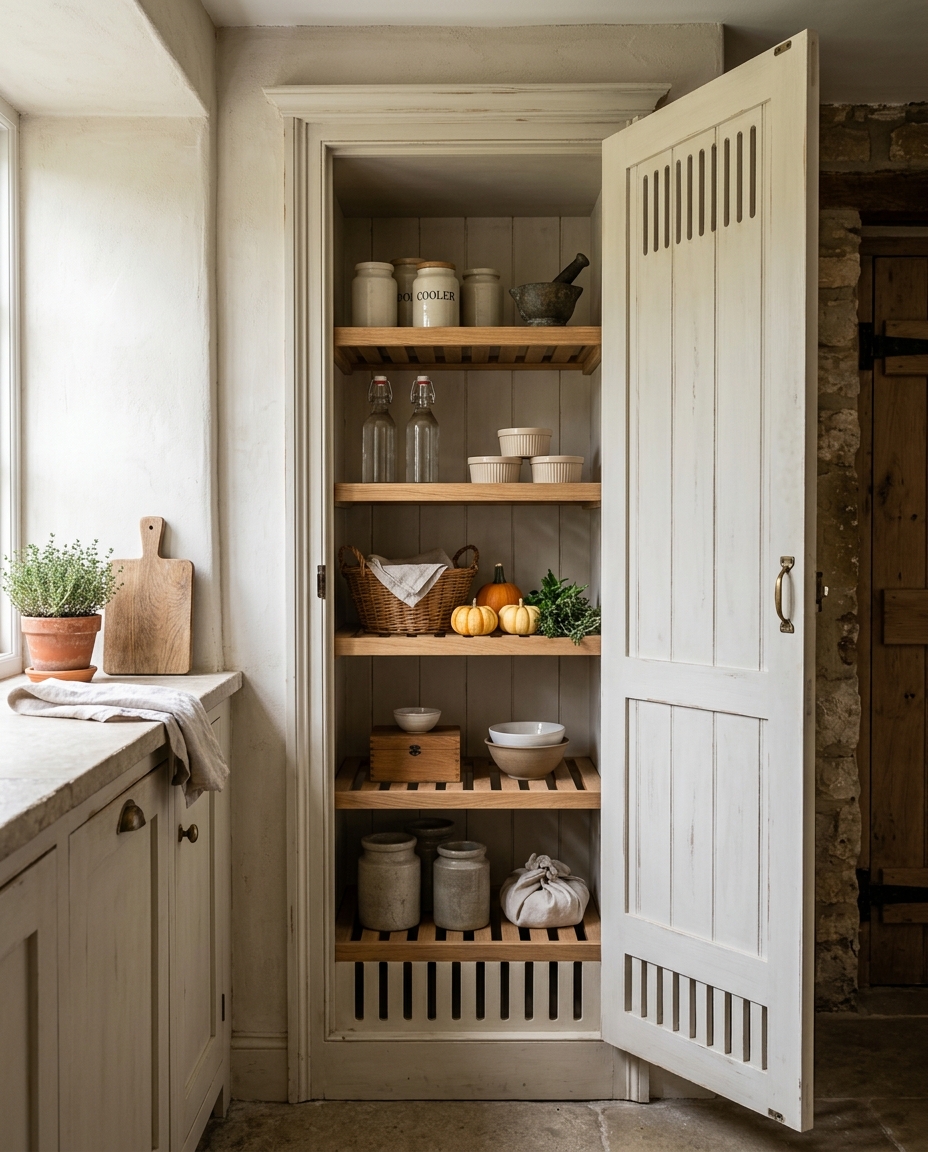
Tucked into many older kitchens was a tall, narrow cabinet vented to the outside wall. A California cooler. Cool air drifted in through the screened bottom and out the top, keeping eggs and canned goods cold without electricity.
The refrigerator made it pointless. The cabinet became just another pantry, then stopped being built entirely.
That Iron Door Where the Coal Went In
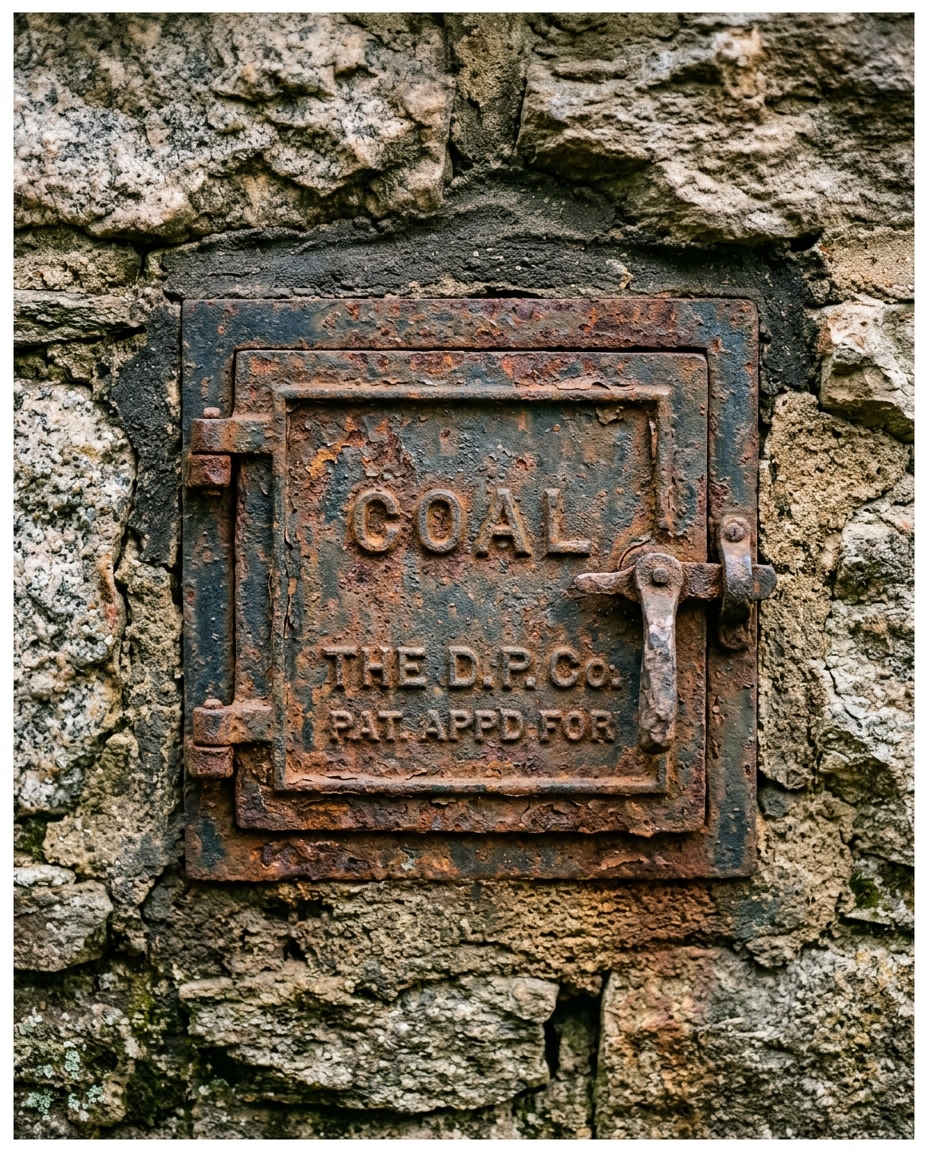
A small iron door low on the outside wall. The coal chute, where the delivery man shoveled winter’s coal straight into a bin beside the furnace.
My grandfather talked about feeding that furnace by hand like it was simply how you stayed warm. When furnaces switched to oil and then gas, the chute lost its reason. The little cast iron door remains on countless old homes, a sealed clue to a harder winter.
Sorting Letters at a Fold-Down Board
Some older homes had a built-in writing surface tucked into a wall in the hall or dining room. Cubbies, a slot for the mail, one good drawer. The household command center before that phrase existed.
YOU’LL ALSO LOVE25 ‘Common Sense’ Home Rules Everyone Followed in the 80s That Would Get You Laughed At Today
It disappeared as paper mail shrank. Visitors decide what they think of your home in the first 10 seconds, and none of it has to do with the mailbox anymore.

Deep Front Porches Made for Sitting
My house had a deep front porch with room for a swing and a couple of rockers. Carol, three doors down, had the same setup. Summer evenings, the conversations ran porch to porch without anyone standing up.
Air conditioning pulled everyone indoors. Television gave the family a reason to face the living room instead of the street. The generous porch narrowed into a step barely deep enough for a doormat.
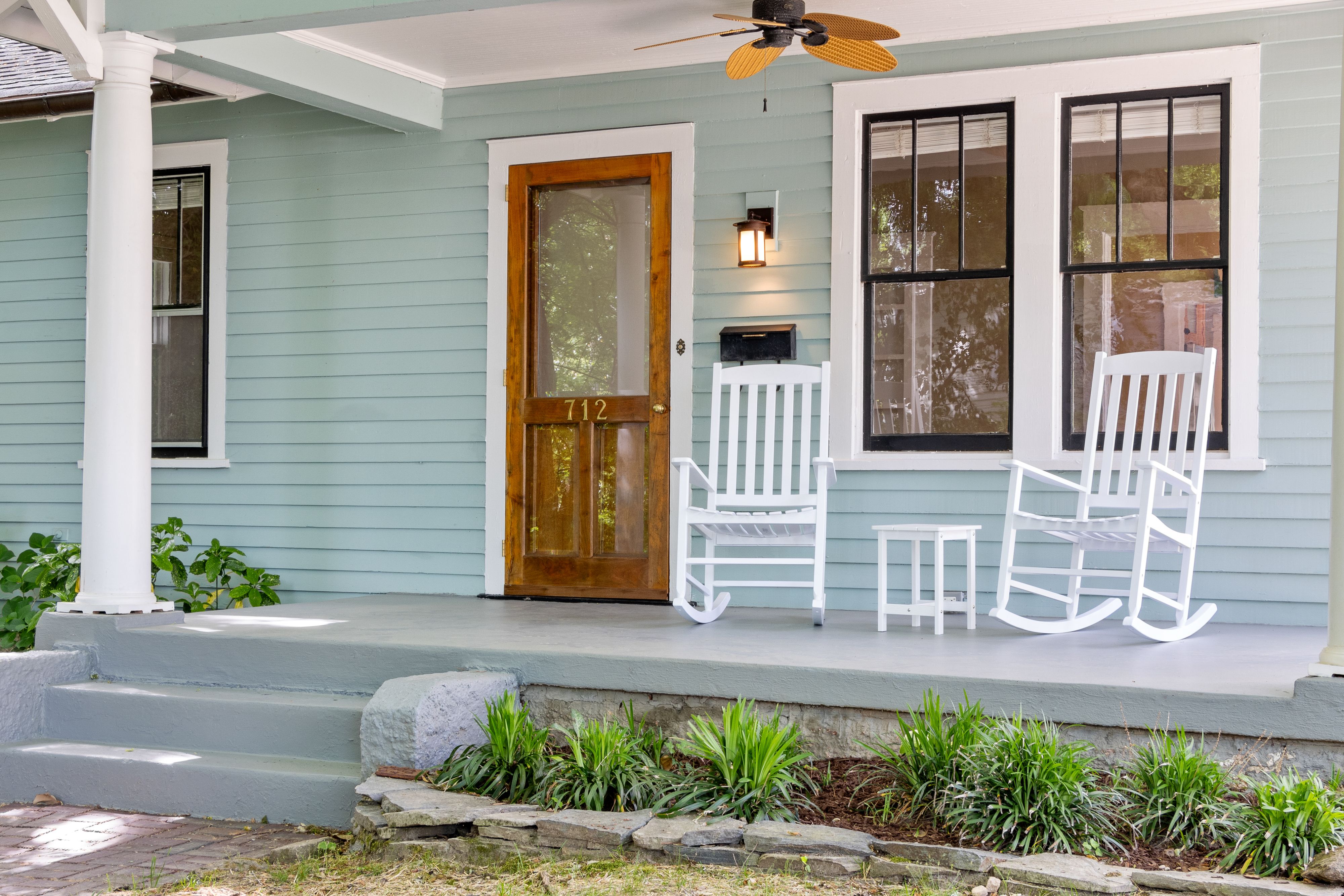
Photo: Curtis Adams / Pexels
Hot Supper Rode Up the Wall on a Rope
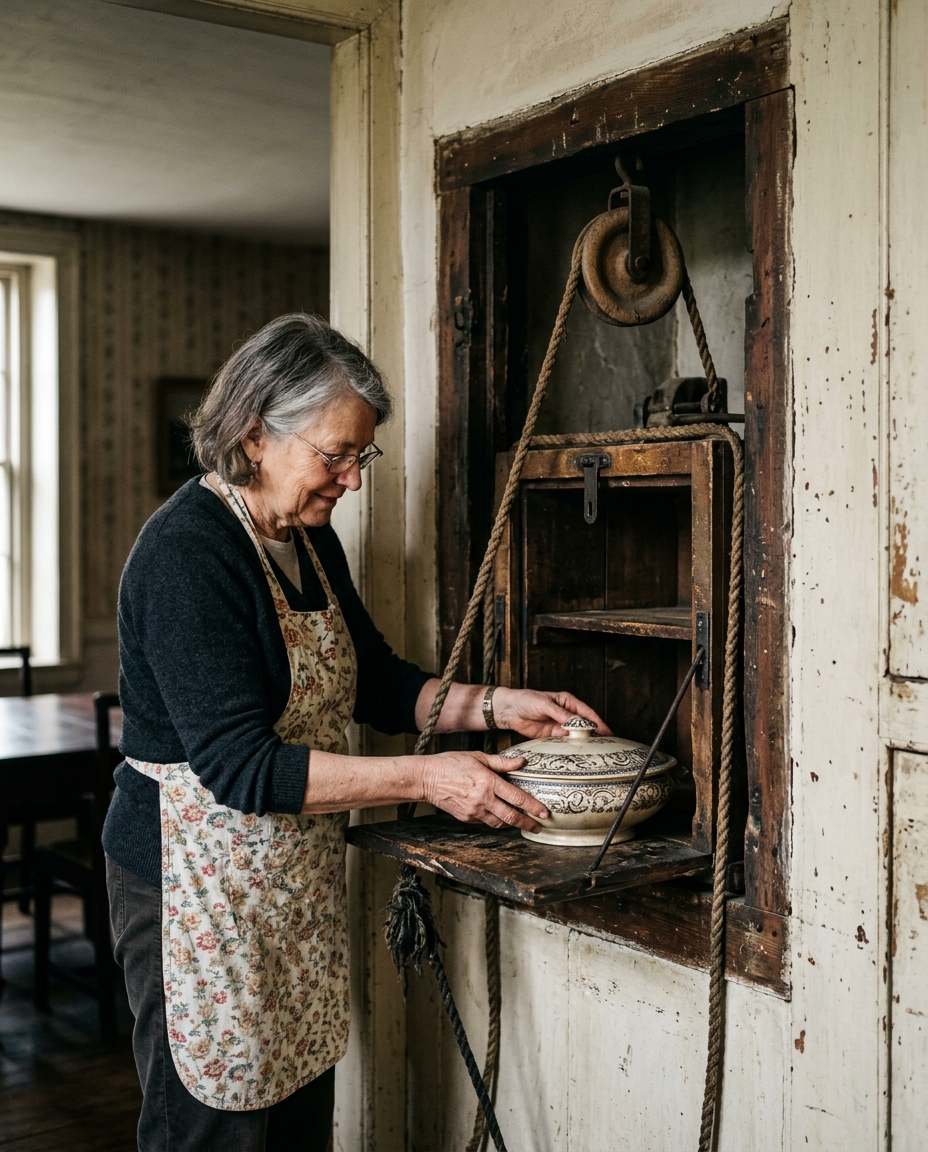
Open a small door in the dining room wall of a grand old house and you found a tiny shaft on ropes. The dumbwaiter hauled hot dishes between floors. George Cannon patented the first mechanical version in 1887.
Would you like to save this?
When cooking and eating migrated onto one open floor by mid-century, there was no upstairs to bridge. The rope-and-pulley box got left off the plans.
Doors That Vanished Into the Wall
Between the parlor and dining room sat heavy wooden doors on a track. Pocket doors. They slid into a hidden pocket so a family could throw two rooms open or seal off the cold parlor on an ordinary night.
Central heating took away the need to close rooms off. The hardware got cheap and the doors rattled off their tracks. Builders went back to plain swing doors.

Every Morning Ran From One Cabinet
Before kitchens had built-in cupboards, the heart of the room was one tall freestanding workstation. The Hoosier cabinet. Pull-out enamel counter, built-in flour bin, spice racks.
By 1920 the makers had sold two million.
The Sears Roebuck catalog carried them nationwide, and one in three American kitchens had one.
Built-in cabinets arrived in the 1920s and the workstation lost its purpose. A good original with accessories sells for $2,000 to $3,800 at auction, more than a year’s rent cost when the cabinet was new.
It might be one of 25 things sitting in your house that your kids would sell for nothing.

Knocking Knees in the Breakfast Nook
Tucked into a kitchen corner sat a snug booth. Two built-in benches, a fixed table, the family squeezed in for the morning meal. It rose alongside the bungalow in the teens and twenties.
The open kitchen swallowed it. Built-in benches gave way to the breakfast bar with stools, and the corner where everybody knocked knees over cereal stopped being framed in.

Soaking in a Tub on Iron Feet
A big rolled-rim bathtub on four ornate iron feet. The clawfoot tub ruled the American bathroom from the 1880s into the 1930s.
After World War I, people grew uneasy about the gap underneath. Kohler had introduced the built-in apron tub in 1911, sealed flush to the floor with no space to clean.
If you still have the original cast iron, hold on.
Refinishing runs $300 to $900 and saves the $5,000 a full replacement costs.
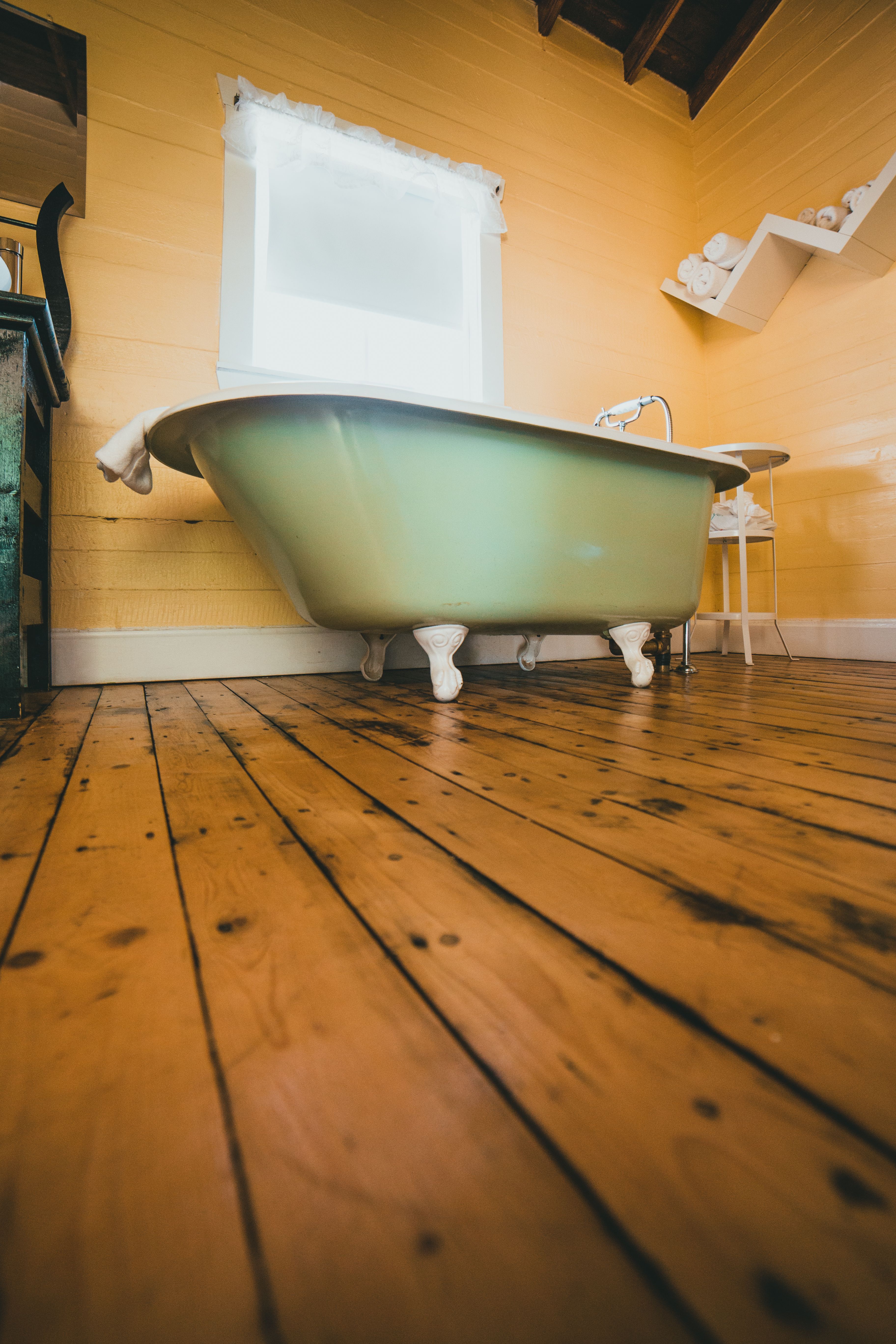
Photo: Erik Mclean / Pexels
Cast Iron Radiators That Hissed All Winter
Heavy ribbed slabs of cast iron under the windows. Steam radiators, fed by a boiler in the basement. That knocking on a cold morning meant the house was waking up.
The first forced-air furnace appeared in 1935.
After the war, ducts went in cheap and fast for millions of new houses. Running heavy pipe to every room was slow and costly. The clanking iron disappeared from new construction, but I’d know that sound in a heartbeat.
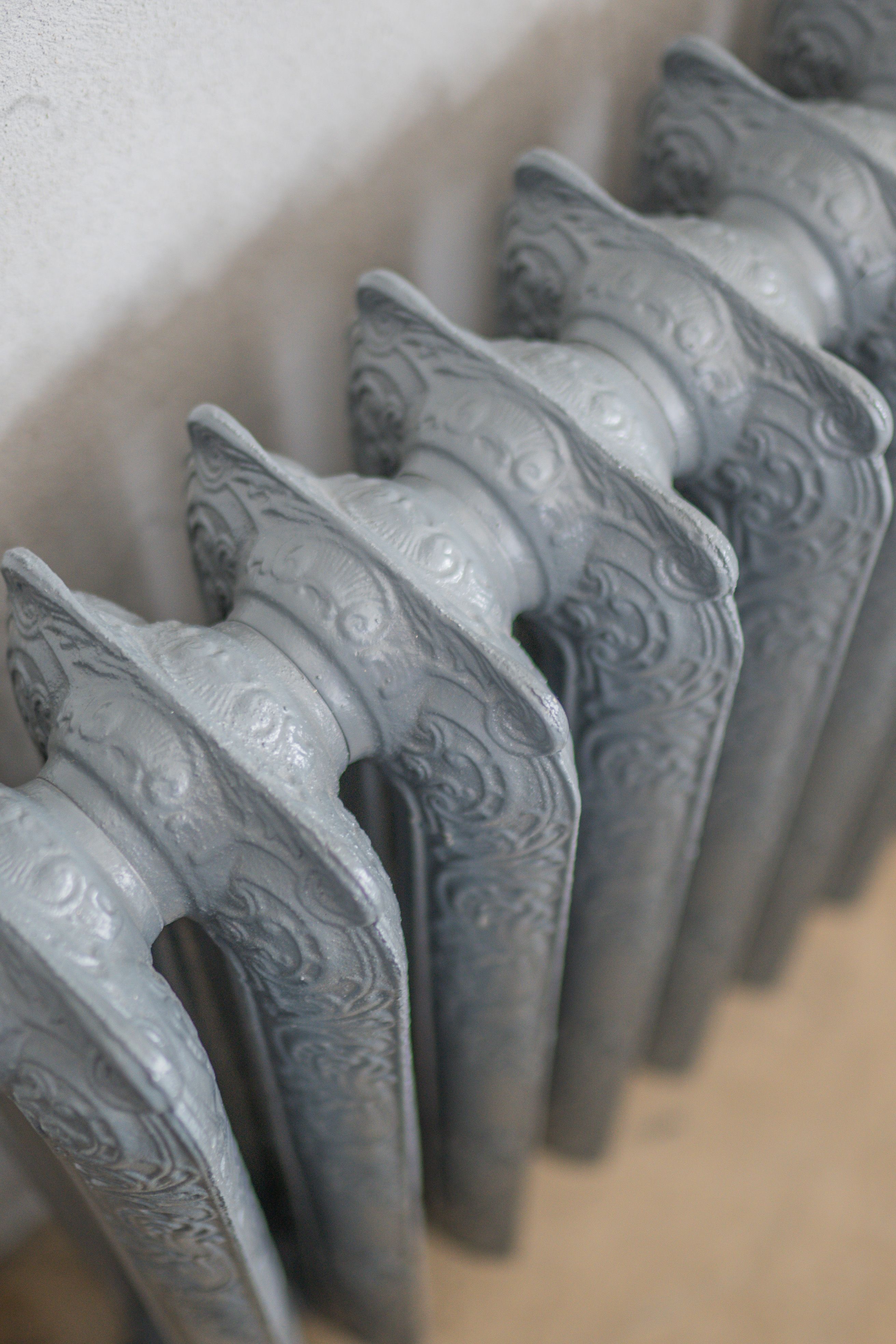
Photo: furkanfdemir / Pexels
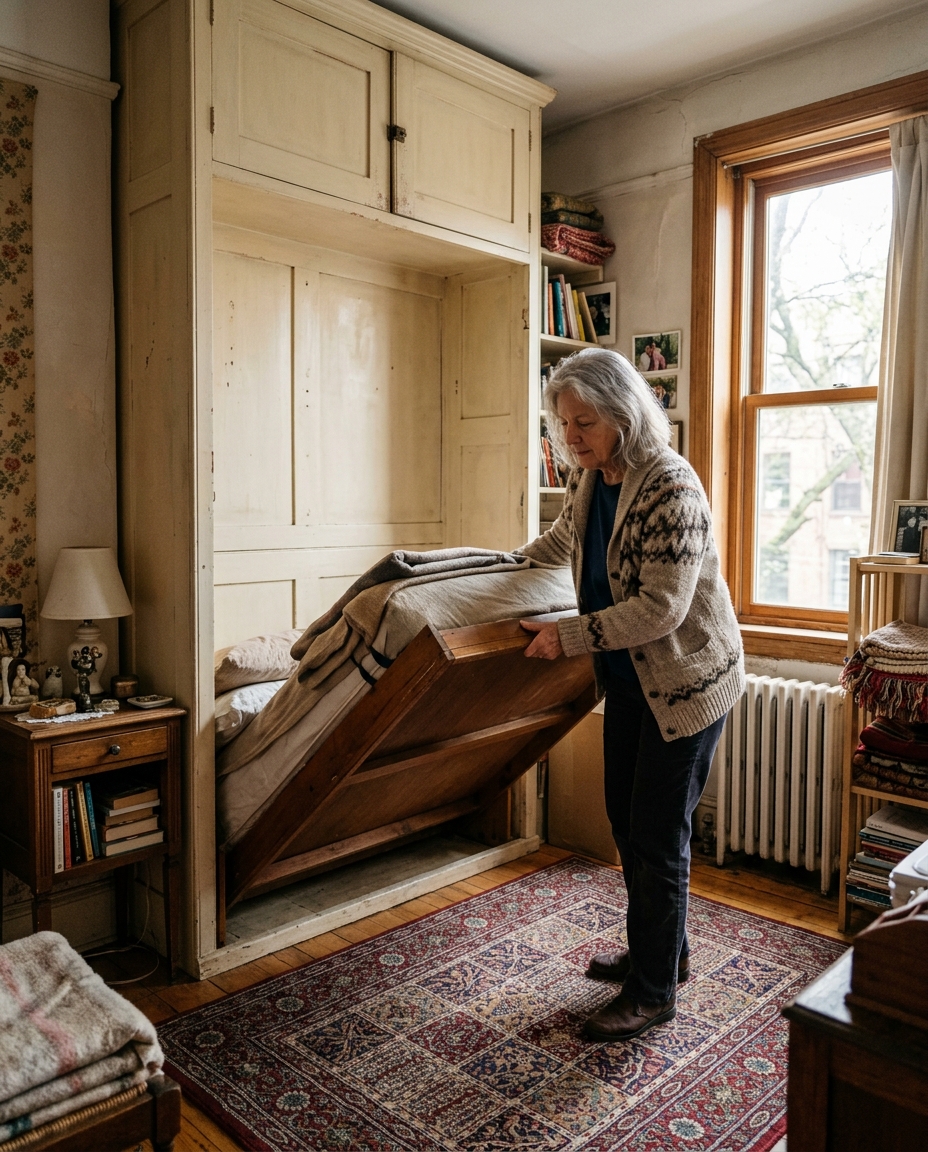
A Bed That Folded Into the Wall
In small apartments and tight bungalows, a full bed swung up on a pivot and tucked behind a cabinet door. The Murphy bed. William Murphy patented it in the early 1900s, and by the 1920s it sold by the thousands a month.
Then the country got more room. Suburban houses grew after the war.
Slapstick comedies kept showing the thing snapping shut on sleepers, and the gag helped fold it out of the ordinary home.
Modern wall beds run $1,500 to $3,500 installed, less than one month’s rent in most cities where closets pass for bedrooms.
Scraping Mud Off at the Front Step
A small iron blade fixed into the stone beside the front steps. The boot scraper. Everyone dragged the mud off before touching the clean floor.
Paved roads and sidewalks ended the need. Taking shoes off at the door sealed its fate. The puzzling iron blade at an old stoop is the last trace of a muddier world.

The One That Quietly Came Back
After decades off the blueprints, the laundry chute is being requested in custom homes again. Builders line the shaft with fire-rated material and fit a self-closing door. It satisfies a 2026 inspector and still gives you that thud.
A few will never return. The coal chute and the incinerator are gone for good.
But the milk door is finding life as a package pass-through. The front porch is creeping back.
And the whole-house fan, nearly killed by central air, is now a 2026 energy darling backed by a federal tax credit.
The house I grew up in solved real problems with real cleverness, and a surprising number of those solutions were never as outdated as the builders decided.
Which of these did your childhood house have?