
Forty percent of a suburban yard sits in shade by the time the trees mature.
Most homeowners fight it with grass seed and lose. I fought it through two houses before my north fence finally taught me to quit.
These 27 perennials turned the spots I used to skip on the yard tour into the corners my wife Linda now walks guests past first. By number 14, that bare patch has a name.
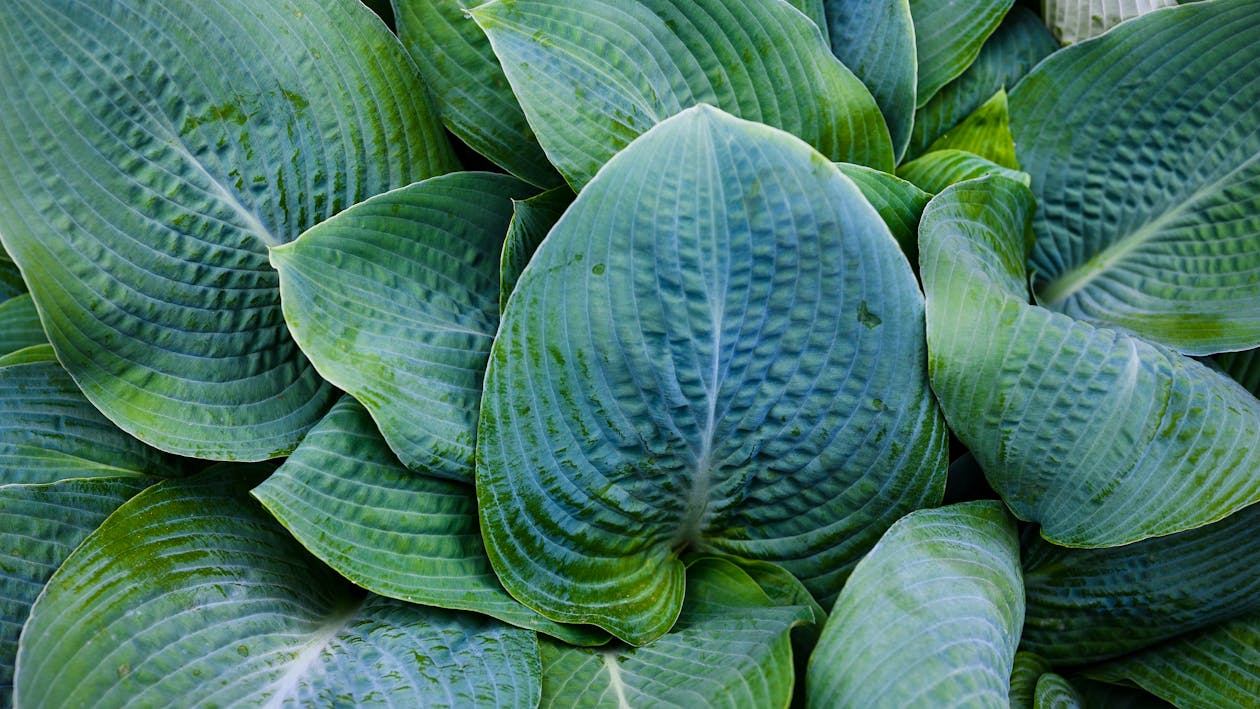
Hostas Turn Deep Shade Into a Wall of Texture
Would you like to save this?
tart here, because the hosta is the plant that made shade gardening forgiving for me.
You grow it for the leaves, not the modest lavender spikes, and the leaves do real work. A single clump of mine fills a gap that grass abandoned years ago. They are hardy from zone 3 to zone 9, which covers almost every reader of this page.
Touch a mature leaf and you feel the ribbing, deep enough to catch a raindrop and hold it through the morning. I learned one thing the hard way. In a damp, dim bed, slugs find them first, so I ring mine with grit and crushed eggshell, and it earns its keep.
That trade-off aside, nothing else I have planted covers more dead ground for less fuss. The next one proved to me that shade does not have to mean a green-only bed.
Astilbe Hands You Color Where You Expected None
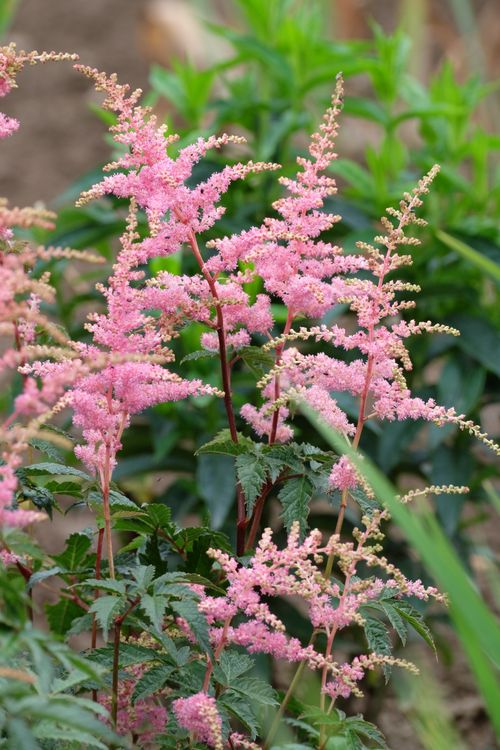
Everybody assumes shade means no flowers. Astilbe argues.
The feathery plumes come in pink, white, lavender, and a red so deep it reads almost burgundy, and they open in early to mid summer when the spring show has faded. Hardy in zones 3 through 8, the fern-like foliage stays handsome even after the flowers brown.
Here is the catch I learned the hard way. Astilbe will not forgive dry soil, and leaf scorch on the edges is the plant telling you it is thirsty. I gave mine the damp, low corner I had written off as useless, and it rewarded me the next June.
The deer leave it alone too, put off by the bitter taste and texture, which matters more than you would think. The plant after it carries its color in the leaf instead of the bloom.
Coral Bells Bring Color You Can Read From the Kitchen
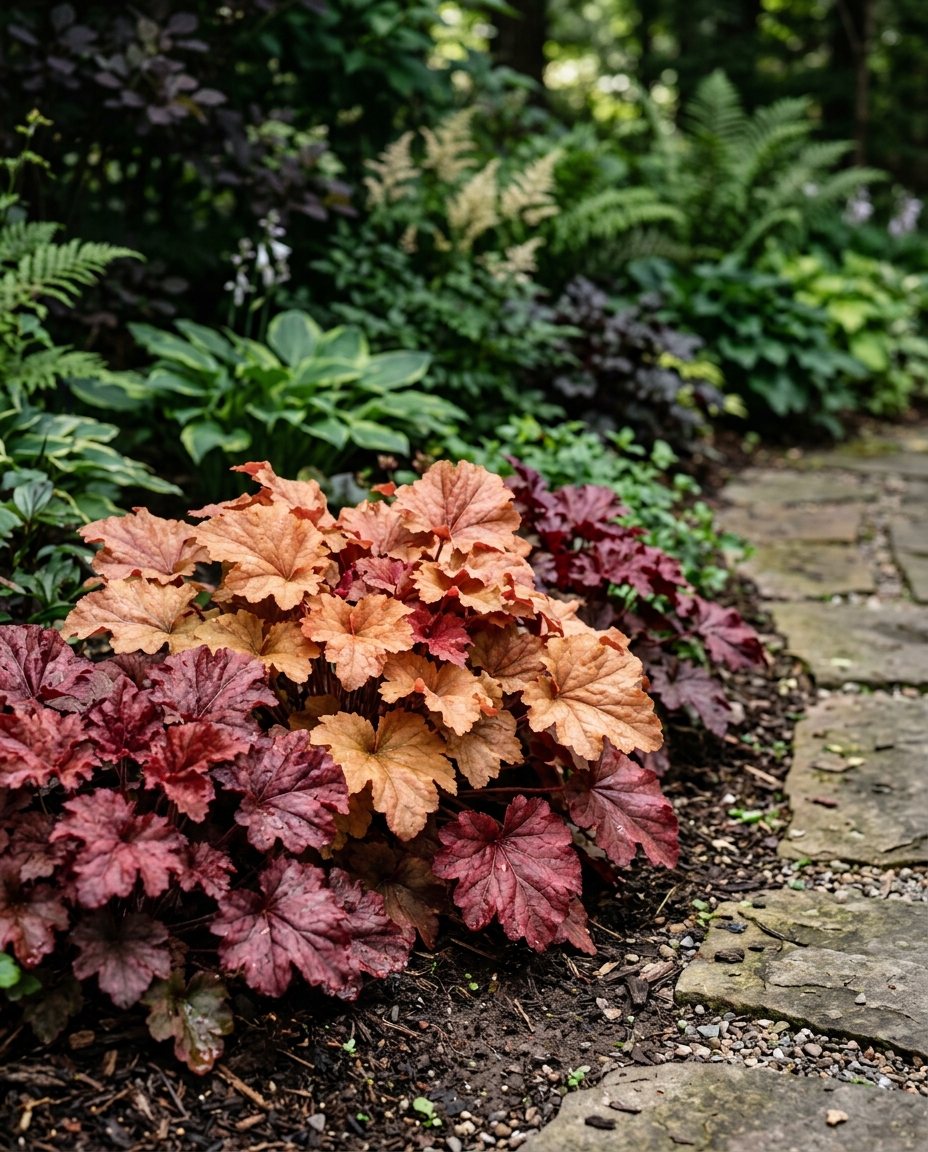
Most shade plants hand you green and ask you to be grateful. Coral bells, sold as heuchera, hand you amber, peach, near-black, and silvered purple.
‘Palace Purple’ won Perennial Plant of the Year in 1991 and still outsells most newer hybrids. Scalloped leaves carry the show all season while slender stems lift tiny bells in late spring.
Hardy zones 4 to 9.
YOU’LL ALSO LOVE25 Things About Your Home That Visitors Notice in the First 10 Seconds (But Never Tell You)
I planted a row at the front and the color reads clear from my kitchen window.
Carol, three doors down, saw mine in spring 2025 and put in 6 before Memorial Day. Wait until you see what opens in February.
Hellebores Bloom While the Snow Is Still Melting
This plant converted me.
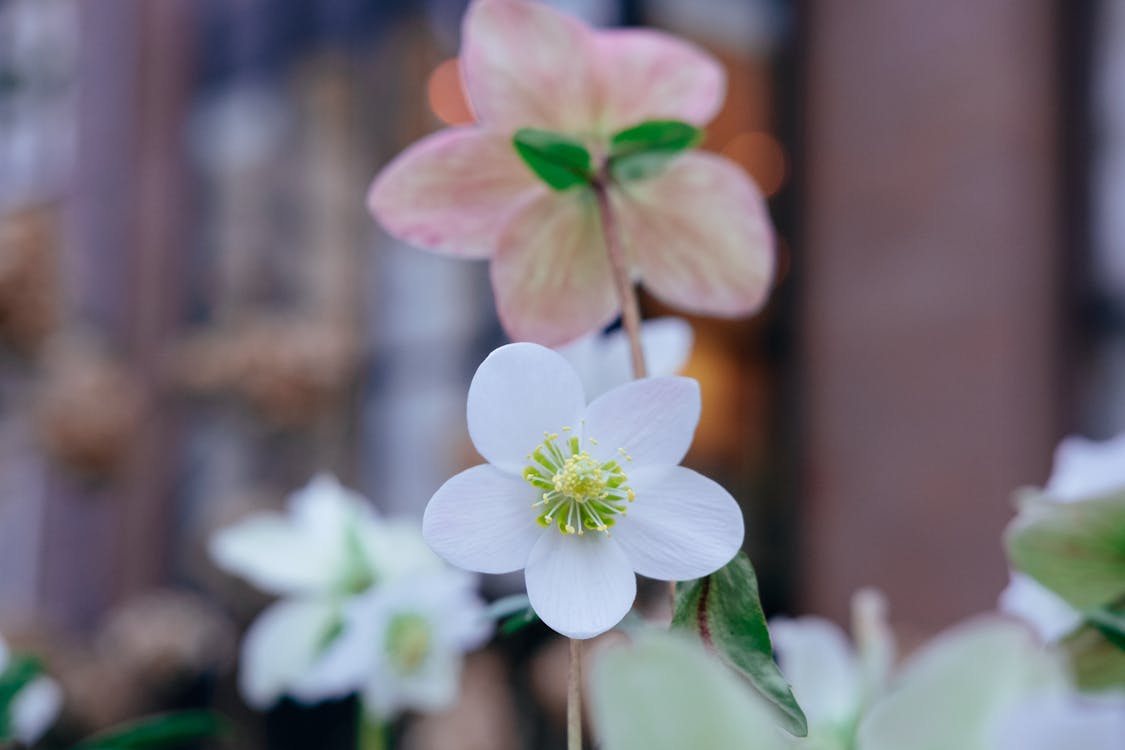
Hellebore, often sold as Lenten rose, opens nodding flowers from late winter into early spring. In my yard that means February, when everything else is brown sticks.
Blooms range from soft pink to plum to near-black. The leathery leaves stay evergreen all 12 months.
Deer never touch them. Toxic alkaloids keep the animals walking past even in a hard winter. Hellebores also shrug off dry shade, earning a spot under my thirstiest maple.
I gave Linda 3 pots for Valentine’s Day in 2025. She said, “First useful gift you have managed in thirty years.”
Which brings us to a leaf worth more than most flowers.
Brunnera Lights Up the Dark With Heart Shaped Silver Leaves
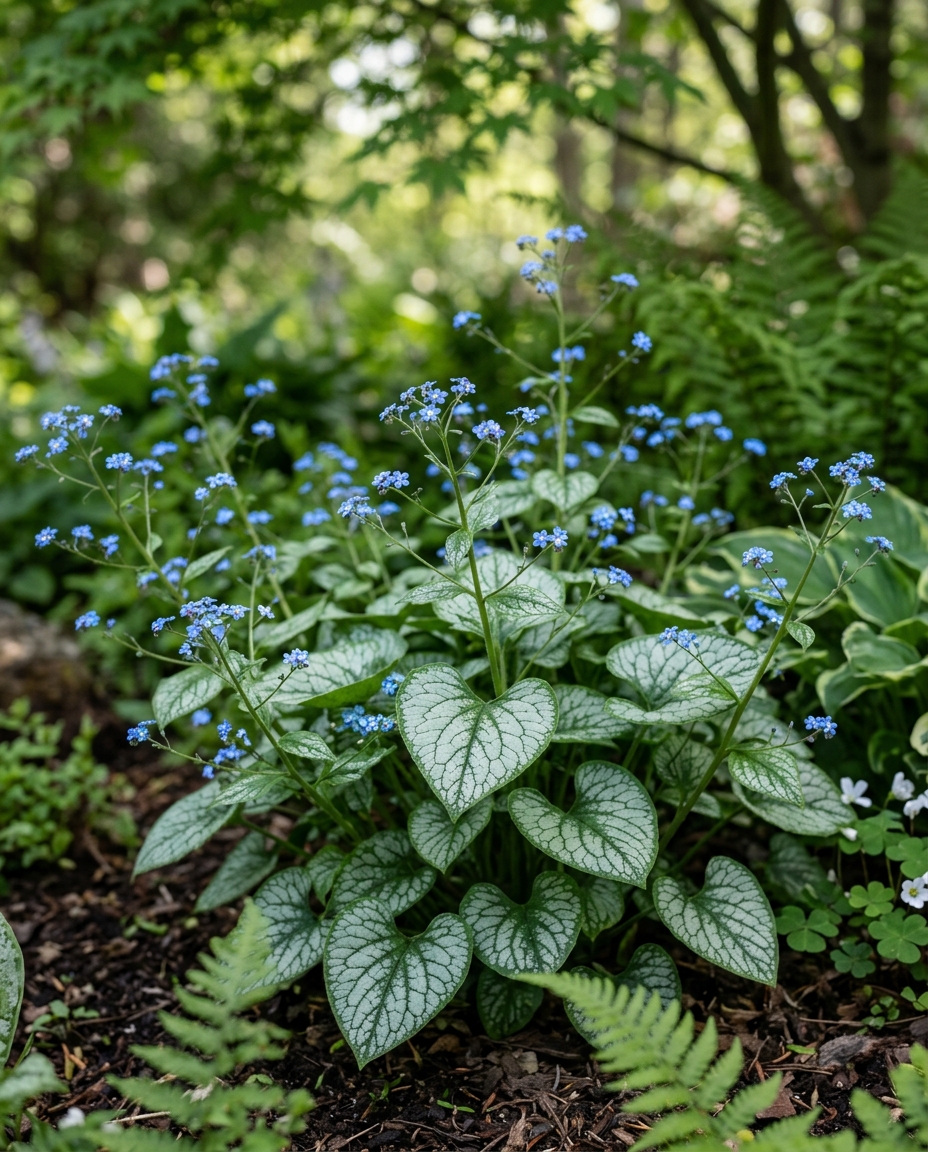
Brunnera ‘Jack Frost’ throws tiny blue flowers in spring, but the silver-veined leaves are the real reason to plant it. They catch whatever light reaches the ground and bounce it back.
A dim bed looks lit from within.
Both deer and rabbits leave it alone. A plant that dodges both is rarer than catalogs admit.
Dave, a retired inspector and my brother-in-law, looked at the bed and laughed. “Half the houses I inspect have worse beds, and those people paid a landscaper,” he said.
I paid $12 a pot, less than a parking-garage exit fee.
Now the bed needs a backbone.
Ferns Fill the Gaps No Flower Ever Could
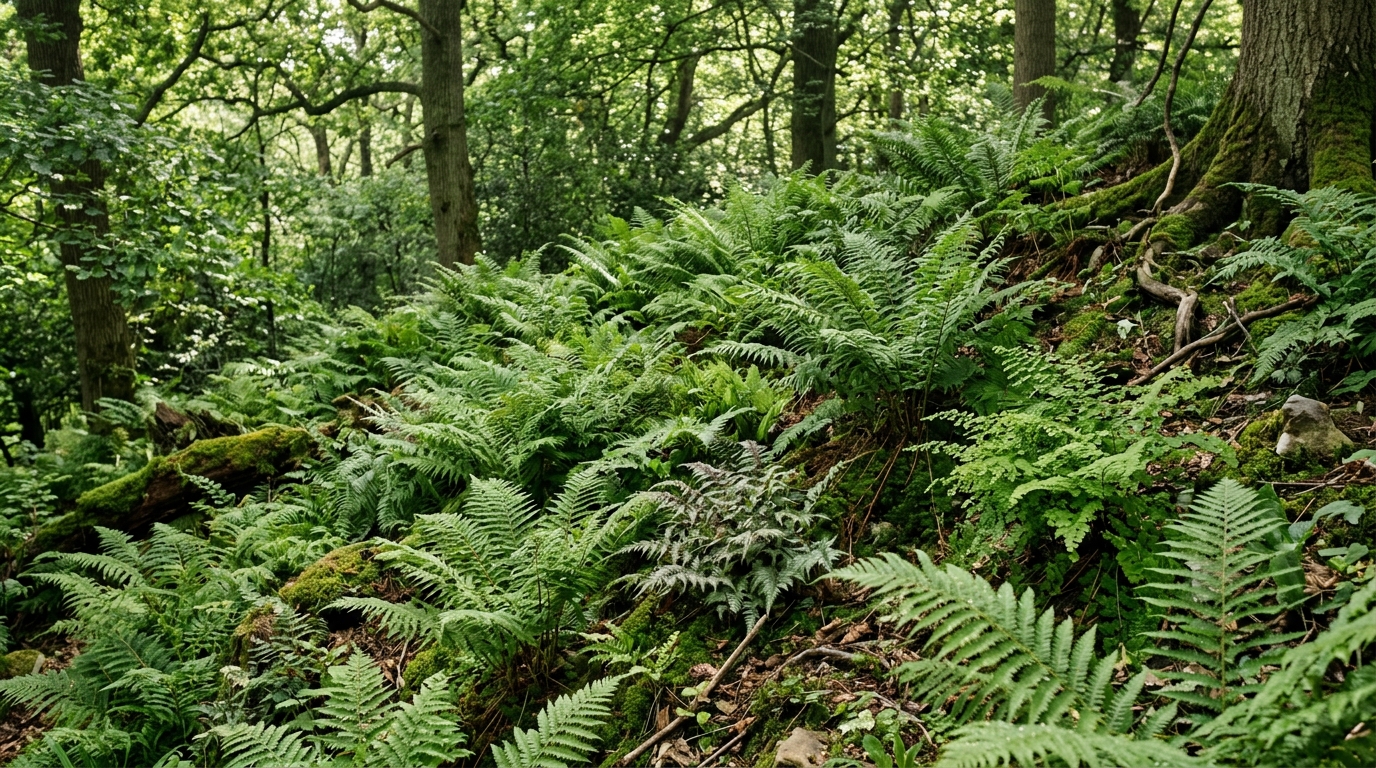
Sometimes the answer to a shady spot is texture, not bloom. Ferns are the backbone of my woodland bed, and deer leave nearly every species alone. That is close to a guarantee in a garden full of maybes.
I mix lady fern and cinnamon fern for height. Smaller types tuck along the path.
Brush a hand across the fronds and they give like soft lace, nothing like the stiff shrubs people default to in shade.
One fern broke the plain-green rule hard enough to win a national award. More on that in a second.
Japanese Painted Ferns Add Silver No Other Fern Can Match
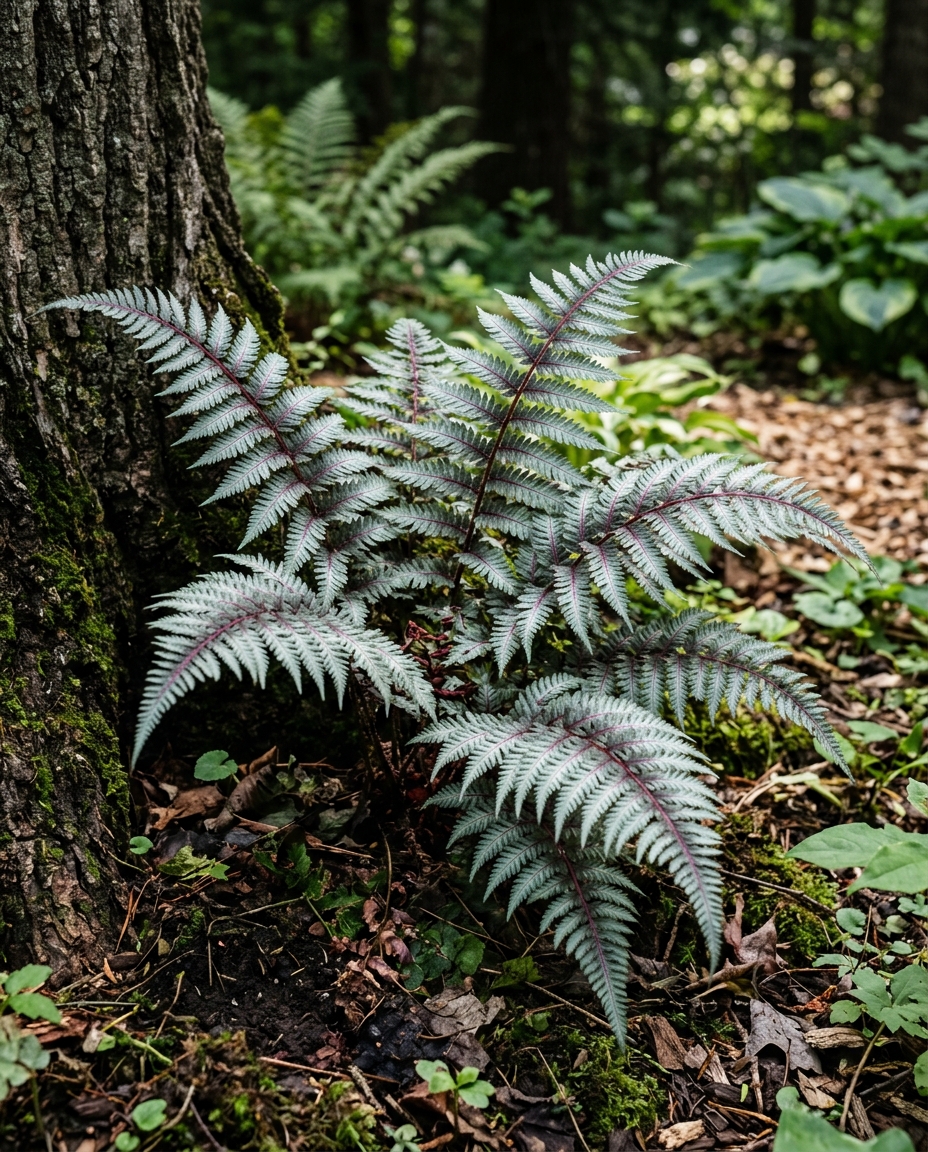
Not all ferns are plain green. Japanese painted fern carries silvery fronds shot through with burgundy.
It won Perennial Plant of the Year in 2004, the first fern ever honored.
YOU’LL ALSO LOVE30 Things in the 1970s Living Room That Would Confuse Anyone Under 30
12 to 24 inches tall, ideal for lining a walkway or ringing a tree base where grass refuses.
The metallic sheen catches evening light and seems to hover. Mine circle a maple trunk. At dusk they almost float.
If your shade bed finally looks deliberate, know that guests are already clocking more than the ferns. There are 25 things about your home visitors notice in the first 10 seconds and never say out loud.
And this is only number 7.
Bleeding Heart Dangles Pink Lockets Over the Shade
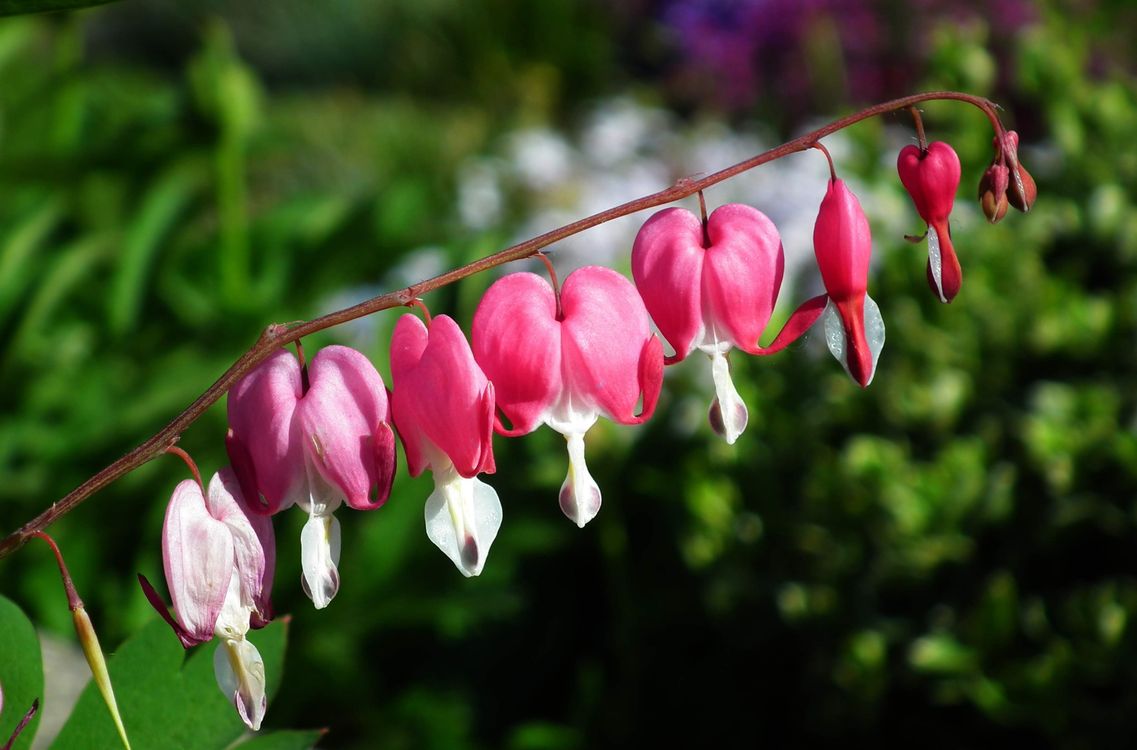
Few plants earn their name this plainly. Bleeding heart hangs pink-and-white lockets along each arching stem in late spring. Hardy zones 2 to 8.
Here is the trick that changes everything.
Bleeding heart goes dormant in summer heat. The foliage yellows by July. That is not death. It is the plant’s normal cycle.
Plant a hosta or a fern beside it to fill the gap. Turns out the plant that vanishes teaches you more than the ones that stay.
Solomon’s Seal Arches Like a Green Fountain
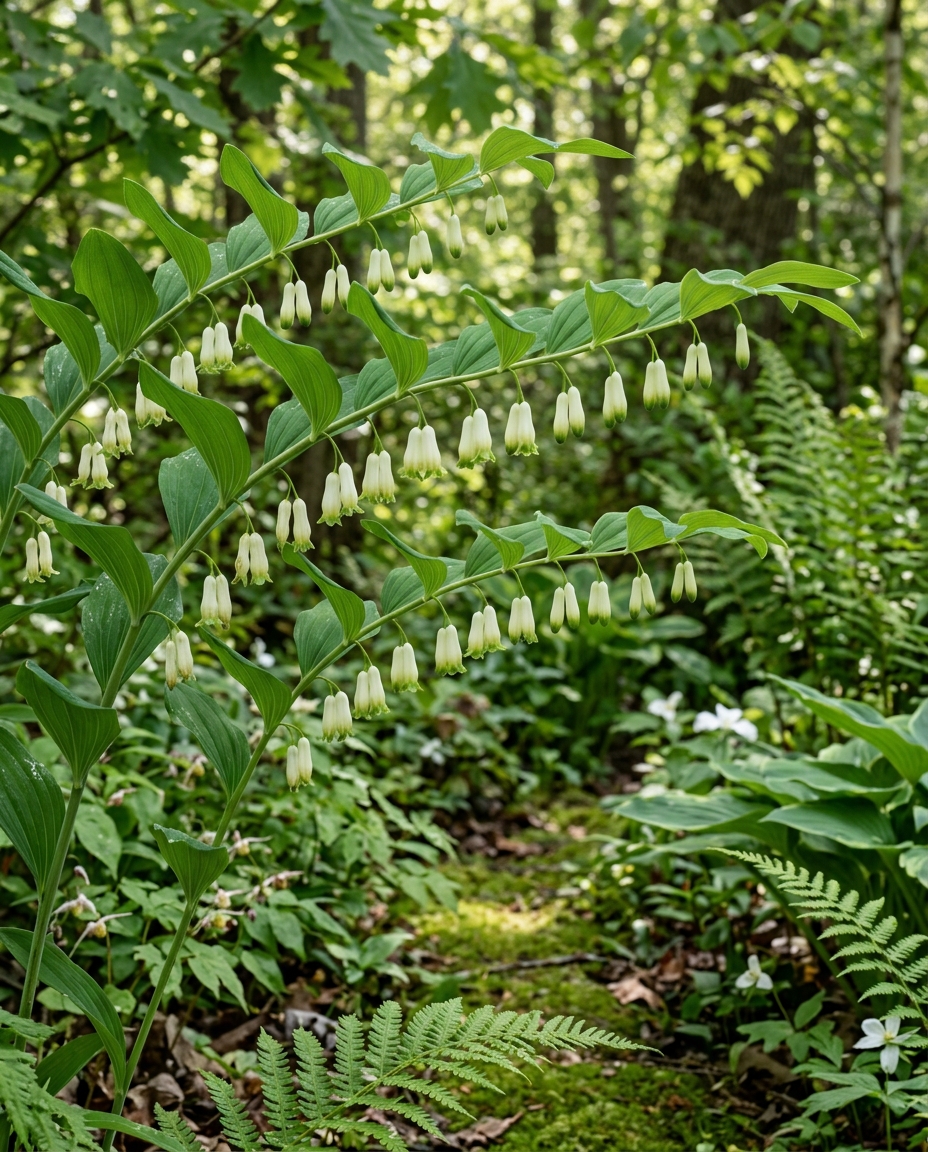
For motion in a still bed, nothing beats it. Solomon’s seal sends up arching stems 2 to 4 feet tall, each dangling green-tipped white bells in spring.
The effect is a fountain frozen mid-arc.
Hardy zones 3 to 9. The variegated form, edged in cream, glows in low light. I run a drift behind shorter plants, and the arches give a flat shade bed the depth it needs to look designed.
Foamflower Spills a Froth of Spring Spires
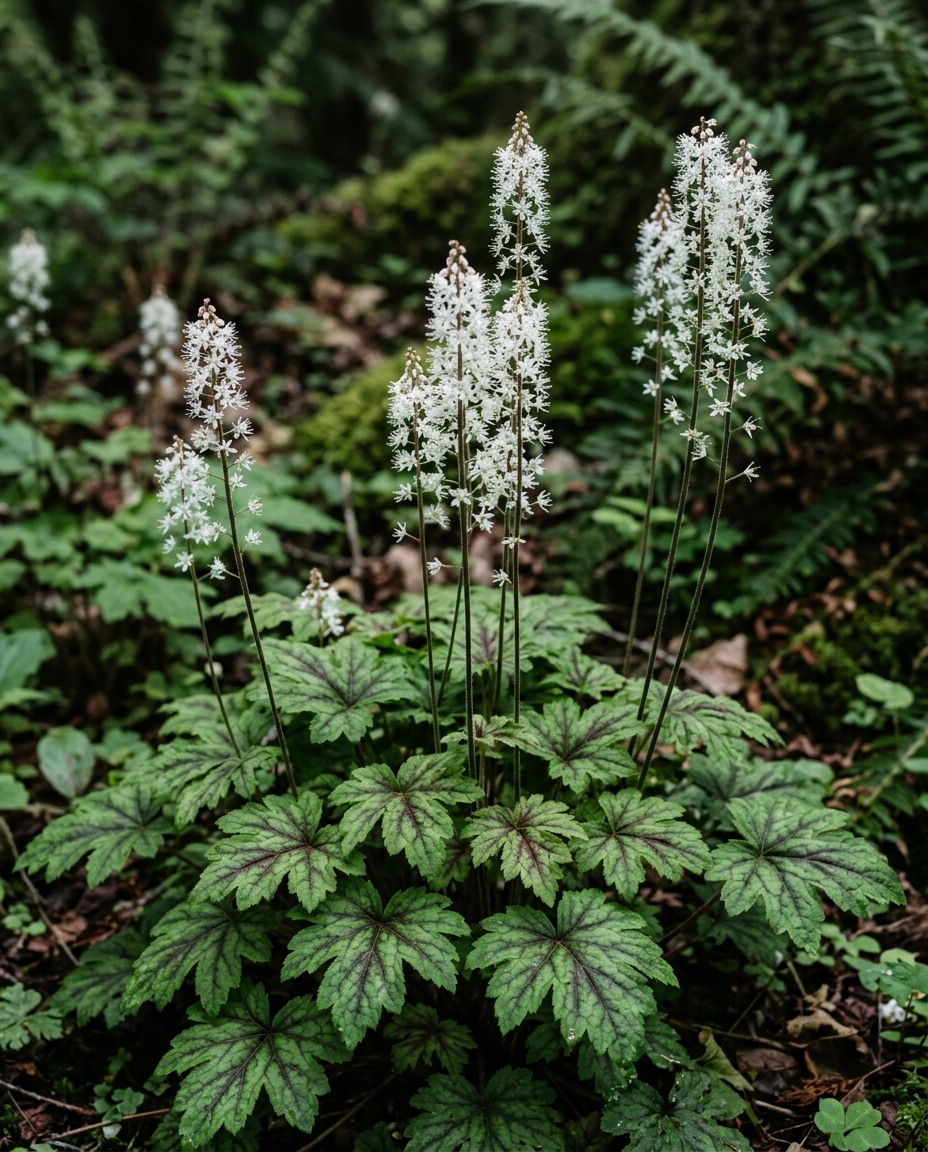
The name is honest. Foamflower sends up airy spires of tiny white flowers in spring that look like froth on a stem.
Lobed, maple-shaped leaves stay handsome after, picking up bronze tones in fall. Hardy zones 3 to 8.
It grows in the sun-free pockets where even tough plants thin out. I use it as a living carpet at the front of a bed.
A few set close fill in within a season and choke out the weeds.
Speaking of ground level, the next plant reads like moonlight.
Lungwort Wears Silver Spots Like Moonlight
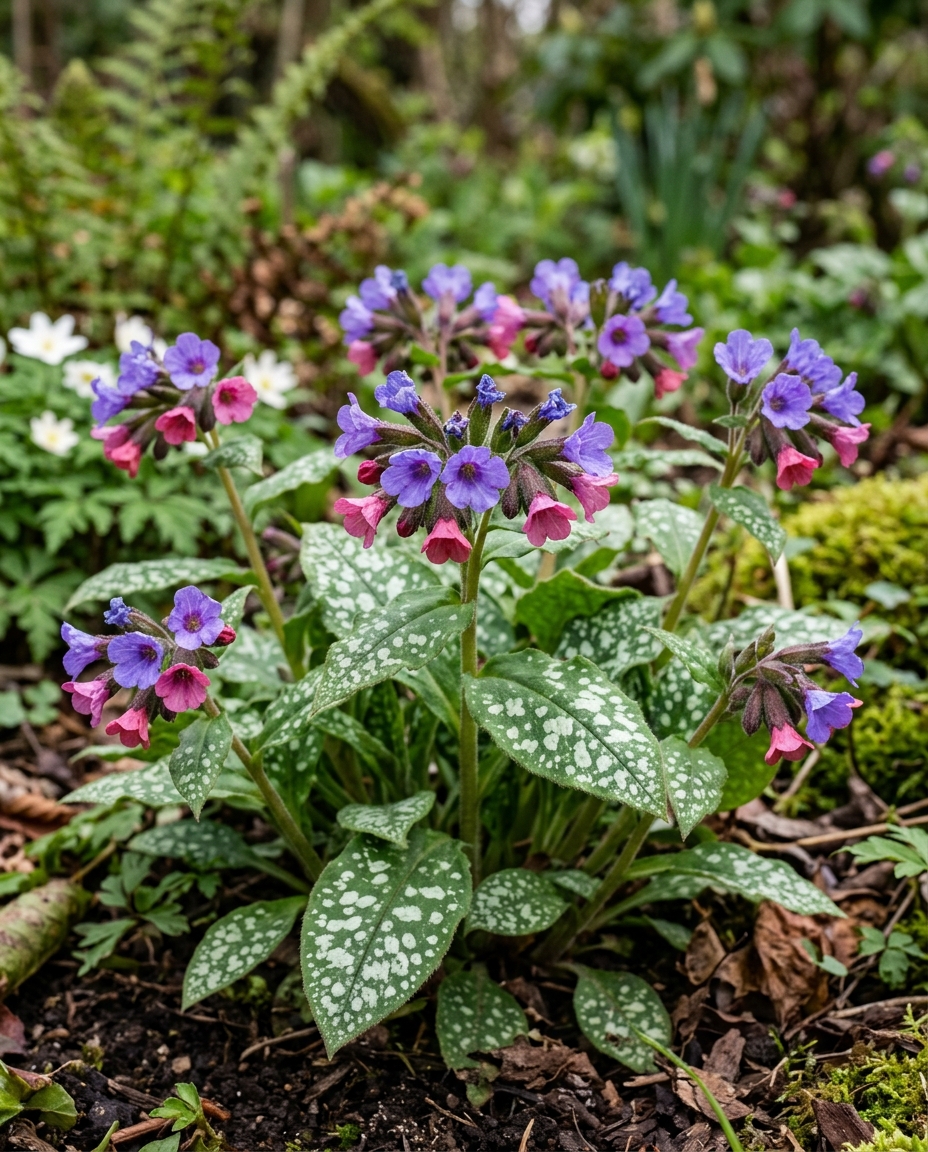
Some plants you keep for the flower. Some for the leaf. Lungwort gives both.
Silver spots scatter across the leaves, and in April the flowers open pink and age to blue on the same stem.
It spreads into a soft groundcover over time. My neighbor Alvarez planted his on the cool side of the house.
3 years later it filled a bed he had been mulching at $50 a load twice a year.
YOU’LL ALSO LOVE11 Neighborhood Rules Every Kid Knew in the ’80s That No Parent Would Allow Today
That saves him $300 a year, enough to cover the plants three times over.
So what fills the spot where even grass gave up?
Lamium Carpets the Bare Ground in Silver
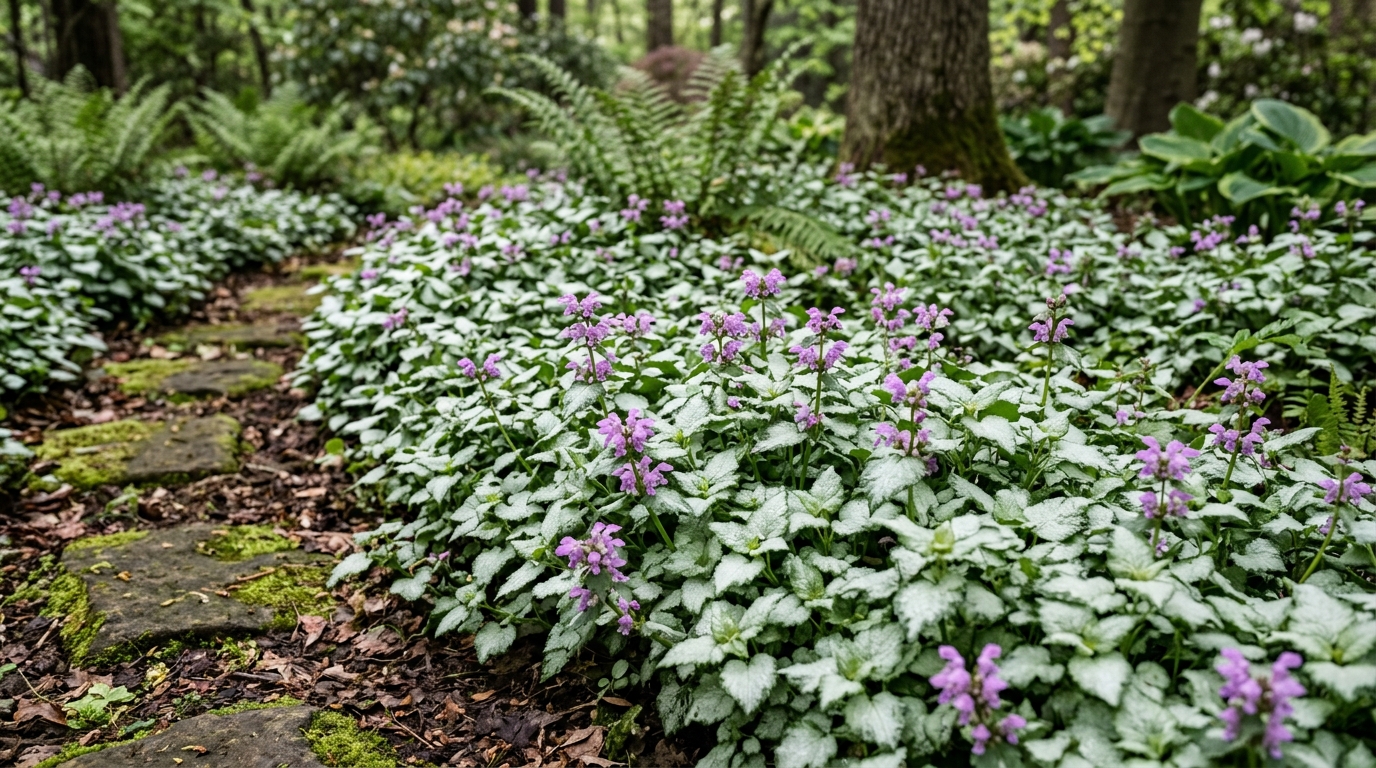
When the goal is simply to stop looking at dirt, this is the plant. Lamium, called dead nettle, spreads silver-frosted foliage across shade where lawn grass quits.
Small hooded flowers in pink or purple sit on top as a bonus.
I set a few plants a foot apart, and they knit into a weed-smothering mat by season’s end. For the spot where I finally gave up on grass, it was the gentlest possible surrender.
Hardy Geraniums Mound Into Months of Bloom
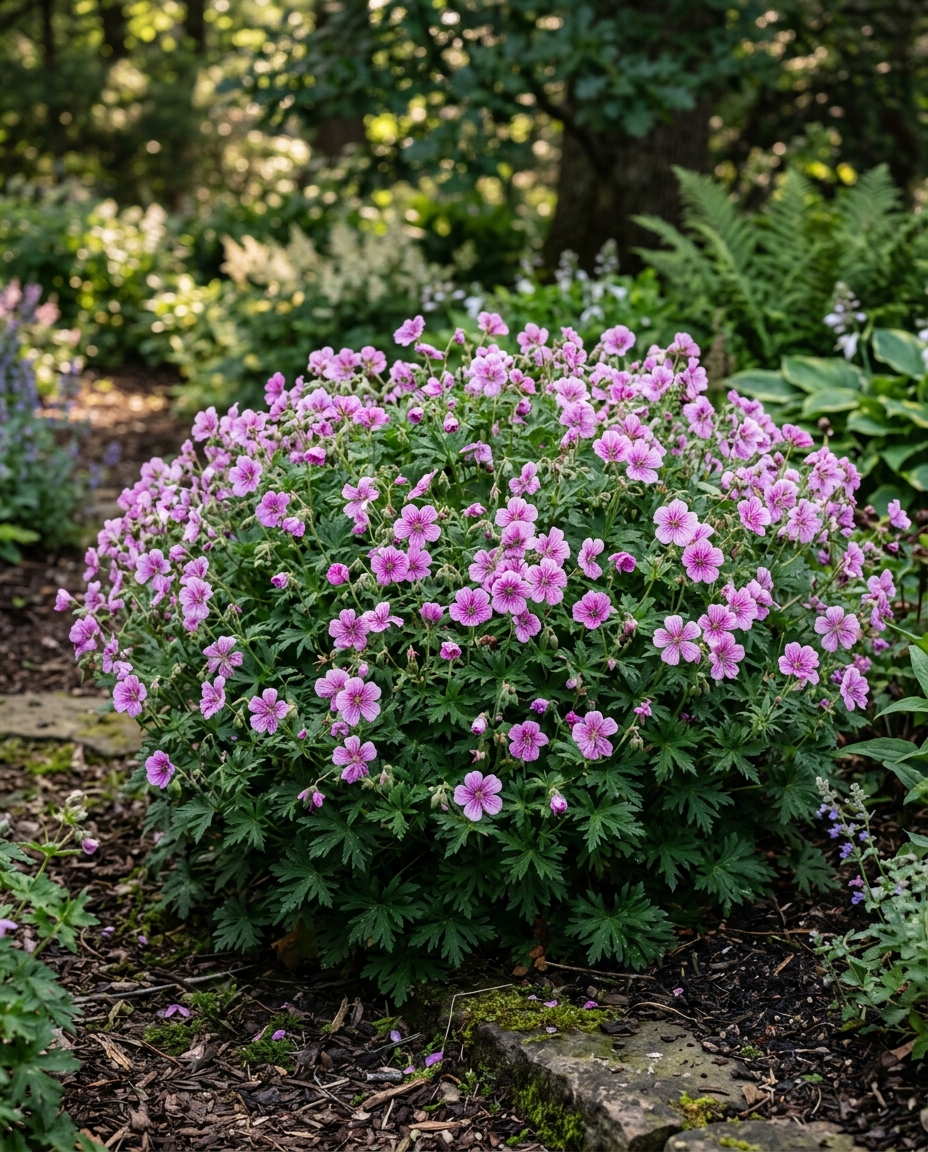
Set aside the annual you buy in a pot every May. Hardy geranium, or cranesbill, is a true perennial that comes back stronger each year. Flowers range from pink to purple.
A $6 pot covers a 2-foot gap by midsummer.
Most types are hardy zones 4 to 9 and keep blooming for months.
Most yard mistakes are not what people plant but what they leave bare while deciding. That indecision quietly makes the list of 7 things homeowners regret most, where the top one has nothing to do with the mortgage.
Columbine Calls in the Hummingbirds
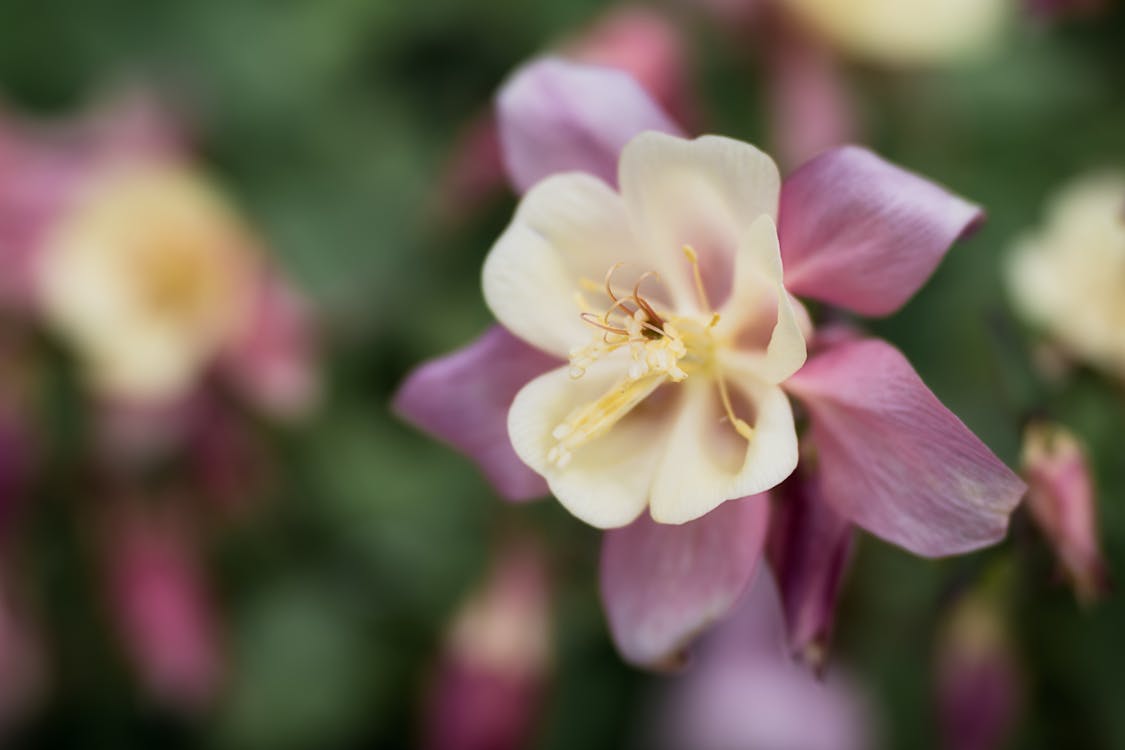
A shade bed does not have to be quiet. Columbine brings spurred, nodding flowers in spring through early summer.
The shape is no accident. Built to fit a hummingbird’s beak. Hardy zones 3 to 9, deer resistant.
It seeds itself gently into nearby gaps over the years, knitting the bed together for free. My neighbor Alvarez puts a feeder 10 feet from his columbine patch. He says the hummingbirds find the flowers first and the sugar water second.
Japanese Forest Grass Pours Down Like Water
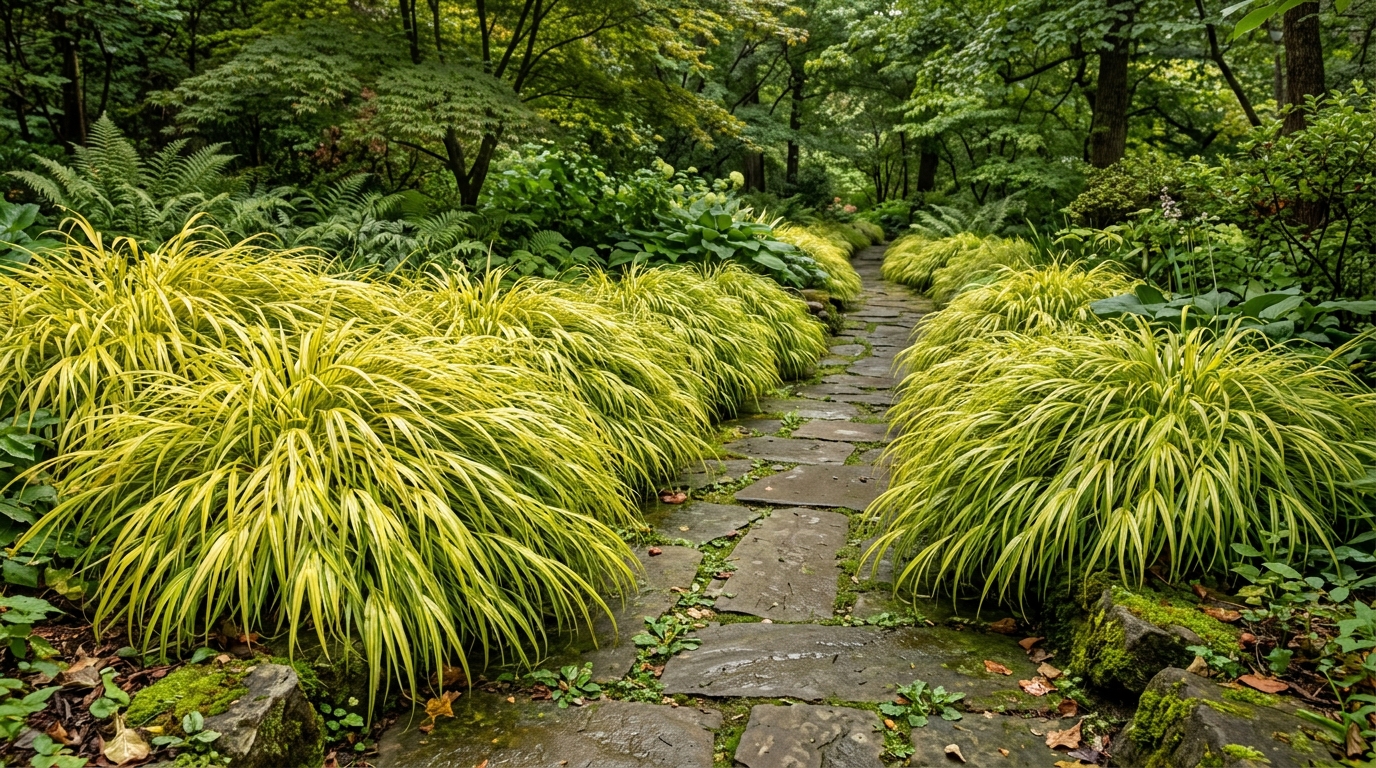
Most ornamental grasses demand full sun. This one breaks the rule.
Hakonechloa ‘Aureola’ cascades in arching mounds that pour over a path edge like slow water. Hardy zones 5 to 9, deer resistant.
It even tolerates the ground under a black walnut, where juglone poisons most plants out.
The slow growth is actually the gift. It never bullies neighbors and never needs digging out. Mine has looked composed for a decade.
Toad Lily Saves Its Show for Last
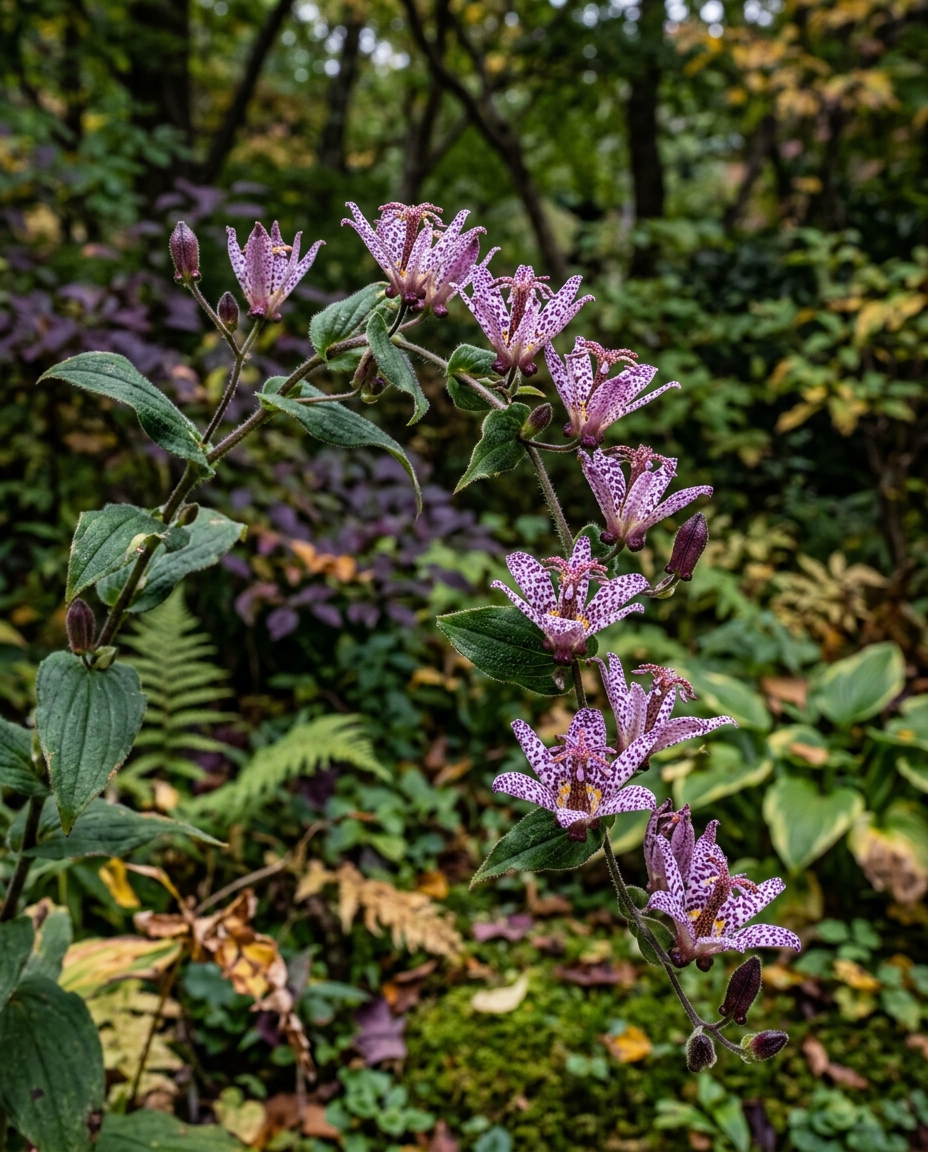
Here is the one that earns the wait.
Toad lily opens freckled purple flowers timed for late season, often well into October when every other shade plant has quit. That timing alone earns it a spot.
The blooms are small. I plant it where I pass close, right beside a bench, and lean in. Deer resistant.
Few plants hand you something to look forward to once the leaves start turning.
Epimedium Survives the Spot Under the Tree That Defeats Everything
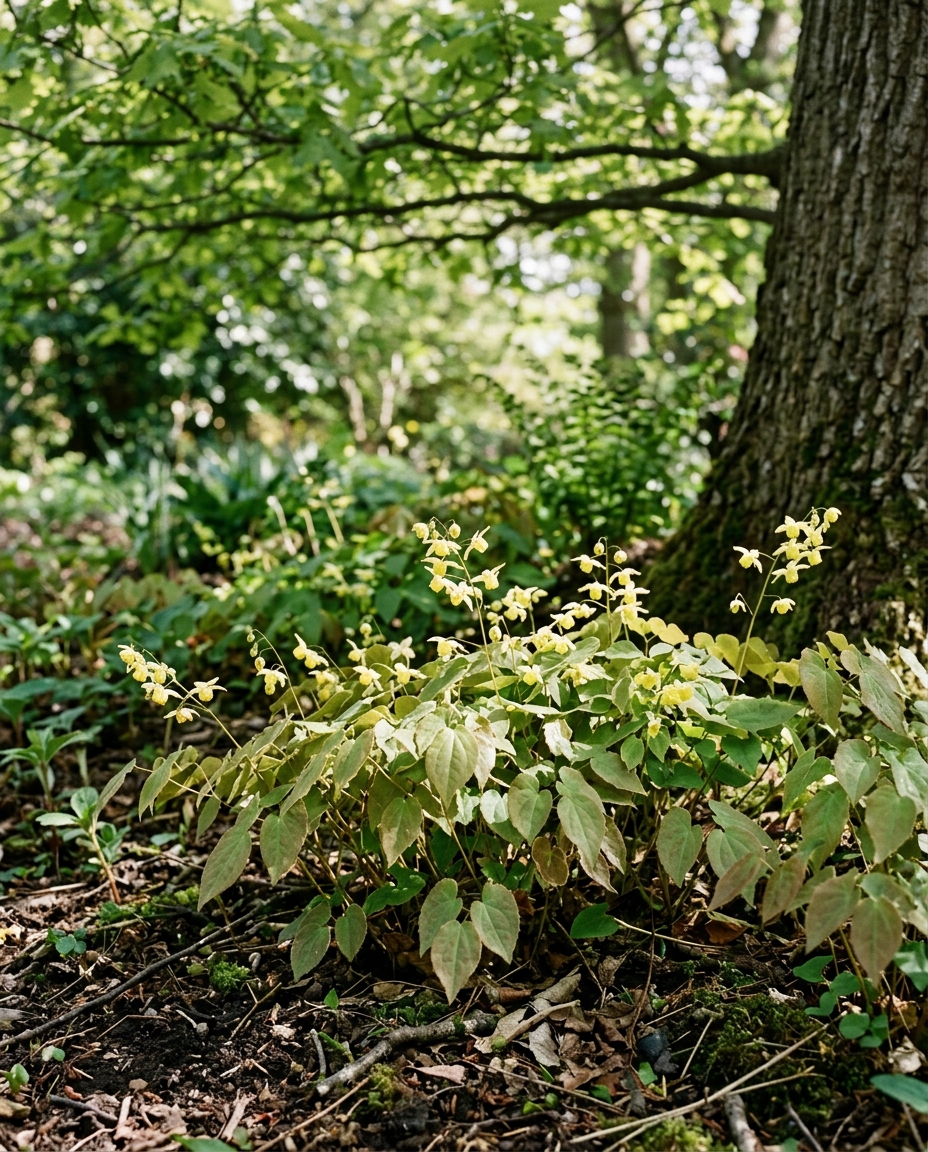
The dry shade directly beneath a mature tree defeats nearly everything. The canopy blocks rain while greedy roots drink whatever seeps through.
YOU’LL ALSO LOVE25 ‘Common Sense’ Home Rules Everyone Followed in the 80s That Would Get You Laughed At Today
Epimedium, or barrenwort, is built for that exact punishment.
Heart-shaped leaves form a low layer. Small spring flowers float above on wiry stems.
Under my maple sits a bare ring of packed dirt. It ate 3 rounds of grass seed. Epimedium is the plant that finally won.
Here’s where the scent takes over.
Lily of the Valley Perfumes the Darkest Corner
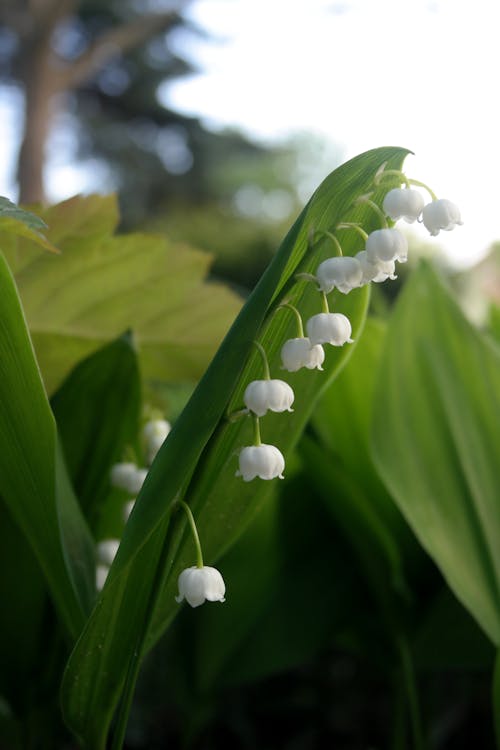
You smell it first. Lily of the valley sends up arching stems hung with small white bells in spring.
The perfume carries across the yard on a still morning.
It forms dense ground cover in deep shade. Brush past a patch in bloom and the scent lifts. It spreads with enthusiasm, so I gave mine a spot bordered by pavement where its march is welcome.
Would you like to save this?
My grandmother had it along every fence line. I can still smell that yard 40 years later. Her whole garden was full of 27 things that quietly disappeared from every American home.
Liriope Edges the Bed and Asks for Nothing
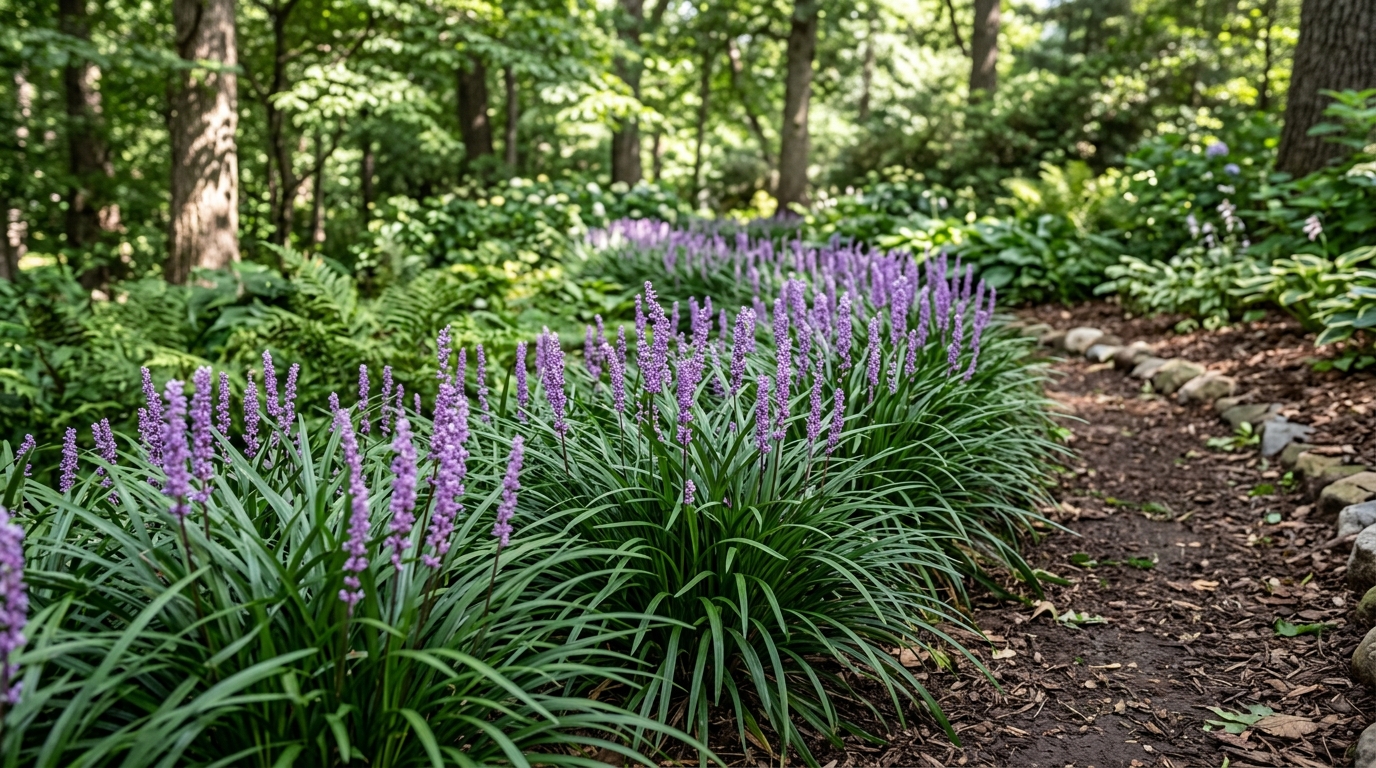
When the spot is both dark and dry and I want zero drama, this is it.
Liriope copes in conditions where pickier plants fail. Strappy clumps stay tidy and largely evergreen. Purple spikes show off in fall when everything else winds down.
I set clumps in a row and they form a clean border that needs one haircut in late winter. 20 minutes and a pair of shears. That is the entire annual commitment.
Hardy Cyclamen Blooms When the Garden Sleeps
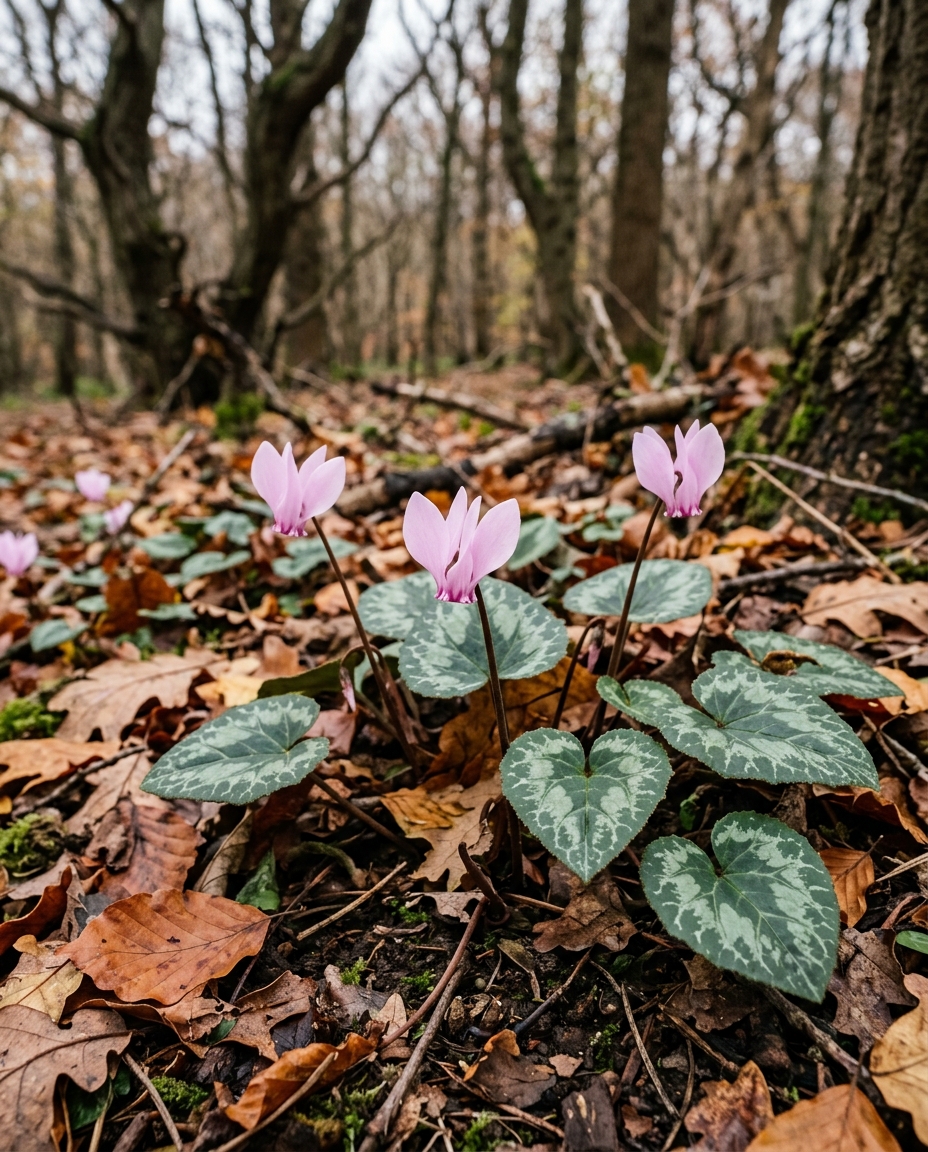
A small marvel for the season nobody plants for.
Hardy cyclamen thrive in shady, dry conditions under big deciduous trees, the exact spot most plants refuse. Swept-back flowers in pink and white appear as the rest of the garden sleeps.
Silver-marbled leaves carry on through winter.
I tucked a handful of corms beneath a tree, and over a few years they self-sowed into a quiet colony. The garden never truly goes dark once these settle in.
Next comes the plant that replaced my mower.
Pennsylvania Sedge Makes a No Mow Lawn for the Shade
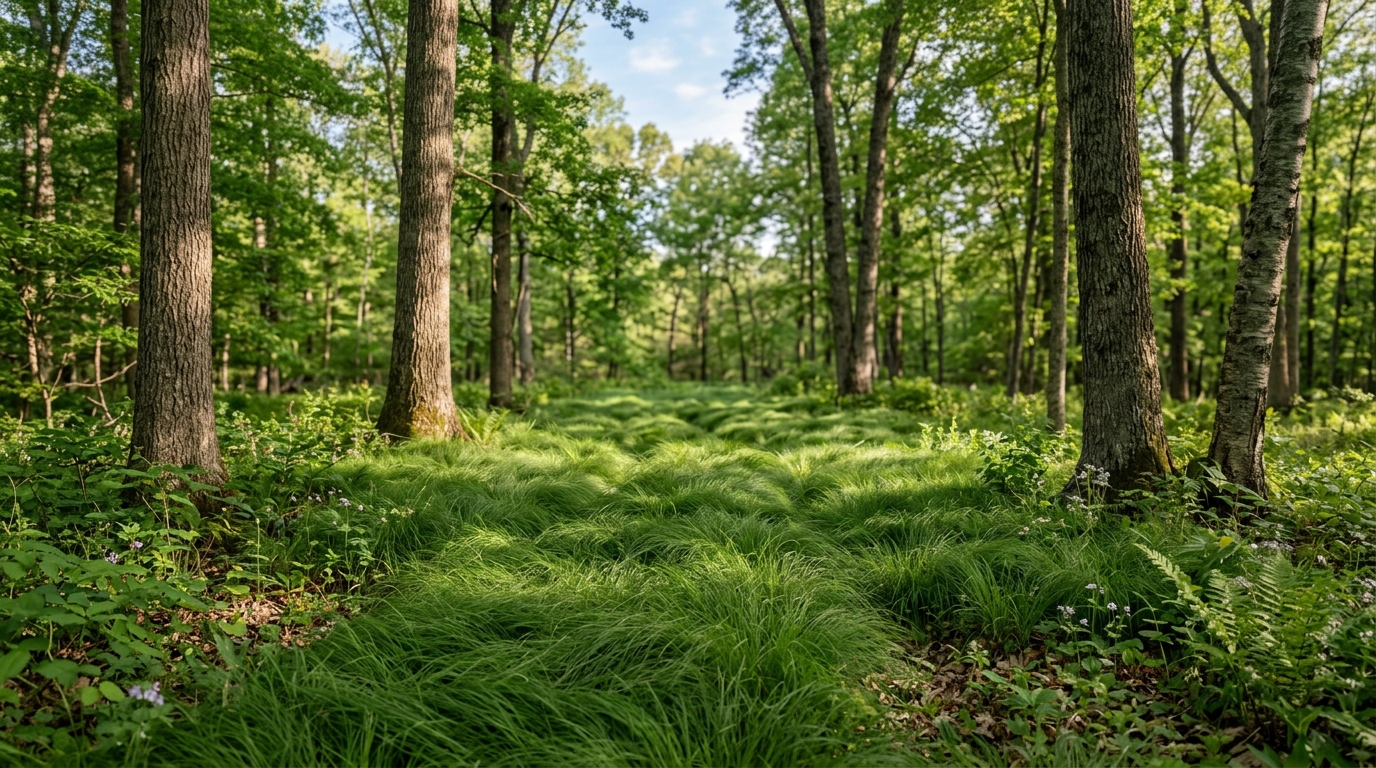
If the dream is a lawn where grass will not grow, this native does the job. Pennsylvania sedge settles in where turf dies because dry shade mimics its natural woodland setting.
Fine blades flow in the slightest breeze and form a low carpet that reads like a meadow.
By fall of 2024, mine had filled a 10-foot strip.
The mower, the seed, the twice-a-year reseeding. I’m done with it. A shaded patch of sedge ended that cycle for good.
Foxglove Sends Spires Up Into the Gloom
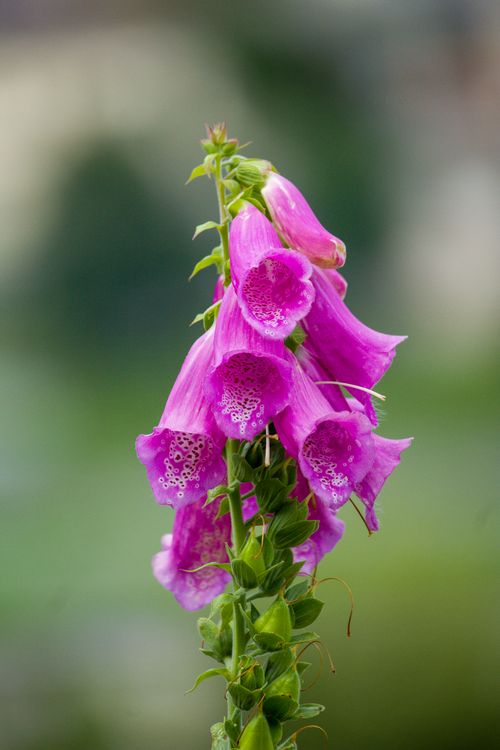
Most shade plants stay low. That is exactly why this one matters.
Foxglove sends tall spires of speckled, tubular flowers straight up from a shaded border. Inside each bloom, the freckled throat guides bees in.
One honest note. Foxglove is poisonous if eaten. I keep mine away from where small children and pets wander.
Placed toward the back, those spires stop visitors mid-step.
A tired yard drains more energy than you think. There are 25 signs your house is making you tired that most people blame on the mattress.
Primrose Opens the Very First Color of Spring
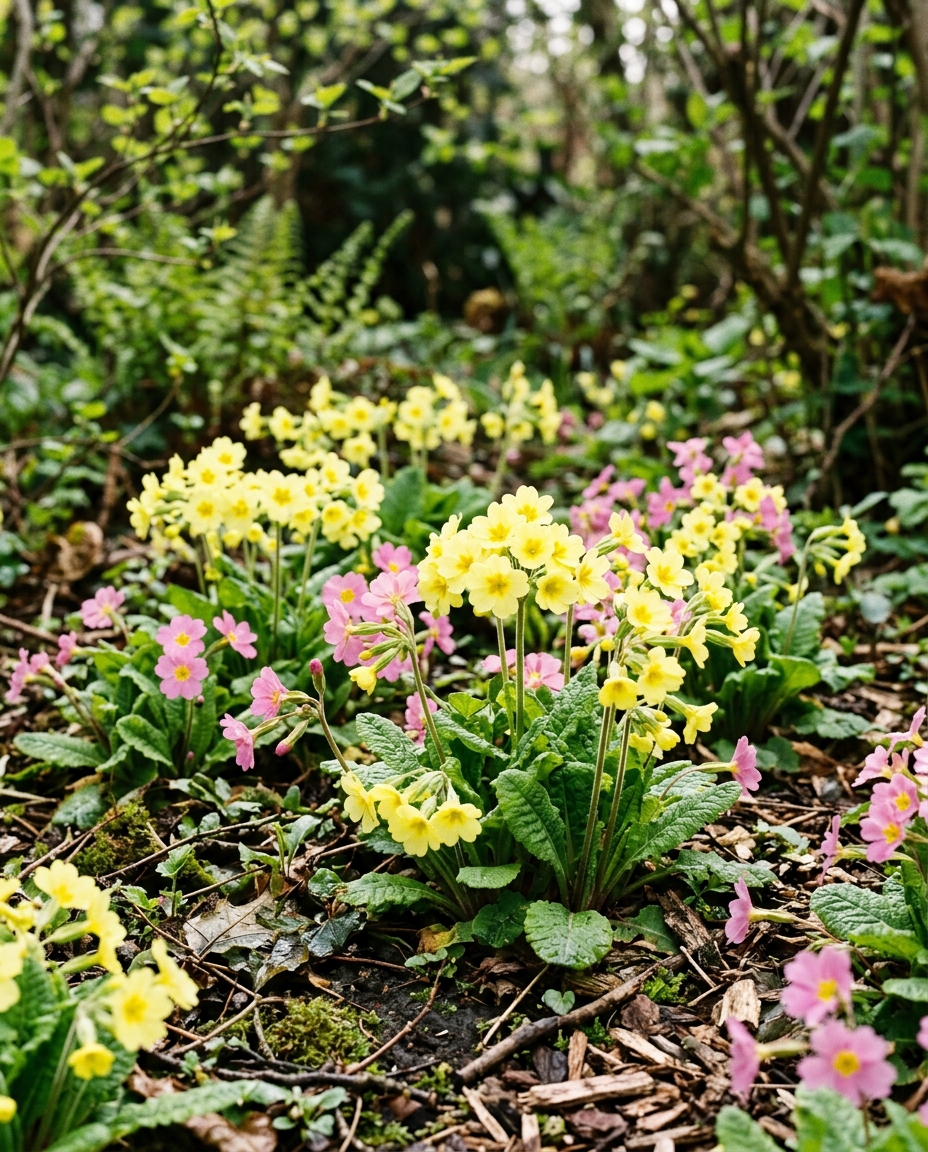
For the gardener who cannot wait, primrose is the early reward.
Low rosettes push out bright clusters very early in spring, among the first real color in the yard. They want the damp, cool conditions most plants complain about.
I set them at the front of a bed and along the path. After a long gray winter, a cluster of primrose opening in the shade feels like the garden clearing its throat.
Which brings us down to the ground.
Sweet Woodruff Spreads a Fragrant Spring Carpet
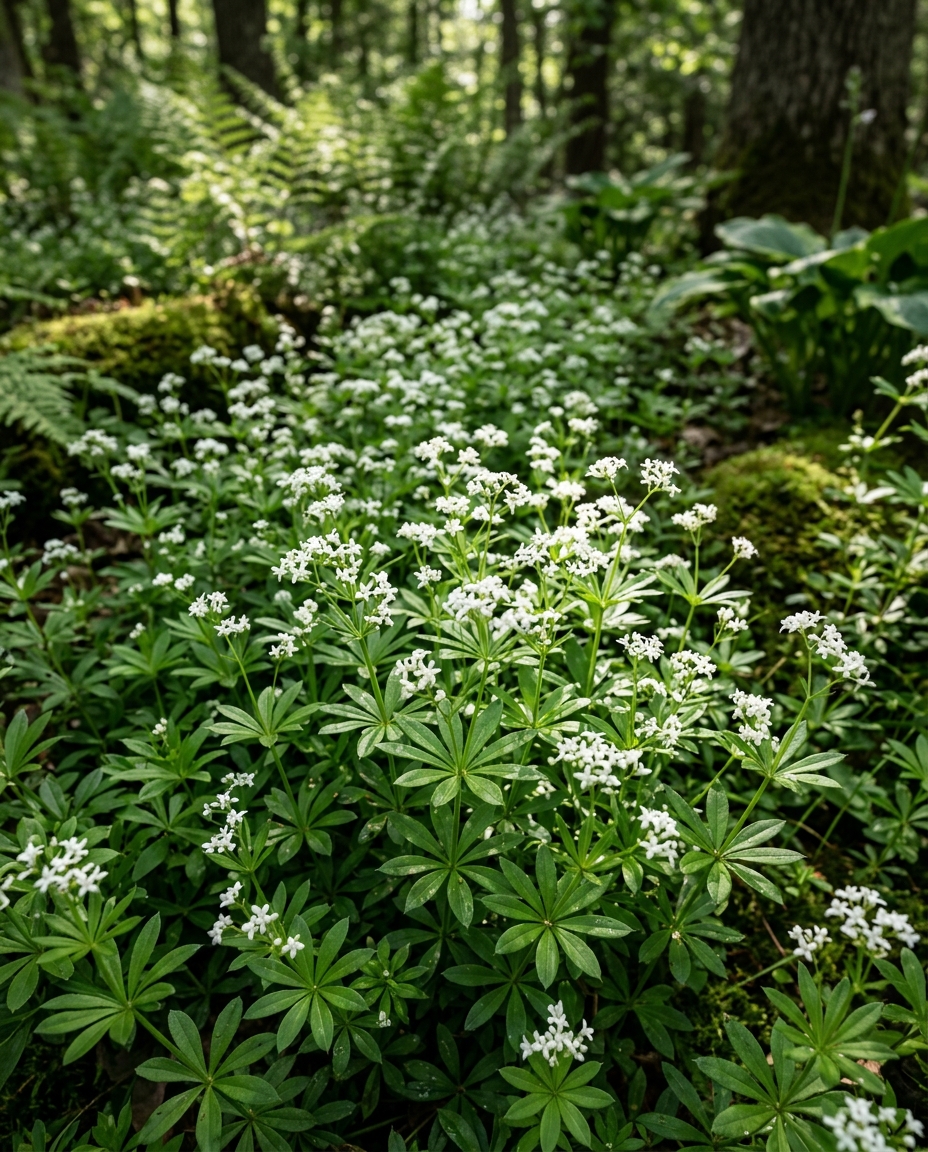
For knitting a woodland bed together at ground level, few plants do it as sweetly. Sweet woodruff spreads a low carpet of whorled leaves topped with tiny white star flowers in spring.
Crush a handful of the dried foliage and it releases the smell of fresh-cut hay. It was once tucked into linens for exactly that scent.
It runs politely through gaps between larger plants, softening edges and smothering weeds.
Wood Spurge Glows Chartreuse in the Dry Dark
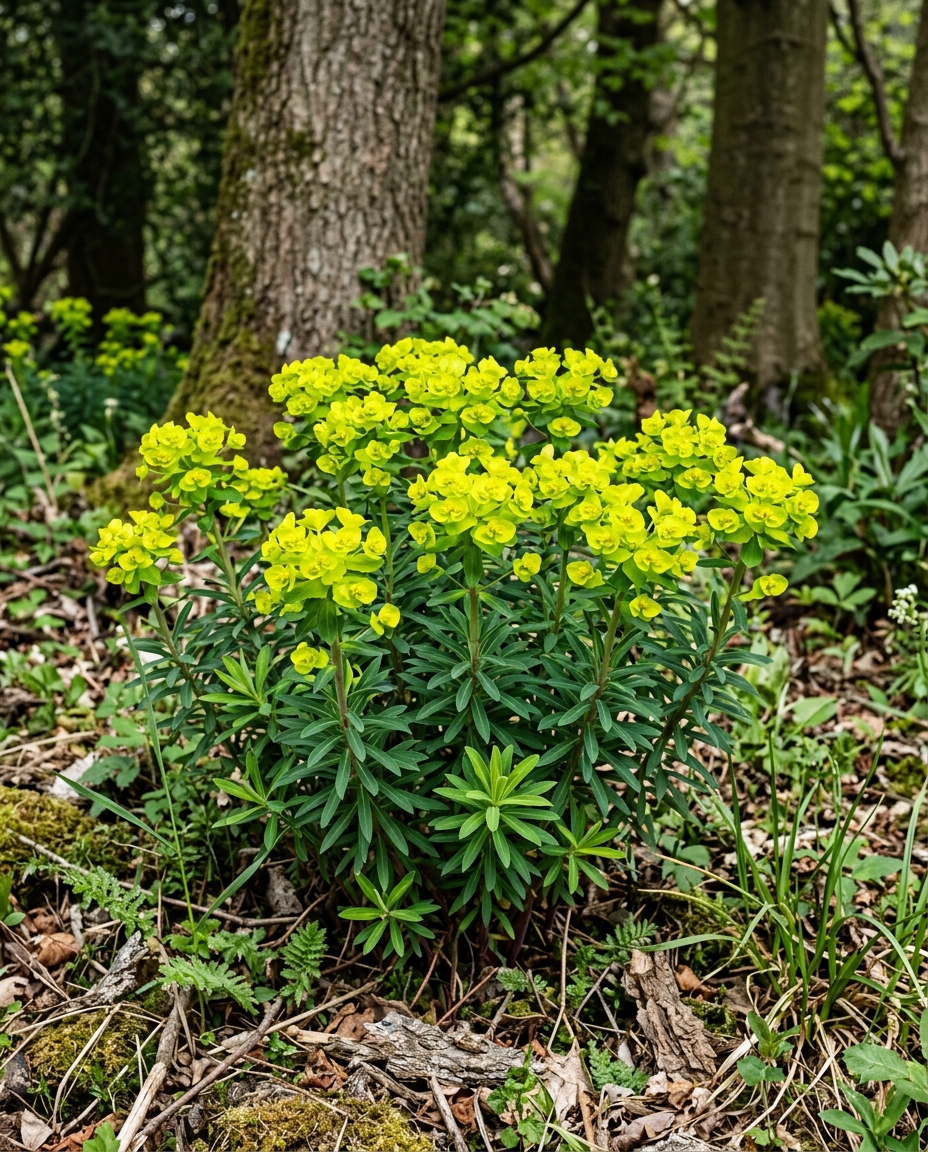
For a jolt of brightness in a parched bed, this delivers. Wood spurge, a shade-loving euphorbia, lifts acid-green bracts in spring that seem to glow against surrounding dark.
Evergreen foliage holds its shape through the year. I keep mine alongside epimedium and liriope, the dry-shade survivors.
One caution: the milky sap irritates skin. Gloves when cutting it back.
But here is the last survivor in the lineup.
Cushion Spurge Mounds Up Where the Hose Never Reaches
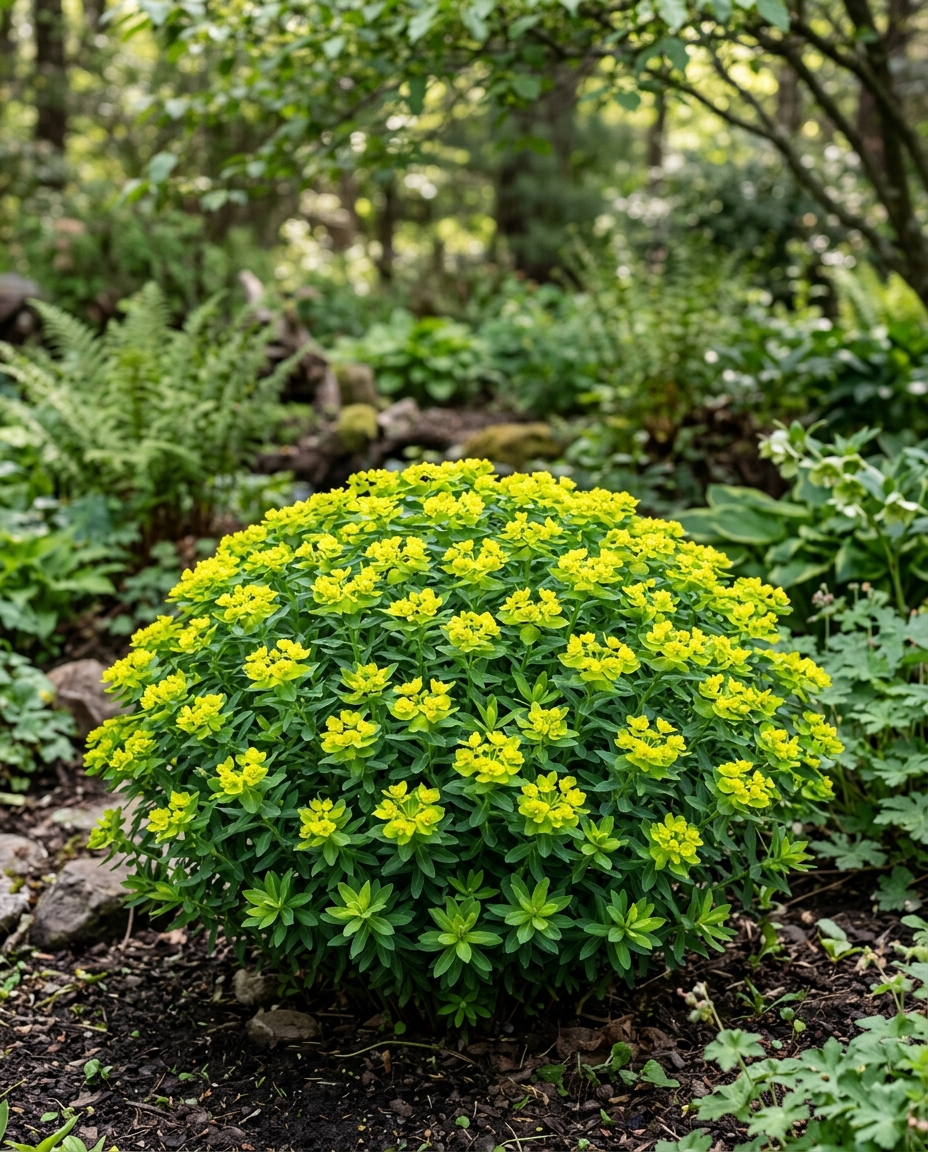
Closing out the drought crew. Cushion spurge forms a rounded mound, crowns it with yellow-green bracts in spring, then turns warm red in autumn.
A $15 plant saves you $40 a season in failed annuals.
It thrives with minimal water, so the spot the hose never reaches stops being a problem.
While you are sorting the garden, take a look at what is sitting in the garage and the shed. Your kids have no idea that 25 things sitting in your house right now are worth real money to the right collector.
Giant Hostas Anchor the Bed Like Living Sculpture
End where I began. Go big.
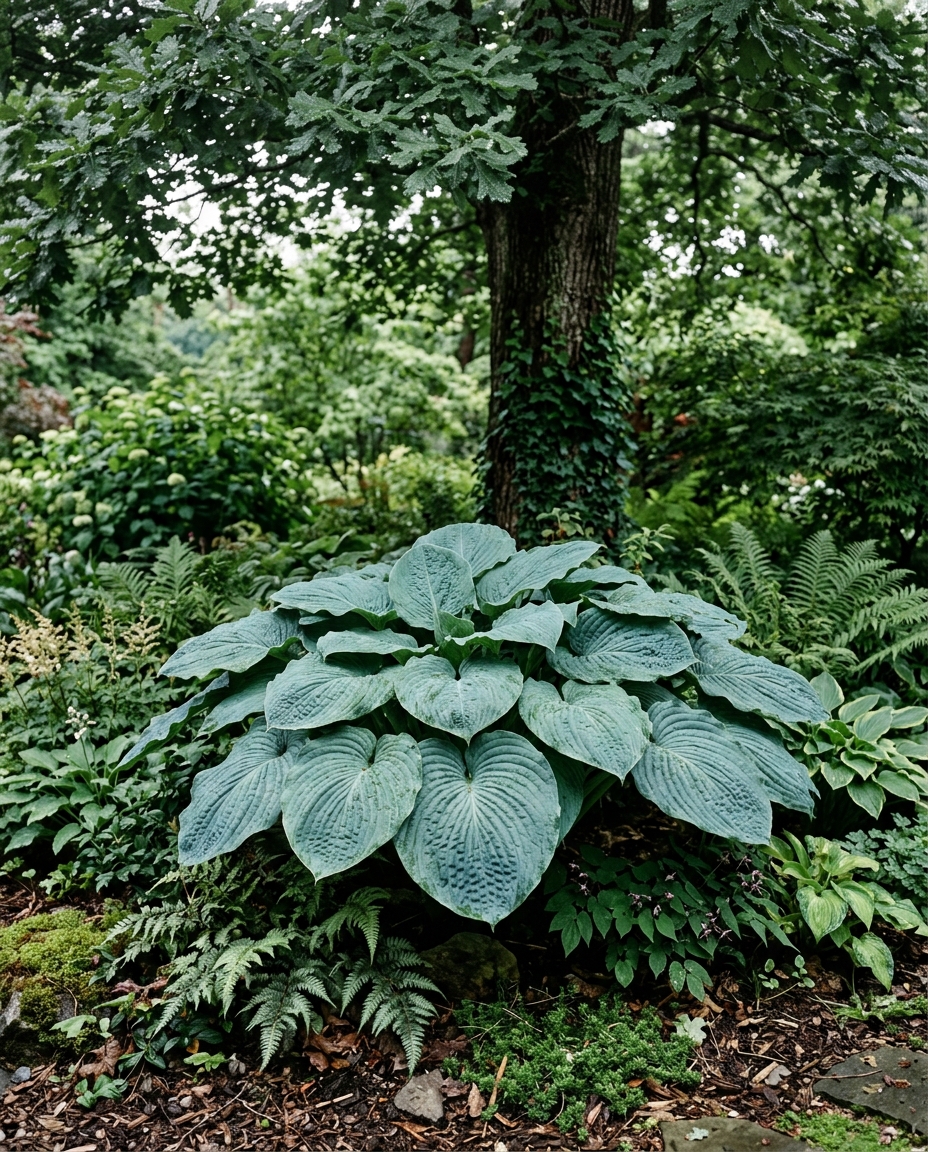
‘Empress Wu’, the largest hosta in the trade, forms a mound 4 to 5 feet tall and up to 8 feet wide.
Individual leaves measure 18 inches across.
One plant fills a shaded corner that swallowed every smaller thing I tried.
Pale lavender flowers rise on 5-foot stalks in midsummer. As living sculpture for a deep corner, nothing on this list matches it.
Give it room and a few years, and the hopeless dark patch becomes the anchor the whole garden is built around.
I now get my grandparents. Their big hosta clump outlasted the marriage, the porch railing, and the driveway. And this one is still growing.
Do This Before You Buy a Single Plant
Find out whether your shade is dry or damp. That one fact matters more than how dark the spot is.
Dig a small hole, fill it with water, and watch.
If it drains in minutes and the soil feels dusty, you have dry shade. Your shortlist: epimedium, liriope, hardy cyclamen, Pennsylvania sedge, wood spurge, and lily of the valley.
If the spot stays cool and moist, astilbe, hostas, ferns, lungwort, primrose, and Japanese forest grass will reward you.
Match the plant to the water, not just the shade. The bed that fought you for years fills in.
Which dark corner are you finally going to plant?